

Key Takeaways
- Soil improvement delivers more long-term value than almost any tool or product you can buy.
- Free inputs like compost, rainwater harvesting, and seed saving can replace many recurring costs.
- Cheap tools that wear out quickly often cost more over time than quality basics that last for years.
- Knowing which costs to cut — and which to keep — prevents common money-wasting mistakes.
- Low-maintenance plant choices reduce both labor and supply costs season after season.
Why Budget Gardening Requires a Strategy, Not Just Cuts
Gardening on a tight budget isn't about refusing to spend money — it's about spending it in the right places. Cutting costs randomly tends to backfire: skimping on soil preparation, for example, means spending more on fertilizers, pest control, and replacement plants later on. The goal is to understand which investments return real value and which expenses are mostly convenience or marketing.
If you're just getting started, our beginner's guide to garden care is worth reading before you buy anything at all. And once you're up and running, a month-by-month seasonal reference can help you stay ahead of problems without reactive spending.
Where to Spend: Investments That Pay Off Over Time
Some garden expenses are genuinely worth it because they reduce future costs or prevent bigger problems. These are the areas where cutting corners tends to cost more in the long run.
Invest in soil improvement before anything else
Healthy soil grows stronger plants that resist disease and drought, reducing what you spend on fertilizers, pest controls, and replacements. Improving soil once with compost or organic matter pays dividends across multiple growing seasons.
Buy a small set of quality hand tools rather than a large set of cheap ones
A well-made trowel, pruners, and fork will outlast several generations of bargain-bin equivalents. Cheap tools bend, break, or lose their edge quickly, costing more over time through repeated replacement.
Learn to prune correctly rather than pruning reactively
Cutting at the wrong time or too aggressively can stress plants, invite disease, and set back growth by a full season — all of which may require costly remediation. Sound pruning technique is a skill that pays for itself repeatedly.
Choose the right fertilizer approach for your actual soil needs
Applying fertilizer without knowing what your soil already contains is a common waste of money. A basic soil test tells you what's actually needed, preventing both unnecessary purchases and the plant damage that over-fertilizing can cause.
For a deeper look at one of the most impactful investments, see our guide to building healthy soil — it explains why soil quality matters more than fertilizer or gadgets.
Where to Save: Costs You Can Confidently Cut
Once you know where to hold firm on spending, you can make genuinely confident cuts elsewhere. Many routine garden costs are optional when you have the right habits in place.
Mulching is one of the highest-return free or low-cost habits available to gardeners. Our guide to garden mulching covers what to use and when to apply it. Similarly, home composting can replace a significant portion of your fertilizer spend with almost no cash outlay.
Choosing Plants That Work With Your Budget
Plant selection is one of the most underrated budget decisions in gardening. High-maintenance plants require more water, feeding, pest control, and replacement — all of which cost money. Choosing plants matched to your actual conditions reduces ongoing spend considerably.
Hardy perennials cost more upfront than annuals but return year after year without replanting costs. Native and regionally adapted plants tend to need less supplemental watering and fewer interventions because they've evolved to suit local conditions. Our guide to low-maintenance plants gives practical options across common garden types.
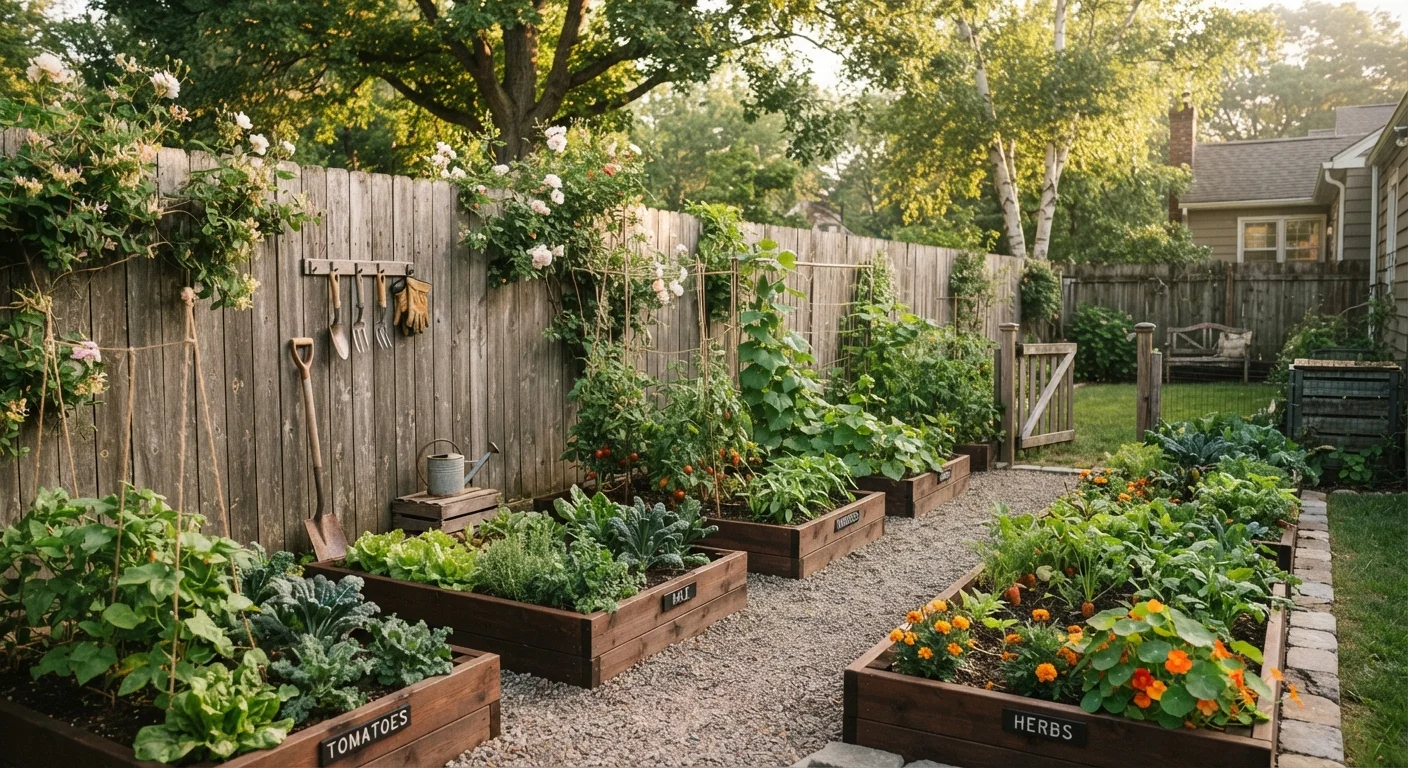
When considering layout, the choice between raised beds and in-ground planting also has real budget implications. Raised beds offer soil control but involve upfront material costs; in-ground planting costs less to establish if your existing soil is workable.
Avoiding False Economies and Common Spending Traps
Some apparent savings actually increase long-term costs. Buying the cheapest hand trowel might mean replacing it every season; a mid-range one with a proper grip and solid construction can last a decade or more. Similarly, skipping pest monitoring in favor of treating problems reactively usually means spending more on controls than prevention would have cost. Our article on natural pest control methods gives an honest look at what actually works.
It's also worth questioning product marketing. Many specialty garden products solve problems that basic technique already handles. Common garden myths persist partly because they sell products — understanding them helps you avoid unnecessary purchases.
The same principle applies beyond the garden: smart home maintenance on a budget follows similar logic — prioritize prevention, build a small core toolkit, and avoid the false economy of the cheapest option every time.