

Key Takeaways
- Healthy soil supports plants through biology, not just chemistry — microbes matter as much as minerals.
- A basic soil test costs very little and tells you exactly what your soil needs before you spend anything.
- Compaction, low organic matter, and pH imbalance are the three most common soil problems in home gardens.
- Compost is the most effective and affordable way to improve soil health over time.
- Fertiliser treats symptoms; improving soil structure and biology treats the root cause.
Soil Health
Soil health refers to the ongoing ability of soil to function as a living ecosystem — supporting plant growth, filtering water, cycling nutrients, and sustaining the organisms that live in it. Healthy soil isn't just dirt; it's a complex mix of minerals, organic matter, air, water, and billions of microorganisms working together. When soil is healthy, plants can access what they need without constant intervention.
Soil scientists often define soil health through measurable indicators including organic matter percentage, pH level, microbial biomass, compaction (measured in bulk density), and water infiltration rate.
What Soil Is Actually Made Of
Strip away the mystery and soil is four things: mineral particles (sand, silt, and clay in varying ratios), organic matter (decomposed plant and animal material), water, and air. The proportion of each determines what your soil can and can't do.
The mineral mix sets your soil's texture. Sandy soil drains fast but dries out quickly. Clay holds moisture and nutrients well but compacts easily and drains poorly. The sweet spot — called loam — is a balanced mix of all three, and it's what most gardeners are working toward.
Organic matter, though it typically makes up just 2–5% of healthy soil by volume, does an outsized amount of work. It improves drainage in clay, increases water retention in sand, feeds soil organisms, and slowly releases nutrients as it breaks down. It's also the primary reason why healthy soil has that dark color and pleasant earthy smell.
~1 billion
Bacteria per teaspoon of healthy soil
USDA Natural Resources Conservation Service estimates that a single teaspoon of productive soil contains between 100 million and 1 billion bacteria.
5%
Organic matter in productive garden soil
Most productive agricultural and garden soils contain between 2% and 5% organic matter by weight, yet many residential soils fall well below this range.
6.0–7.0
Optimal pH range for most garden plants
University extension services broadly recommend this pH range for vegetable gardens, as most nutrients are most readily available to plants within this window.
The Biology Underneath Your Feet
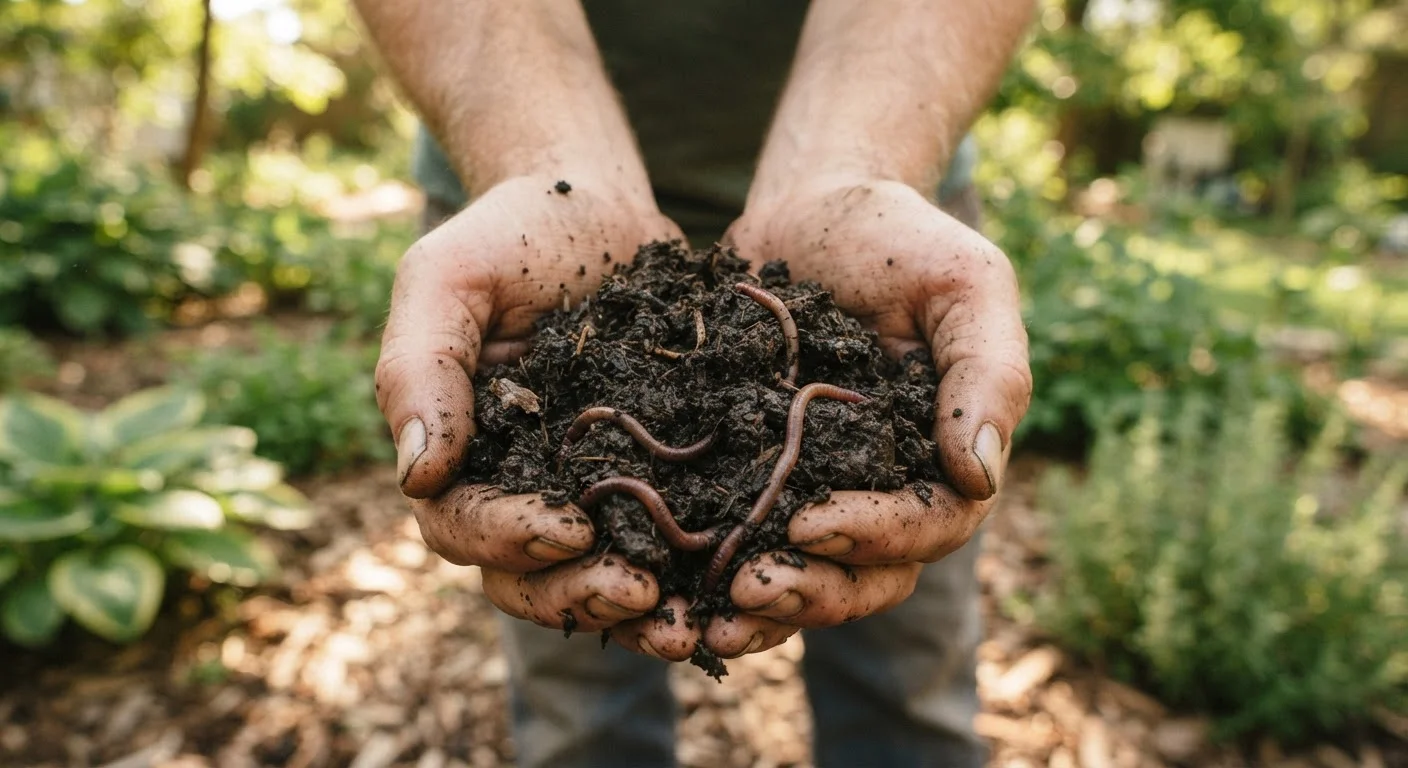
A teaspoon of healthy garden soil can contain hundreds of millions of bacteria, along with fungi, protozoa, nematodes, and larger creatures like earthworms. This is not background noise — it's the engine of soil health.
Soil bacteria and fungi break down organic matter and convert it into forms plants can absorb. Mycorrhizal fungi form direct partnerships with plant roots, extending their reach for water and phosphorus. Earthworms improve aeration and drainage simply by moving through the soil. When this web of life is thriving, your garden does too — with less effort from you.
Many common gardening practices inadvertently damage this biology. Excessive tilling destroys fungal networks. Leaving soil bare exposes microbes to temperature extremes. Over-watering drives out the air pockets that aerobic organisms need to survive. Understanding the biology helps you avoid these traps without having to spend anything. For a complementary approach to protecting soil biology, learn how mulching shields soil from the surface down.
How to Test What Your Soil Needs
Before adding anything to your soil — fertiliser, lime, amendments — get a soil test. Most cooperative extension services and garden centers offer basic tests for a low cost or sometimes free. A standard test tells you pH, nitrogen, phosphorus, and potassium levels, and many include recommendations tailored to what you're growing.
You can also do simple home checks. The jar test — shaking a soil sample in water and letting it settle — reveals your sand, silt, and clay ratios visually over 24 hours. Squeezing a handful of moist soil and observing whether it crumbles or stays clumped tells you roughly how much clay you're working with. Digging and counting earthworms gives you a rough measure of biological activity.
Test Before You Treat
Adding lime, sulfur, or fertiliser without knowing your soil's current state is guesswork that can make things worse. A basic soil test — available through most county cooperative extension offices — removes the guesswork and usually costs under $20. It's the most efficient use of any garden budget.
If your garden has struggled despite regular watering and fertilising, compaction is often the overlooked culprit. Pushing a screwdriver into the soil should meet little resistance in the top 6 inches — if it doesn't, your roots are working harder than they should be.
Testing before spending is the single most budget-conscious move a gardener can make. See also our guide on where to spend and where to save in your garden.
Building Better Soil Over Time
Improving soil health is a long game, but it doesn't require expensive products. The most reliable and affordable approach is adding organic matter consistently over time. Compost — made from kitchen scraps, grass clippings, and fallen leaves — is the workhorse here. It improves almost every soil problem: too much clay, too much sand, poor fertility, and low biological activity.
A few practices make a meaningful difference with little or no cost:
- Cover cropping: Planting clover or legumes in off-season beds adds nitrogen and organic matter when the beds are otherwise empty.
- Minimal tilling: Reducing or eliminating tillage preserves soil structure and protects the microbial communities living within it.
- Leaving roots in place: When annuals finish, cutting plants at soil level rather than pulling them leaves root channels that improve aeration.
- Consistent mulching: A 2–3 inch layer of organic mulch over bare soil moderates temperature, retains moisture, and slowly feeds the soil as it breaks down.
These aren't shortcuts — they're the actual foundation that fertilisers and gadgets are meant to support. If you're newer to gardening, start with this beginner's guide to garden care before investing in any amendments. And be wary of advice that sounds logical but isn't — common garden myths can quietly undermine even well-intentioned effort.