

Key Takeaways
- Natural pest control methods can meaningfully reduce pest pressure but rarely eliminate problems entirely.
- Companion planting, physical barriers, and beneficial insects each have specific conditions where they work best.
- Combining multiple methods — rather than relying on one — gives the most consistent results.
- Severe infestations, certain pest species, and poor soil health can push natural methods past their limits.
- Understanding what a method can and cannot do prevents wasted effort and garden losses.
Low cost compared to repeated pesticide applications
Many natural methods — hand-picking, barrier fabrics, companion planting — involve little to no ongoing spend. Physical row covers, for example, can be reused across multiple seasons.
Supports beneficial insect populations
Avoiding broad-spectrum pesticides preserves ladybugs, lacewings, parasitic wasps, and other predators that do ongoing pest control work naturally without any extra effort from the gardener.
Reduces chemical exposure for food crops
For edible gardens especially, keeping synthetic pesticide residues off vegetables and herbs is a practical benefit that matters to many home growers and their families.
Improves long-term garden ecosystem balance
Natural methods tend to build resilience over time. A garden with diverse plantings and a healthy insect community is generally less vulnerable to sudden pest outbreaks than a monoculture treated with chemicals.
Some methods deter multiple pest types at once
Floating row covers block aphids, cabbage moths, flea beetles, and other insects simultaneously — one intervention working across several potential problems.
Rarely effective against severe infestations
Once pest populations reach high levels, natural deterrents and beneficial insects often can't keep pace with reproduction rates. At that stage, more direct intervention is usually needed.
Results vary widely by pest species and conditions
Companion planting that reliably deters whiteflies in one garden may have little measurable effect in another due to differences in microclimate, plant density, and local pest pressure.
Beneficial insect strategies take time to establish
Attracting or purchasing beneficial insects is not an immediate fix. Building habitat and food sources for them can take one or more growing seasons before populations are large enough to make a visible difference.
Physical barriers require consistent maintenance
Row covers need to be checked for gaps, and copper tape loses effectiveness when it oxidizes or gets covered in soil. Barriers that aren't maintained regularly stop working quickly.
Not all natural products are risk-free
Neem oil and diatomaceous earth, while naturally derived, can harm beneficial insects and pollinators if applied incorrectly. "Natural" is not the same as harmless to everything in the garden.
Companion planting evidence is often anecdotal
Some companion plant combinations have solid research support, but many popular pairings have limited or inconsistent scientific backing. Results in home gardens can be unpredictable.
Our Verdict
Natural pest control is a genuinely useful part of any home garden strategy — low cost, low toxicity, and often sustainable over time. But it requires realistic expectations: these methods reduce risk and slow damage rather than guarantee pest-free plants. When pest pressure is light to moderate and methods are layered thoughtfully, results can be solid.
Gardeners who are willing to plan ahead, monitor their plants regularly, and accept that some pest damage is part of growing food or flowers without synthetic inputs.
What Natural Pest Control Actually Means
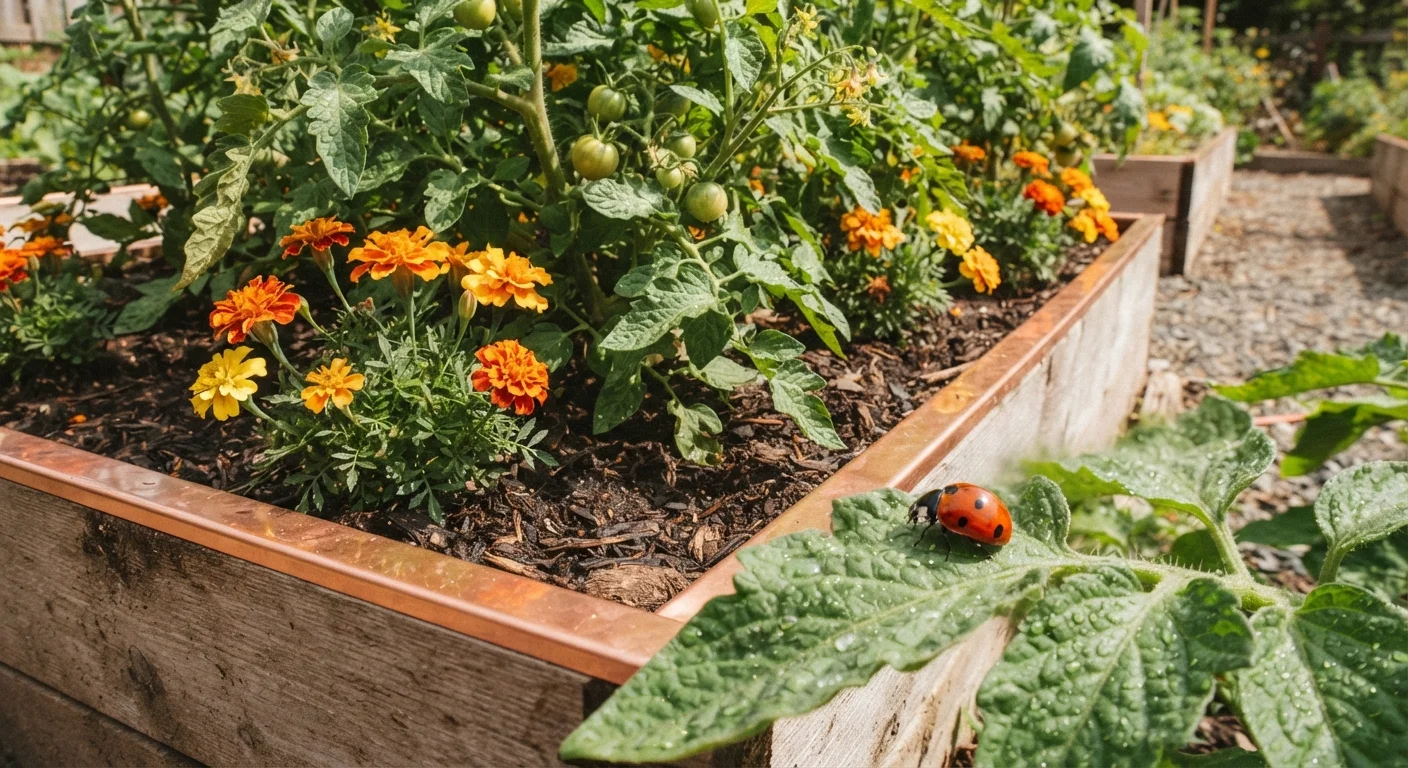
Natural pest control refers to any approach that manages garden pests without synthetic chemical pesticides. The most common methods include companion planting (growing certain plants near each other to deter pests), physical barriers like row covers or copper tape, introducing or attracting beneficial insects, and applying naturally derived deterrents such as neem oil or diatomaceous earth.
These approaches appeal to budget-conscious gardeners for good reason: many cost little or nothing, they don't introduce chemical residues into food crops, and they support broader garden health. But the phrase "natural" can create unrealistic expectations. Natural doesn't mean effortless, and it doesn't always mean effective enough on its own. Understanding what each method is actually doing — and where it breaks down — saves time and frustration.
Good soil health also plays a role here: healthier plants resist pest damage more effectively, so natural methods tend to perform better in well-maintained beds.
The Real Advantages Worth Knowing
When conditions are right, natural pest control has meaningful advantages that go beyond simply avoiding chemicals.
Low cost compared to repeated pesticide applications
Many natural methods — hand-picking, barrier fabrics, companion planting — involve little to no ongoing spend. Physical row covers, for example, can be reused across multiple seasons.
Supports beneficial insect populations
Avoiding broad-spectrum pesticides preserves ladybugs, lacewings, parasitic wasps, and other predators that do ongoing pest control work naturally without any extra effort from the gardener.
Reduces chemical exposure for food crops
For edible gardens especially, keeping synthetic pesticide residues off vegetables and herbs is a practical benefit that matters to many home growers and their families.
Improves long-term garden ecosystem balance
Natural methods tend to build resilience over time. A garden with diverse plantings and a healthy insect community is generally less vulnerable to sudden pest outbreaks than a monoculture treated with chemicals.
Some methods deter multiple pest types at once
Floating row covers block aphids, cabbage moths, flea beetles, and other insects simultaneously — one intervention working across several potential problems.
These benefits are well-documented in home gardening contexts and align with broader principles of sustainable garden management. If you're working on a tight budget, knowing which garden investments genuinely pay off helps you prioritize. Several natural pest methods — especially companion planting and hand-picking — cost almost nothing.
The Limitations You Should Plan Around
The honest truth is that natural methods have real ceilings, and gardeners who don't account for them often end up frustrated or with significant crop losses.
Rarely effective against severe infestations
Once pest populations reach high levels, natural deterrents and beneficial insects often can't keep pace with reproduction rates. At that stage, more direct intervention is usually needed.
Results vary widely by pest species and conditions
Companion planting that reliably deters whiteflies in one garden may have little measurable effect in another due to differences in microclimate, plant density, and local pest pressure.
Beneficial insect strategies take time to establish
Attracting or purchasing beneficial insects is not an immediate fix. Building habitat and food sources for them can take one or more growing seasons before populations are large enough to make a visible difference.
Physical barriers require consistent maintenance
Row covers need to be checked for gaps, and copper tape loses effectiveness when it oxidizes or gets covered in soil. Barriers that aren't maintained regularly stop working quickly.
Not all natural products are risk-free
Neem oil and diatomaceous earth, while naturally derived, can harm beneficial insects and pollinators if applied incorrectly. "Natural" is not the same as harmless to everything in the garden.
Companion planting evidence is often anecdotal
Some companion plant combinations have solid research support, but many popular pairings have limited or inconsistent scientific backing. Results in home gardens can be unpredictable.
~30%
Average crop loss to pests globally
The UN Food and Agriculture Organization has estimated that pests account for roughly 20–40% of global crop production losses annually, underlining why pest management matters even in small gardens.
3–5 seasons
Time to establish stable beneficial insect habitat
Entomologists and extension garden educators generally note that meaningful, self-sustaining beneficial insect communities in home gardens may take several growing seasons of consistent habitat planting to develop.
It's also worth acknowledging that some widely repeated natural remedies have mixed or weak evidence behind them. Garden myths are common, and a few natural pest tips fall into that category — always look for practical results in your own garden rather than assuming a method works because it's popular.
Layering Methods: Why One Approach Is Rarely Enough
The most effective natural pest management strategies combine multiple tools rather than betting on a single technique. A gardener who installs row covers, plants trap crops like nasturtiums near squash, and maintains habitat for ground beetles is creating overlapping layers of protection — no single failure point wipes out the whole strategy.
Physical barriers are reliable but limited in coverage. Beneficial insects are powerful but take time to establish and can leave during hot dry spells. Companion planting improves the odds but won't stop a heavy aphid migration on its own. Used together, these methods reinforce each other.
When to Consider Stepping Up Intervention
Natural methods are most effective as prevention and early management. If you're seeing more than 30% leaf damage on a crop, or a population of pests that's growing despite your efforts, it may be worth consulting your local cooperative extension service for guidance on appropriate next steps. Letting a severe infestation run unchecked in the name of staying 'all natural' can harm the rest of your garden too.
Mulching is another underappreciated layer: it disrupts the soil-surface lifecycle of several common pests, including certain flies and beetles that pupate in bare ground around plant stems.
Your garden setup also shapes which methods make sense. Raised beds and in-ground plots differ in drainage, exposure, and how easily you can install barriers — all of which affects pest control options.