

Key Takeaways
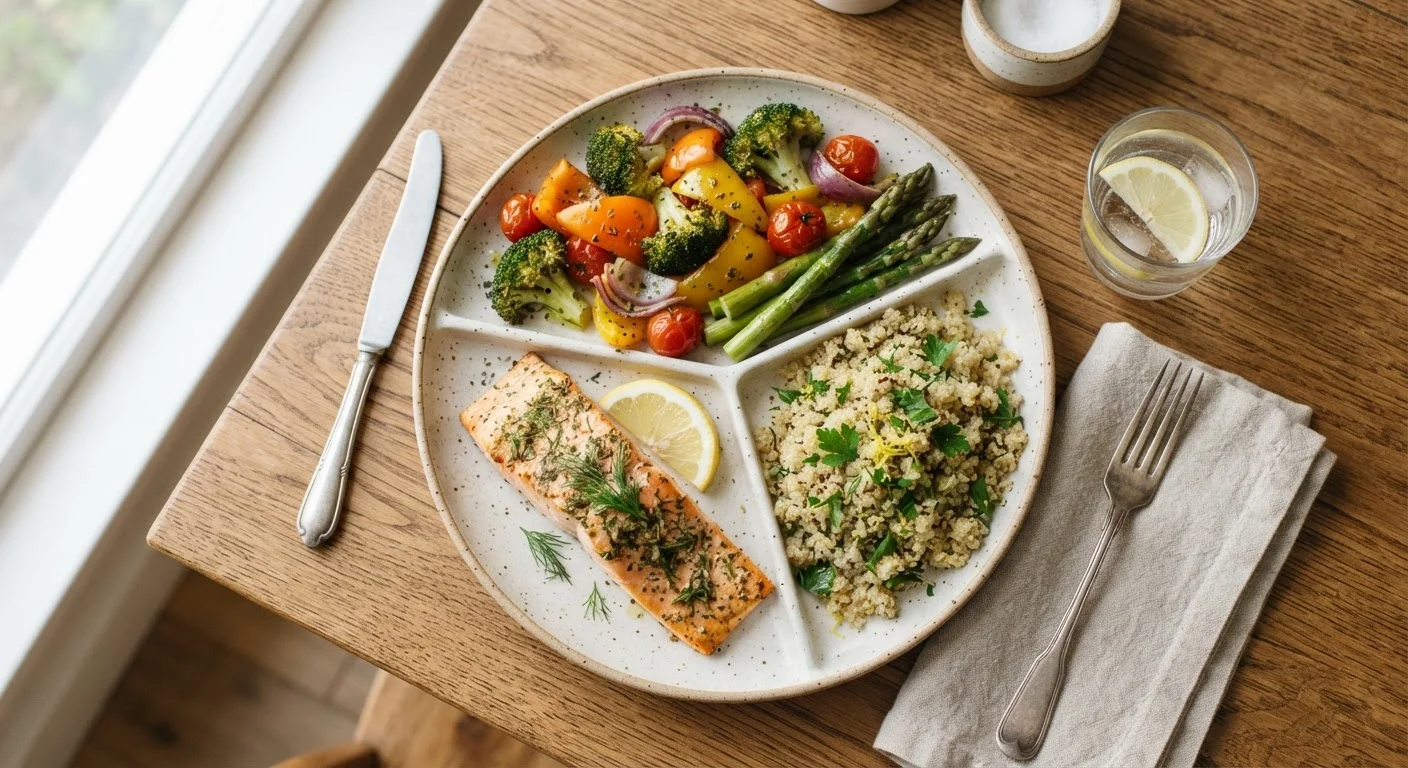
- Half your plate filled with vegetables and fruit is a principle that works across virtually every eating style.
- Protein and whole grains are flexible categories — plant and animal sources both fit the framework.
- Consistency in proportions matters more than perfection at any single meal.
- Budget-friendly whole foods like beans, eggs, and frozen vegetables align naturally with balanced plate principles.
Why One Framework Works for Many Diets
Whether you eat meat daily, follow a plant-based pattern, or simply try to eat fewer processed foods, the same core proportions show up in mainstream nutrition guidance. That's not a coincidence — it reflects decades of public health research pointing to patterns rather than individual foods as the drivers of long-term health.
The plate model — popularized in the U.S. by the USDA's MyPlate framework — isn't a rigid prescription. It's a visual shorthand for proportions that support adequate nutrient intake without requiring calorie counting or expensive specialty ingredients. Understanding why these proportions work helps you apply them no matter what you're cooking or what your dietary values are.
For more on translating these principles into weekly routines, see our meal planning guide for practical systems that keep nutrition on track.
This article provides general nutrition education and is not a substitute for personalized medical or dietary advice. Consult a qualified healthcare professional for guidance specific to your health needs.
Core Plate-Building Principles
The practices below represent widely supported nutritional principles that are flexible enough to fit omnivore, vegetarian, vegan, and other common eating patterns. They're also designed to work with everyday, affordable ingredients.
Fill half your plate with vegetables and fruit at most meals.
Vegetables and fruit provide fiber, vitamins, and minerals that support digestive health and help manage hunger without adding significant calories. Most Americans fall well short of recommended intake. This proportion is consistent across USDA guidance, the Harvard Healthy Eating Plate, and Mediterranean-style dietary patterns.
Reserve roughly a quarter of your plate for whole grains or starchy vegetables.
Whole grains like oats, brown rice, and whole wheat bread provide fiber and B vitamins that refined grains largely lack. They digest more slowly, helping sustain energy between meals. Starchy vegetables like sweet potatoes and winter squash offer similar benefits with additional micronutrients.
Use the remaining quarter for a protein source — animal or plant-based.
Protein supports muscle maintenance, immune function, and satiety. The source can vary widely: chicken, fish, eggs, tofu, tempeh, legumes, and dairy all count. Budget-friendly options like canned beans, lentils, and eggs are nutritionally effective and widely accessible.
Choose water or low-calorie beverages as your default drink with meals.
Sugary drinks add significant calories without contributing to satiety or nutrient intake. Swapping soda or sweetened juice for water, sparkling water, or unsweetened tea at meals is one of the simplest ways to improve overall dietary quality without changing what's on your plate.
Limit heavily processed foods rather than eliminating entire food groups.
Ultra-processed foods — those with long ingredient lists of additives, refined starches, and added sugars — are associated with higher calorie intake and lower diet quality in research settings. Reducing them gradually, rather than cutting whole categories cold turkey, tends to be more sustainable for most people.
Use healthy fats in moderate amounts rather than avoiding fat altogether.
Dietary fats from sources like olive oil, avocado, nuts, and seeds support absorption of fat-soluble vitamins (A, D, E, and K) and contribute to meal satisfaction. The goal is replacing saturated and trans fats where possible, not eliminating fat as a category.
If you're exploring a more plant-forward approach, our introduction to plant-based eating covers how these same proportions translate when animal products are reduced or removed.
Putting It Into Practice Without Overthinking It
The goal isn't a perfect plate — it's a reliable default. Most nutrition researchers and dietitians suggest that what you eat most of the time matters far more than any single meal. Building a consistent mental model for what a reasonable plate looks like is more sustainable than tracking every gram.
A format like grain bowls illustrates these principles in action: a base of whole grains, a protein source, and generous vegetables, finished with a flavorful sauce. See our grain bowl formula guide for a flexible template that makes weeknight cooking straightforward.
Special Dietary Needs Require Individual Guidance
The proportions outlined here reflect general public health guidance and are appropriate for most healthy adults. However, people managing chronic conditions like diabetes, kidney disease, or cardiovascular disease may have specific nutritional requirements that differ from general recommendations. Pregnant or breastfeeding individuals, children, and older adults also have distinct needs. Always consult a registered dietitian or physician for personalized dietary guidance.
For a deeper look at eating well on a limited grocery budget, our comprehensive affordable eating resource covers shopping strategy, meal prep, and nutrition trade-offs in one place.