

| Optimal soil workability | When a handful crumbles rather than clumps or crumbles to dust |
| Recommended mulch depth | 2–3 inches around plants, away from stems |
| Watering best time of day | Early morning |
| Garlic planting window | After first fall frost, before ground freezes |
| Soil pH range for most vegetables | 6.0–7.0 (University cooperative extension consensus) |
| Vegetable feeding frequency | Every 2–4 weeks during active growth |
How to Use This Reference
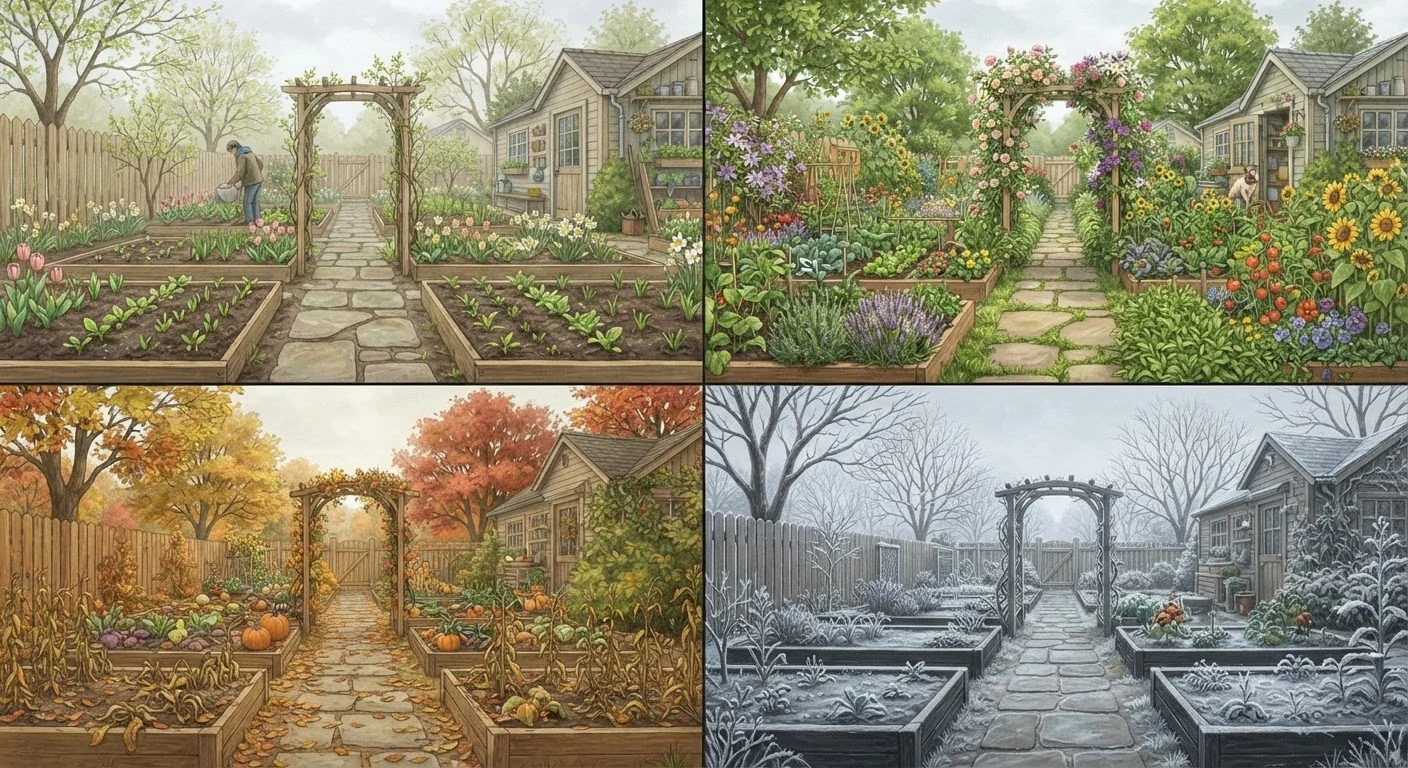
This guide is organized by season rather than strict calendar month, because planting zones vary widely across the US. A task listed for early spring might fall in February in the South and April in the Upper Midwest. Use your local last-frost and first-frost dates as anchors, and adjust the timing accordingly.
If you're just getting started outdoors, the beginner's garden guide covers the foundational ideas you'll want before diving into a seasonal schedule.
| Optimal soil workability | When a handful crumbles rather than clumps or crumbles to dust |
| Recommended mulch depth | 2–3 inches around plants, away from stems |
| Watering best time of day | Early morning |
| Garlic planting window | After first fall frost, before ground freezes |
| Soil pH range for most vegetables | 6.0–7.0 (University cooperative extension consensus) |
| Vegetable feeding frequency | Every 2–4 weeks during active growth |
Spring: Wake Up the Garden
Early spring is about assessment and preparation. Walk the beds and note what has died back, what survived, and where bare patches need filling. Clear away dead plant material left over from winter — this reduces pest and disease pressure.
- Test soil pH if you haven't in two or more years. Amend with lime to raise pH or sulfur to lower it based on what you're growing.
- Divide overgrown perennials before new growth gets tall.
- Apply a thin layer of compost to beds rather than synthetic fertilizer — it feeds slowly and improves soil structure over time.
- Start cool-season vegetables (lettuce, spinach, peas) directly in the ground once soil is workable.
Late spring is planting season for warm-season crops and annuals, but only after your last expected frost date has passed. Rushing this step is one of the most common (and costly) mistakes gardeners make.
Deadheading
Removing spent or faded flowers from a plant to redirect its energy into producing more blooms rather than setting seed.
Last Frost Date
The average date in spring after which freezing temperatures are unlikely in a given location. Used to time transplanting and direct sowing of tender plants.
Soil pH
A measure of how acidic or alkaline your soil is, on a scale of 0–14. Most vegetables and garden plants prefer a pH between 6.0 and 7.0.
Mulching
Covering soil around plants with a layer of organic or inorganic material to retain moisture, regulate temperature, and suppress weed growth.
Perennial
A plant that lives for more than two years, typically dying back in winter and regrowing from its roots each spring.
Compost
Decomposed organic matter — such as vegetable scraps and yard waste — used to improve soil structure and provide slow-release nutrients.
For guidance on cutting back woody plants without damaging them, see when and how to prune.
Summer: Maintain and Monitor
Summer gardening is less about planting and more about keeping what you have healthy. Heat, drought, and pests all intensify, so consistent attention pays off.
- Watering: Water deeply and less frequently to encourage roots to grow downward. Early morning is the most efficient time — less evaporation, and foliage dries before evening, reducing fungal risk.
- Weeding: Pull weeds before they set seed. A few minutes weekly is far easier than a single exhausting session once weeds have taken hold.
- Deadheading: Remove spent flowers on annuals and reblooming perennials to extend the flowering period.
- Feeding: Vegetables in active production benefit from feeding every two to four weeks. Compost tea or balanced granular fertilizer both work; follow label directions carefully and don't over-apply.
If you're watching costs, this breakdown of where to spend and where to save can help you decide which summer supplies are actually worth buying.
Fall and Winter: Protect and Prepare
Fall is the season most gardeners underuse. The soil is still warm, rain is often more reliable, and many plants establish better than they would in spring.
- Plant spring-blooming bulbs (tulips, daffodils, alliums) after the first frost but before the ground freezes.
- Sow garlic in fall for a summer harvest.
- Cut back spent perennials, but leave some seedheads standing — they provide winter food for birds and habitat for beneficial insects.
- Mulch beds with 2–3 inches of shredded leaves or wood chips to insulate roots and suppress winter weeds.
For a complete fall closeout process, the end-of-season garden checklist walks through each step in order.
Winter is quieter but not idle. Sharpen and oil tools, order seed catalogs, plan bed rotations, and build or turn your compost pile. Plants that genuinely don't need much attention year-round are worth considering — low-maintenance plants that actually thrive is a useful starting point.
~50%
Of garden water lost to evaporation when watered at midday
Watering in the early morning significantly reduces waste compared to afternoon watering, according to general horticultural guidance.
2–3 inches
Mulch depth proven to suppress weeds effectively
A consistent mulch layer this deep can reduce weed germination significantly while also retaining soil moisture.