

Key Takeaways
- A high-pitched squealing sound when braking is usually the first sign of worn brake pads.
- Grinding noise during braking often means metal-on-metal contact has already begun — act immediately.
- Increased stopping distances and brake pedal pulsation are physical warning signs drivers can feel.
- Most vehicles have a brake warning light that activates when pad sensors detect critical wear.
- Replacing pads early is significantly cheaper than replacing pads plus damaged rotors.
- A qualified mechanic should inspect and replace brake pads — improper installation is a safety risk.
Brake Pad Wear
Brake pads are the friction material that presses against your brake rotors to slow or stop your vehicle. Over time, that material gradually wears down through normal use. 'Brake pad wear' refers to the thinning of that material to a point where braking performance is compromised or the pad must be replaced.
New brake pads typically measure 10–12 mm of friction material. Most mechanics recommend replacement when pads reach 3–4 mm; at 2 mm or less, the pad is considered critically worn and metal-on-metal contact is imminent.
The Sounds That Tell You Something Is Wrong
Your ears are often the first alert system for brake pad wear. Brake pad manufacturers build in a small metal tab called a wear indicator that is designed to contact the rotor and emit a high-pitched squeal when friction material runs low. If you notice a squealing or squeaking sound primarily when applying the brakes — and it goes away when you release the pedal — that is the wear indicator doing its job.
A grinding or growling sound is a more serious signal. It typically means the pad's friction material has been fully depleted and the metal backing plate is now contacting the rotor directly. At this stage, every stop is damaging the rotor surface, significantly escalating repair costs. As explained in our article on how small repairs become bigger bills, ignoring early warnings routinely turns a simple pad replacement into a pad-plus-rotor job.
Rain, Rust, and Temporary Brake Noise
A thin layer of surface rust can form on rotors overnight or after rain, causing a brief scraping sound during the first few stops. This is generally harmless and clears itself within a minute of normal driving. Persistent noise — across multiple days and brake applications — is what merits a closer look.
Not all squealing is brake-related. Dust, light surface rust after rain, or cold temperatures can cause temporary noise that disappears after a few stops. Persistent squealing — especially across multiple brake applications over several days — warrants attention.
Physical Sensations Behind the Wheel
Beyond sound, worn brake pads produce physical feedback through the pedal and steering wheel. Watch for these sensations:
- Longer stopping distances: If your vehicle takes noticeably more road to stop from the same speed, reduced pad thickness may be compromising braking force.
- Pedal pulsation or vibration: A brake pedal that pulses under your foot often signals uneven rotor wear — which can accompany worn pads — rather than pad wear alone.
- Vehicle pulling to one side: If the car drifts left or right during braking, pads on one side may be wearing faster than the other, a condition a mechanic should inspect promptly.
Reaction time matters enormously in emergency stops. Degraded braking compounds risk, particularly in situations like those covered in brake failures and emergency driving scenarios.
3–4 mm
Recommended pad replacement threshold
Most automotive technicians and vehicle manufacturers cite 3–4 mm of remaining friction material as the standard replacement point before braking performance degrades.
2×–3×
Cost multiplier when rotors are also damaged
Industry repair data consistently shows that replacing brake pads together with scored or warped rotors can cost two to three times more than a pad-only replacement performed at the right time.
25,000–65,000 mi
Typical brake pad lifespan range
The wide range reflects differences in driving style, vehicle weight, and conditions — city driving with frequent stops tends to wear pads considerably faster than highway use.
Visual Checks You Can Do Yourself
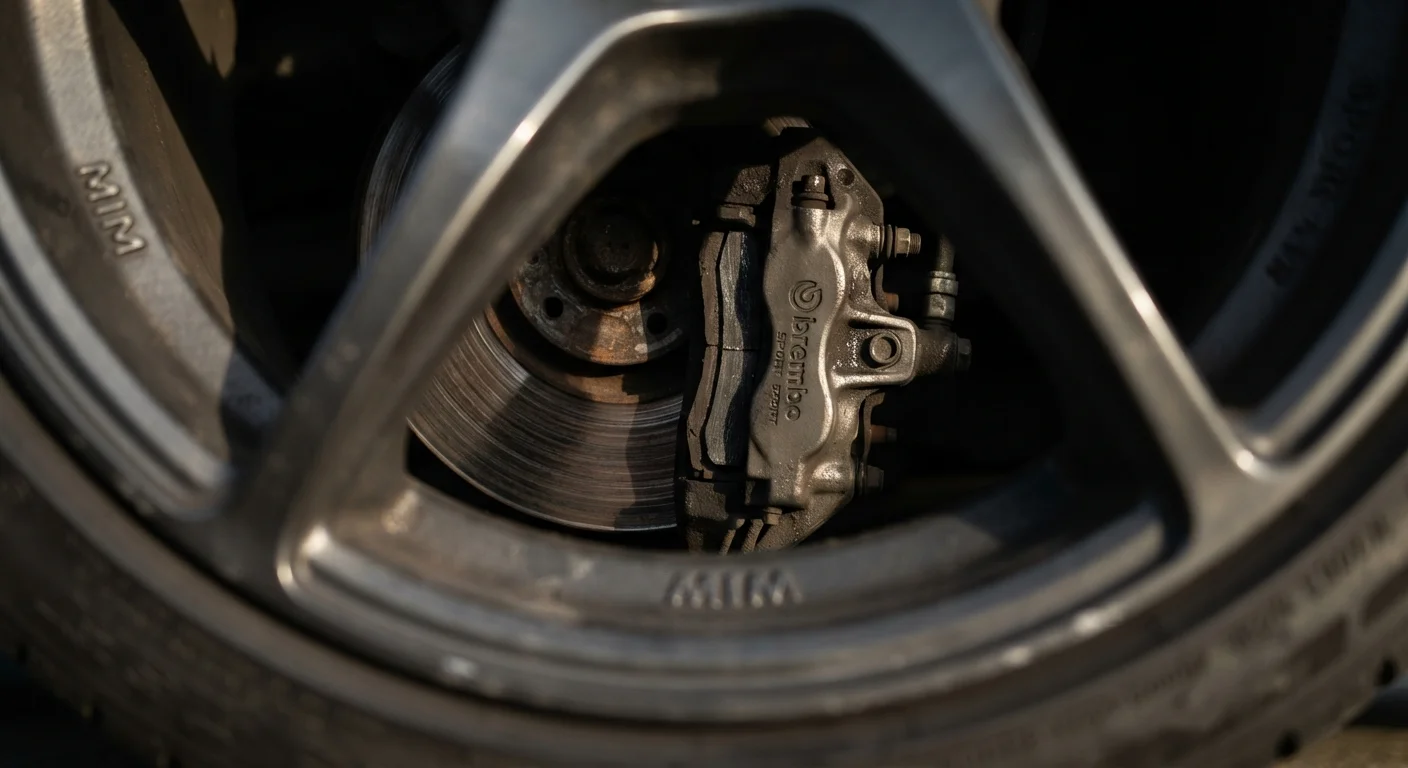
You don't need to lift the car to get a rough visual on your brake pads. On most vehicles, looking through the wheel spokes reveals the caliper (the clamp-like component) and the pad pressed against the rotor disc. If the friction material visible on the pad looks thinner than a quarter-inch, schedule an inspection.
For a more thorough look, a mechanic will remove the wheel and measure pad thickness directly. Many shops include this check during routine oil changes at no extra charge — it's worth asking. Most manufacturers recommend replacing pads at 3–4 mm of remaining material; at 2 mm or below, the pad is at end of life.
Your dashboard may also provide an alert. Many modern vehicles have an electronic wear sensor that triggers a brake warning light when pads reach a critical threshold. For a breakdown of what that and other lights mean, see our dashboard warning lights guide. Keep in mind that not all vehicles have electronic pad sensors — audible indicators and visual checks remain important regardless.
What Happens If You Wait Too Long
Delaying brake pad replacement has a predictable cost escalation. Worn pads lead to rotor scoring or warping, which often means replacing rotors in addition to pads — a repair that can cost two to three times more. In extreme cases, a brake caliper can seize, adding further expense.
Beyond cost, there is a safety dimension that shouldn't be understated. Stopping distance increases with pad wear, and that reduction in braking performance matters most in emergencies — exactly when you need maximum response from your brakes. A vehicle with critically worn pads is genuinely harder to control in a panic stop.
The good news is that brake pad replacement is one of the more straightforward and affordable maintenance items when caught early. A qualified mechanic can typically complete a standard pad replacement in under an hour per axle. If you're unsure about the current condition of your brakes, a visual inspection request at your next service appointment costs nothing and gives you useful information.
This article is for informational purposes only. Brake system maintenance involves safety-critical components — always have brake inspections and repairs performed by a qualified mechanic.