

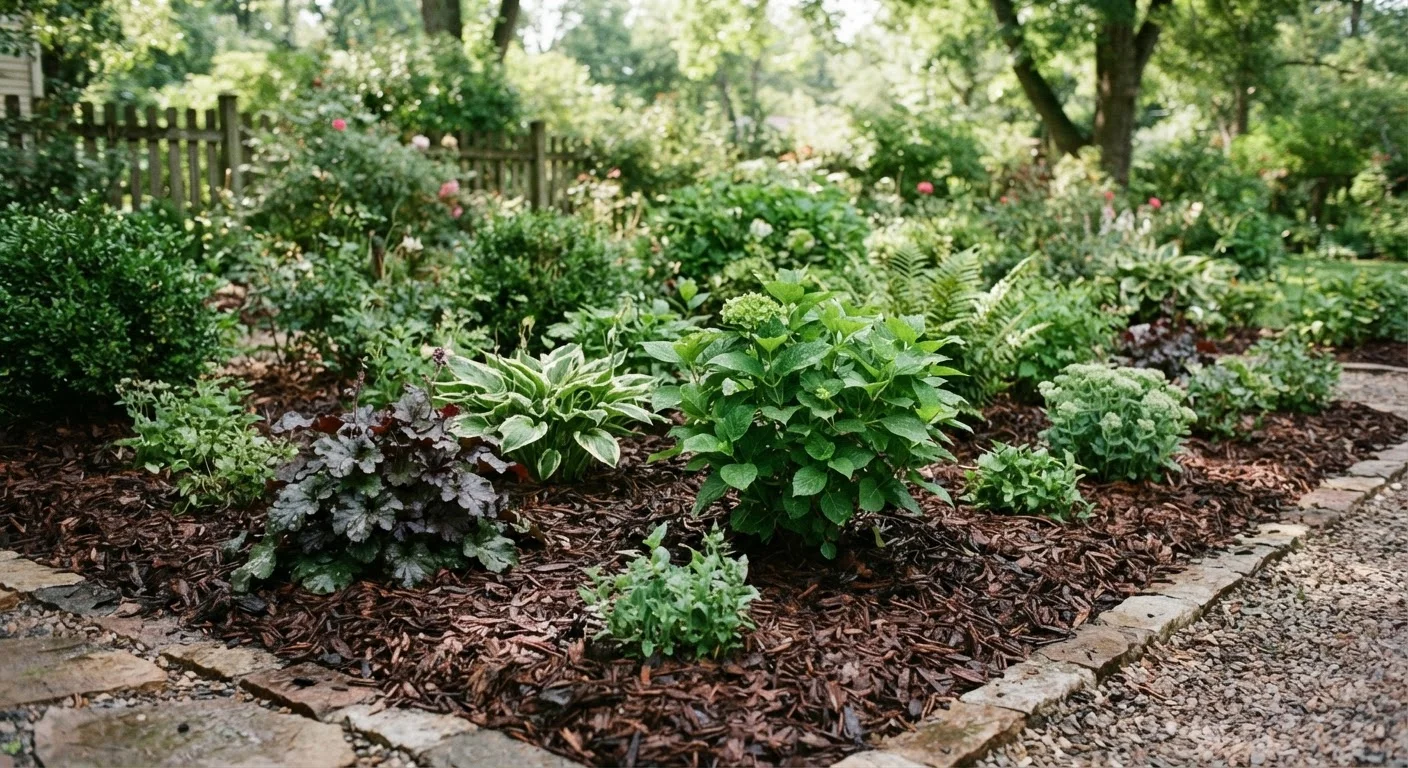
Key Takeaways
- A 2–3 inch layer of mulch reduces soil moisture loss and suppresses most annual weeds.
- Organic mulches break down over time and gradually improve soil structure and fertility.
- Piling mulch against plant stems encourages rot and pest damage — keep a gap.
- Spring and fall are the two most effective times to apply or refresh mulch.
- Free or low-cost mulch sources like shredded leaves and wood chips are often just as effective as bagged products.
What Mulch Actually Does for Your Garden
Mulch is any material spread across the soil surface around plants. The benefits are practical and well-established: it slows water evaporation from the soil, moderates soil temperature, reduces weed germination, and — if organic — adds nutrients as it breaks down. Most gardeners underestimate how much of a difference a consistent mulch layer makes compared to bare soil.
Bare soil loses moisture quickly, heats up sharply in summer, and provides an open seedbed for weed seeds. Covering it disrupts all three of those processes. A properly applied mulch layer can reduce how often you need to water, cut down on weeding time noticeably, and protect shallow plant roots from temperature swings that stress them in both summer and winter.
Understanding these mechanics helps you mulch with intention rather than just habit. For a deeper look at what's happening below the surface, see our guide on soil health and what it means for your garden.
2–3 inches
Recommended mulch depth for most garden beds
Cooperative Extension programs across the US consistently cite this depth as effective for moisture retention and weed suppression without cutting off air exchange.
Up to 70%
Reduction in soil moisture evaporation
Research from various university extension services indicates mulched soil can retain significantly more moisture than bare soil under comparable conditions.
10–25°F
Soil temperature moderation in summer
Studies have shown mulched soil can remain considerably cooler than bare soil on hot days, reducing heat stress on shallow-rooted plants.
Organic vs. Inorganic Mulch: Know the Difference
The most important distinction in mulching is between organic and inorganic types. Organic mulches — wood chips, straw, shredded leaves, bark, grass clippings — decompose over time. That breakdown is a feature, not a bug: it feeds soil organisms and gradually improves soil structure. Inorganic mulches — gravel, crushed rock, landscape fabric, rubber — do not break down. They offer long-lasting coverage and are useful in specific situations like paths or drought-prone areas, but they don't improve soil biology.
For most garden beds growing perennials, vegetables, or shrubs, organic mulch is the more versatile and soil-friendly choice. Inorganic options work better where permanence matters more than soil nutrition — around ornamental features or in areas where replanting is rare.
When choosing between mulch types for a vegetable bed, lean toward materials that break down in one season — like straw or shredded leaves. You'll be turning the bed over anyway, and the decomposed mulch becomes part of your soil improvement.
Fast-decomposing organic mulches deliver the most soil benefit in beds that are reworked annually, adding organic matter rather than requiring removal before planting.
If you're mulching around newly planted trees or shrubs, go a little wider than feels necessary — a 3-to-4-foot diameter ring does more for root establishment than a tight collar around the base.
Roots extend well beyond the visible canopy of young plants. A wider mulch zone keeps the whole root zone cooler and moister, supporting stronger early establishment.
Common Mulch Types and When to Use Each
Not every mulch suits every situation. Here's a plain-language breakdown of the most common types:
- Wood chips and bark: Long-lasting, widely available, and good for shrub borders and tree bases. They break down slowly, so they don't need refreshing as often. Avoid fine wood chips dug into soil — on the surface they're fine, but incorporated they can temporarily tie up nitrogen as they decompose.
- Shredded leaves: One of the best free mulches available in fall. They break down relatively quickly, feed soil life, and are ideal for vegetable beds and perennial borders. Run them through a mower first to prevent matting.
- Straw: Lightweight and useful in vegetable gardens. It breaks down in a season and adds organic matter. Avoid hay, which typically contains seeds that become weeds.
- Grass clippings: Apply in thin layers only — thick layers mat down, exclude air, and can smell. Best composted first. See our guide on composting at home without the smell or the fuss for how to process them.
- Gravel or stone: Good around drought-tolerant plants, succulents, or in Mediterranean-style plantings. Doesn't improve soil but provides year-round coverage without breakdown.
If you're relying on fertilizer alongside your mulch, the difference between organic and synthetic fertilisers is worth understanding — some pairings work better than others.
When and How to Apply Mulch
Spring and fall are the two prime times to mulch. In spring, apply after the soil has had a chance to warm up — mulching over cold, wet soil in early spring can delay soil warming and slow plant growth. In fall, mulch protects roots from freeze-thaw cycles and can be topped up or refreshed ahead of winter. For a broader fall garden plan, our end-of-season garden checklist covers what to do alongside mulching.
Application is straightforward. Aim for a 2–3 inch layer across the bed surface. Any thinner and you lose most of the weed-suppressing benefit; any thicker and you risk cutting off air and water exchange. Always leave a gap of several inches between the mulch and any plant stem or trunk — contact with stems traps moisture and encourages rot and pest problems.
Water the bed before applying mulch if the soil is dry, not after — mulch over dry soil traps that dryness in. Pull obvious weeds before mulching; mulch suppresses germination but doesn't kill established weeds already rooted below.
Mulch After Watering, Not Before Dry Spells
Apply mulch when the soil is already moist — either after rain or after you've watered thoroughly. Mulch locks in whatever moisture is already present, so starting with dry soil means you're preserving dryness. A good rule: if it hasn't rained in a week and you haven't watered, do that first and mulch the following day.
Mistakes That Undermine Your Mulching Effort
Most mulching problems come from a handful of common errors. Being aware of them saves time and plant losses:
- Volcano mulching: Piling mulch in a cone shape against tree trunks or shrub stems. This is one of the most common and damaging practices. It rots bark, encourages pests, and can kill established trees over time. Keep mulch flat and pulled back from the base of every plant.
- Mulching over weeds: It buries them temporarily, but established weeds push through and are harder to remove later. Clear first, then mulch.
- Using the wrong depth: Too thin (under an inch) and it does little. Too thick (over 4 inches) and it can repel water rather than retain it, especially with fine-textured materials.
- Ignoring refresh cycles: Organic mulch breaks down. Check it each spring and top up where it's thinned out below 2 inches.
Some widely repeated mulching advice is worth questioning. Our piece on garden myths that keep homeowners from getting results addresses a few mulching-related misconceptions directly.
Keeping Costs Down on Mulch
Mulch doesn't have to cost much. Several reliable sources are free or very low-cost:
- Shredded leaves from your own yard are among the best mulches available — run them over with a lawn mower and use them immediately in fall.
- Municipal wood chip programs: Many towns and cities offer free wood chips from tree crews. Check with your local public works or parks department.
- Tree service companies sometimes offer chips at no charge when they're working nearby — they'd otherwise have to haul them away.
- Cardboard under mulch: A layer of plain cardboard (tape and staples removed) under wood chips makes an excellent weed barrier and breaks down in a season. It's free if you save boxes from deliveries.
Bagged mulch from garden centers works perfectly well, but the costs add up for larger areas. Buying in bulk by the cubic yard from a landscape supplier is typically far cheaper per square foot covered than bags. For more ways to spend wisely in the garden, see our guide on keeping a garden on a tight budget.