

Key Takeaways
- A well-stocked pantry of staples like beans, oats, and canned vegetables dramatically lowers weekly grocery costs.
- Planning even two or three meals in advance reduces impulse spending and food waste significantly.
- Frozen and canned produce deliver comparable nutrition to fresh at a fraction of the cost.
- Reading nutrition labels helps you spot hidden sodium, sugar, and unhealthy fats in budget foods.
- Affordable eating is a skill — small, consistent habits compound into real savings and better health.
Why Affordable Eating Is Harder Than It Looks
Food prices have risen sharply in recent years, and many people feel caught between eating well and staying within budget. Processed convenience foods are often heavily marketed at low price points, while fresh produce and lean proteins can seem out of reach. But the challenge goes beyond price tags — it's also about time, knowledge, and habit.
Most people weren't taught how to cook from scratch, read a nutrition label, or plan a week of meals efficiently. The result is a cycle of last-minute grocery trips, wasted food, and takeout spending that quietly drains budgets. This guide addresses all of it — from pantry strategy to shopping habits to understanding nutrition trade-offs — so you have one clear, practical resource to return to. For a deeper look at the underlying nutrition science, see our comprehensive nutrition guide.
Start With One Habit, Not Ten
It's tempting to overhaul your grocery list, meal plan, and cooking routine all at once — but that approach tends to collapse quickly. Pick one strategy from this guide and practice it for two weeks before adding another. Consistency with a single habit will outperform a perfect system you abandon after day three.
Build Your Budget Pantry First
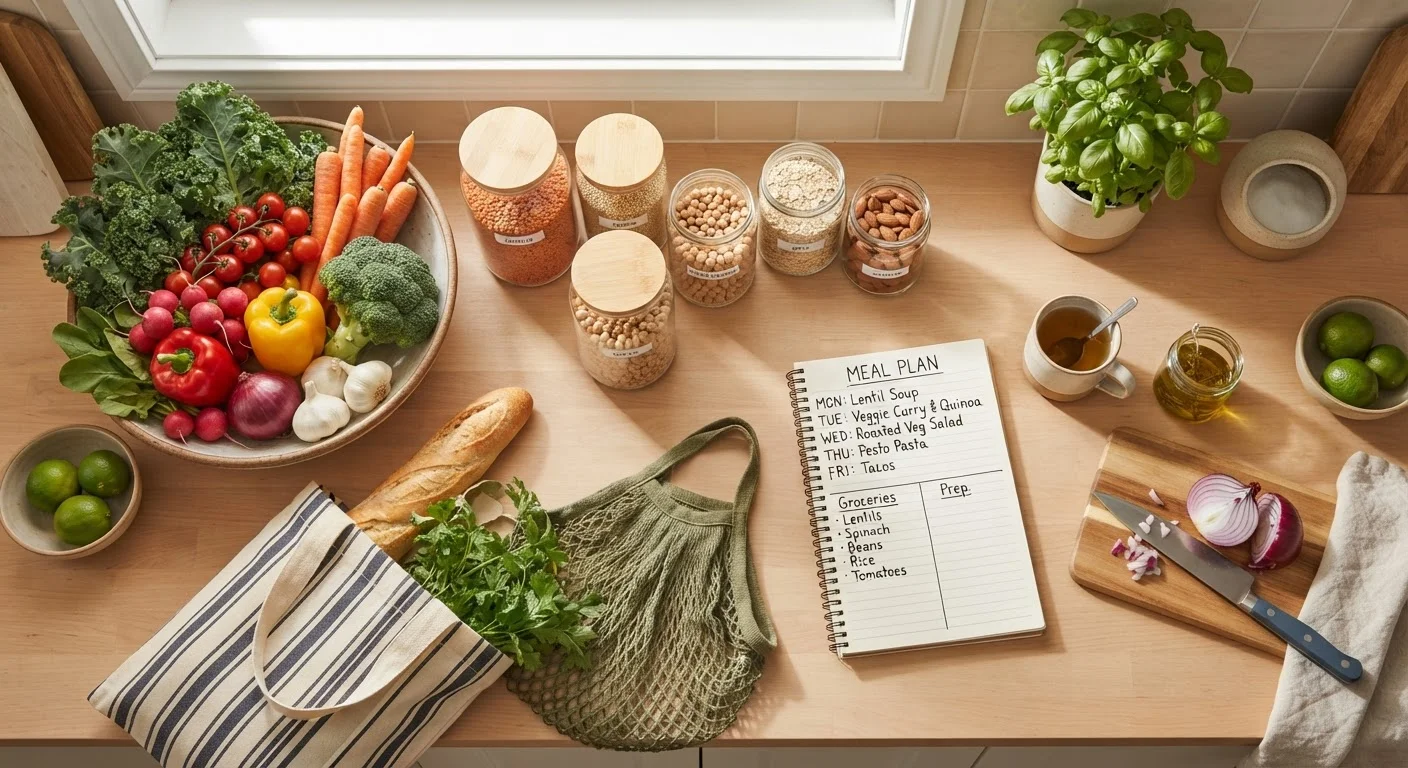
A reliable pantry is the foundation of affordable eating. When your shelves hold a core set of versatile, shelf-stable ingredients, you can build hundreds of different meals without a special shopping trip each time.
- Dried or canned legumes (lentils, black beans, chickpeas) — among the most affordable protein and fiber sources available
- Whole grains (oats, brown rice, whole wheat pasta) — filling, nutritious, and cheap per serving
- Canned tomatoes and broth — the backbone of soups, stews, and sauces
- Cooking oils, vinegars, and spices — small investments that make simple food taste good
- Frozen vegetables — nutritionally comparable to fresh and far less likely to go to waste
Research consistently shows that frozen and canned vegetables retain most of their nutrients because they are processed shortly after harvest. This makes them a smart, economical choice — not a compromise. Our weekly grocery nutrition checklist can help you cover all your nutritional bases at the supermarket.
~$1,500
Average annual U.S. household food waste cost
USDA estimates suggest American households discard roughly 30–40% of the food they buy, translating to significant financial loss per year.
3–4x
Cost difference: dried vs. canned beans
Dried legumes typically cost significantly less per serving than pre-cooked canned equivalents, while delivering equivalent nutrition.
~$0.15
Average cost per egg (U.S. historical average)
Eggs have historically been one of the most affordable high-protein foods per gram of protein in the U.S. grocery market.
Shop Smarter, Not Just Cheaper
Cutting your food bill doesn't mean buying the lowest-priced item in every category. It means making deliberate choices that deliver the most nutrition per dollar spent.
Practical Shopping Habits
- Shop with a list. Studies consistently show that unplanned grocery trips result in more impulse purchases and higher spending. Even a rough list keeps you on track.
- Compare unit prices, not package prices. The cost per ounce or per serving is what matters — larger packages aren't always better value.
- Buy seasonal produce. Fruits and vegetables in season are typically less expensive and better quality than out-of-season alternatives.
- Reduce meat frequency. Meat is often the most expensive item on any grocery list. Replacing two or three meat-centered meals per week with legume- or egg-based alternatives can produce meaningful savings.
Learning to read a nutrition label also helps you identify when a budget product trades nutrition for price — particularly with sodium content and added sugars in inexpensive packaged foods.
Meal Planning Without the Overwhelm
You don't need a rigid, color-coded spreadsheet. Effective meal planning can be as simple as deciding on three dinner meals at the start of each week and buying only what those meals require.
A Simple Framework
- Audit what you already have. Check your pantry and fridge before writing a grocery list. Most households have the ingredients for at least one or two meals already on hand.
- Plan for flexibility. Choose recipes that share ingredients — a bag of spinach used in Monday's pasta can go into Wednesday's eggs or Friday's soup.
- Batch cook once or twice a week. Cooking a large pot of grains or a tray of roasted vegetables takes about the same effort as cooking a single serving and gives you building blocks for multiple meals.
- Use leftovers intentionally. Dinner leftovers reframed as tomorrow's lunch is one of the most underused budget strategies available.
For guidance on portion awareness without calorie counting, including visual cues that work without any apps, we have a dedicated resource. You can also explore building a balanced plate without counting anything for a practical visual approach to meal balance.
Cook a double batch of grains or legumes every time you make them — the extra portions are tomorrow's fastest possible meal foundation.
Batch cooking is consistently cited by nutrition educators as one of the highest-leverage habits for reducing both food waste and weeknight cooking effort.
When in doubt at the store, choose ingredients you can use in at least three different ways — versatility is the real measure of grocery value.
Versatile staples like canned tomatoes, eggs, or oats reduce the risk of single-use purchases that drive up costs without expanding your meal repertoire.
Nutrition Trade-Offs Worth Knowing
Budget eating does involve some real trade-offs — and understanding them helps you make informed decisions rather than feeling blindsided.
Where Budget Foods Can Fall Short
- Sodium in canned goods: Many canned beans, vegetables, and soups are high in sodium. Rinsing canned beans removes roughly 40% of the added sodium. Choosing low-sodium varieties when available is also effective.
- Added sugar in cheap breakfast foods: Many affordable cereals and flavored oatmeals contain significant added sugar. Plain oats or unsweetened cereals are nearly always cheaper per serving and more nutritious.
- Ultra-processed snacks: Highly processed snack foods are inexpensive and filling short-term but often deliver little fiber, protein, or micronutrients. Pairing them with a protein source or fruit improves nutritional value.
Where Budget Foods Perform Well
- Eggs remain an exceptional value — high in protein, versatile, and affordable in most U.S. markets.
- Dried lentils cook in under 30 minutes without soaking and deliver protein, iron, and fiber at very low cost.
- Bananas, cabbage, carrots, and sweet potatoes consistently rank among the most affordable produce options per serving of nutrition delivered.
For unfamiliar nutrition terms that appear on labels or in recipes, our everyday nutrition glossary defines them in plain language. And if you want to explore a more plant-forward approach that naturally aligns with budget eating, see our introduction to plant-based eating.
Watch for Hidden Sodium in Budget Staples
Canned soups, flavored rice packets, and processed sauces often contain very high sodium levels — sometimes more than half the recommended daily intake in a single serving. If you or someone in your household manages blood pressure or kidney health, check labels carefully and rinse canned goods where possible. When in doubt, speak with a healthcare provider or registered dietitian about appropriate sodium intake for your situation.
Putting It All Together
Affordable eating isn't a single trick — it's a set of layered habits that reinforce each other. A stocked pantry makes meal planning easier. Meal planning makes shopping more efficient. Smarter shopping reduces waste. Less waste means the food budget stretches further.
Start with one change this week: audit your pantry, add three staple ingredients to your next grocery list, or plan just two dinners in advance. Small moves compound over time. Our guide on small nutrition habits that stick shows how incremental steps lead to lasting change without requiring a complete lifestyle overhaul.
If you want a fuller picture of eating well without overspending, Healthy Eating on a Tight Budget covers pantry staples and planning principles in even more depth. And for a grounding in overall nutrition science, the Nutrition from Scratch guide is a reliable starting point.
This article is for general informational and educational purposes only and does not constitute medical or dietary advice. Please consult a qualified healthcare professional or registered dietitian for guidance tailored to your individual health needs.