

Key Takeaways
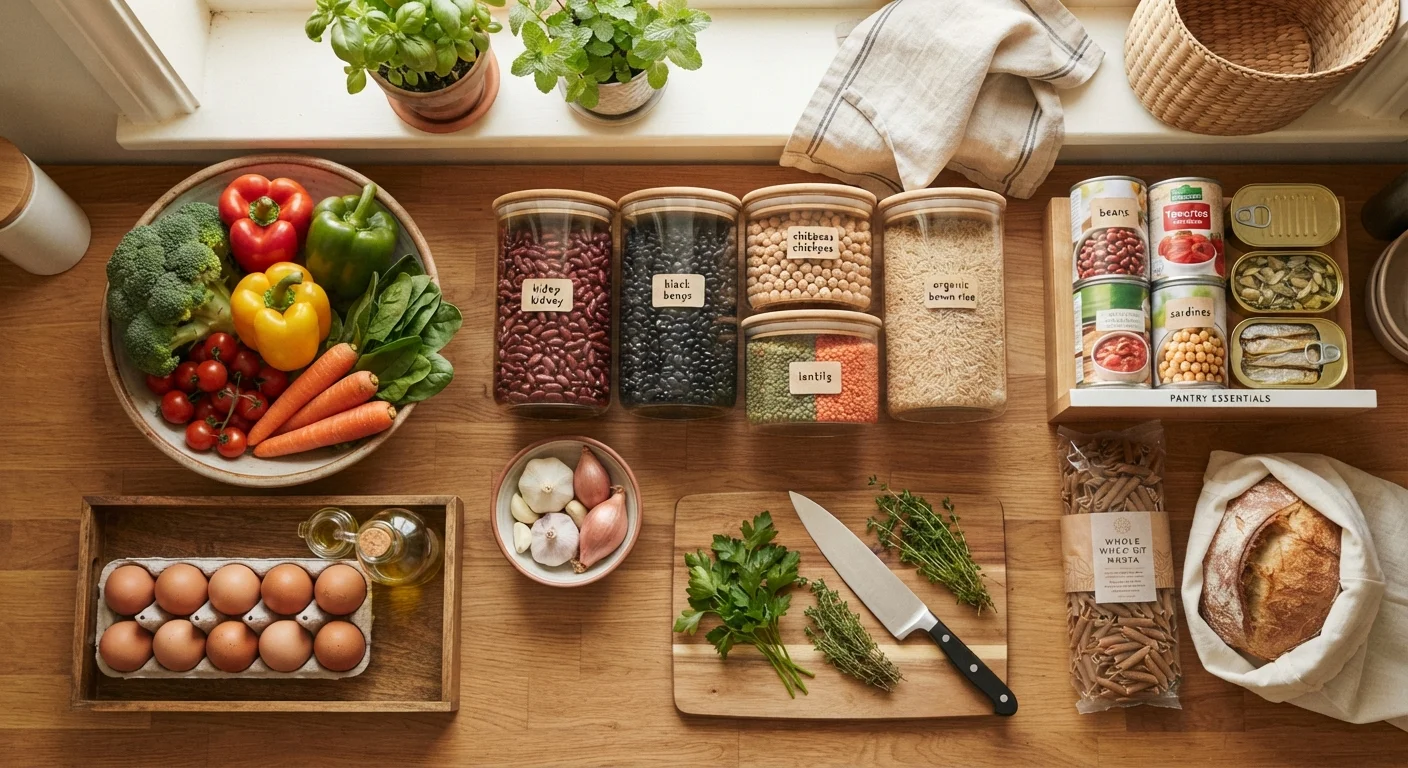
- A handful of versatile pantry staples — beans, eggs, grains, canned vegetables — can anchor nutritious meals all week.
- Meal planning before you shop consistently reduces both food waste and impulse spending.
- Protein doesn't have to be expensive; plant-based sources like lentils and eggs deliver strong nutritional value at low cost.
- Cooking in batches saves time and money by turning one cooking session into multiple ready-to-eat meals.
- Frozen vegetables are nutritionally comparable to fresh and often cost significantly less per serving.
Why Budget Eating Doesn't Mean Eating Poorly
Many people assume that eating nutritiously requires spending more. In reality, some of the most nutrient-dense foods available — dried lentils, eggs, oats, canned tomatoes, frozen spinach — are consistently among the most affordable items in any grocery store. The challenge isn't access to cheap nutritious food; it's knowing which foods punch above their nutritional weight and how to use them well.
Research published by the USDA and nutrition researchers consistently shows that plant-heavy diets built around whole grains, legumes, and seasonal produce tend to cost less than diets centered on processed foods or frequent meat. That doesn't mean you need to go fully plant-based, but shifting even a few meals per week toward these foundations makes a meaningful difference both nutritionally and financially. For a broader overview of where to start, see a complete starting point for budget eating.
Plan Before You Shop — Every Time
Planning isn't just about saving money; it's about eating better. When you arrive at the store without a list, you're more likely to buy based on appetite and marketing rather than nutritional intent. A written plan — even a rough one — anchors your shopping to what you'll actually use.
The most effective approach is to check what's already in your fridge and pantry before writing your list. This prevents duplicate buying and helps you spot ingredients that need to be used up. Then build meals around those existing items first, supplementing with a short list of fresh or frozen additions. For a step-by-step version of this habit, run through this pre-shop checklist before your next store visit.
Consistency matters more than perfection here. Even an imperfect plan that accounts for four out of seven dinners dramatically reduces the chance of expensive last-minute takeout or wasted produce. See meal planning principles that actually work for systems that hold up over time.
Make Your Staples Work Harder
A stocked pantry is one of the most practical tools for budget nutrition. When your shelves hold a reliable rotation of versatile staples, you can assemble a solid meal from whatever fresh items are on hand — reducing waste and last-minute spending. Staple pantry ingredients that keep food costs low all month offers a practical reference list worth bookmarking.
The core categories to keep stocked include: a whole grain (brown rice, oats, or whole wheat pasta), at least two forms of protein (dried or canned beans, lentils, eggs, canned fish), an acid (vinegar or canned tomatoes), an allium (onions or garlic), and a cooking fat. These five categories alone can produce dozens of distinct, nourishing meals. Eggs in particular deserve a spotlight — eggs work well far beyond breakfast and remain one of the most affordable complete protein sources available.
Don't overlook frozen vegetables. They're picked and frozen at peak ripeness, meaning their vitamin content is often comparable to fresh produce — sometimes higher than fresh items that have been stored for several days. A bag of frozen peas, edamame, or mixed vegetables adds color, fiber, and micronutrients to a meal for very little cost. For more ideas on building nutritionally balanced plates without overcomplicating things, see building a balanced plate without counting anything.
30–40%
Food supply lost to waste at consumer level
According to the USDA, American households account for a substantial share of total food waste — representing real dollars discarded weekly.
$1.50
Approximate cost per serving of cooked dried lentils
USDA food cost data consistently shows dried legumes as among the most affordable sources of plant protein and dietary fiber available in US grocery stores.
3–4x
Cost difference: convenience meals vs. home cooking
General cost comparisons, including research from food economists, suggest home-cooked meals cost significantly less per serving than ready-made or restaurant alternatives.
Reduce Waste, Stretch Every Dollar
Food waste is one of the most overlooked budget problems. According to the USDA, American households throw away an estimated 30–40% of the food supply, much of it at the consumer level. Every item you discard is money you already spent but didn't benefit from.
Batch cooking — preparing larger quantities of a base ingredient like grains, roasted vegetables, or a pot of beans — dramatically reduces both waste and the temptation to order out on tired weeknights. For example, a single whole chicken can stretch across four different dinners with planned cooking and portioning. The same principle applies to vegetarian proteins: a batch of cooked lentils can become soup, a grain bowl topping, or a filling for wraps across several days.
It also helps to know which foods keep longest and plan accordingly. Use delicate greens and fresh fish early in the week; save heartier root vegetables, frozen items, and canned goods for later. This simple rotation ensures that the most perishable items get eaten first. For structured guidance on reducing household food waste, these practical habits help cut waste while keeping meals interesting.
This article provides general nutrition and food budgeting information for educational purposes. It is not medical or dietary advice. Individuals with specific health conditions or dietary needs should consult a registered dietitian or qualified healthcare professional.