

Key Takeaways
- A small set of versatile pantry staples — beans, grains, eggs, frozen vegetables — forms the foundation of affordable eating.
- Meal planning before you shop is one of the most effective ways to reduce food waste and overspending.
- Budget eating does not require sacrificing nutrition; affordable foods can be genuinely nourishing.
- Home cooking, even at a basic skill level, consistently reduces food costs compared to convenience options.
- Skipping meals to save money often backfires — it can lead to overeating later and lower energy overall.
Start here
Why Budget Eating Is a Learnable Skill
Next
The Affordable Pantry: What to Stock First
Then
Smart Shopping Without Overwhelm
Apply it
Simple Meal Planning That Actually Works
Go deeper
Nutrition on a Budget: What Matters Most
Why Budget Eating Is a Learnable Skill
Eating affordably is less about willpower and more about having a working system. Most people overspend on food not because they make bad decisions, but because they shop without a plan — picking up items on impulse, letting produce go to waste, or defaulting to convenience options when energy runs low.
The good news is that the core habits behind budget eating are straightforward to learn. They build on each other: once you know what to stock, shopping becomes faster; once you plan meals, cooking becomes less stressful. This guide is designed to give you that foundation from the ground up, without requiring culinary training or hours of prep time.
For a broader resource covering everything from shopping strategy to nutrition trade-offs, see our comprehensive affordable eating guide.
Start With One Habit, Not All of Them
If you are new to budget eating, resist the urge to overhaul everything at once. Pick one habit — writing a shopping list, or cooking one more meal at home per week — and practice it until it feels automatic. Small, consistent changes compound over time far more reliably than big, unsustainable overhauls.
The Affordable Pantry: What to Stock First
A well-chosen pantry is the single most useful tool in budget eating. When you have the right staples on hand, you can build a meal from almost nothing — and you spend less time making last-minute, expensive decisions.
Pantry staples
Non-perishable or long-lasting foods you keep on hand as the base of many meals — things like dried beans, oats, canned goods, and cooking oil.
Unit price
The cost of a product per standard measure (per ounce, per pound, etc.), which lets you compare value between different package sizes accurately.
Meal planning
Deciding in advance what you will eat for a set period — typically a week — before you shop, so you buy only what you actually need.
Satiety
The feeling of fullness and satisfaction after eating. Foods high in protein and fiber tend to produce stronger satiety, helping you feel satisfied for longer.
Legumes
A food family that includes beans, lentils, chickpeas, and peas — all are high in protein and fiber and are among the most affordable foods widely available.
Prioritize items that are cheap per serving, nutritionally solid, and flexible enough to use in many dishes:
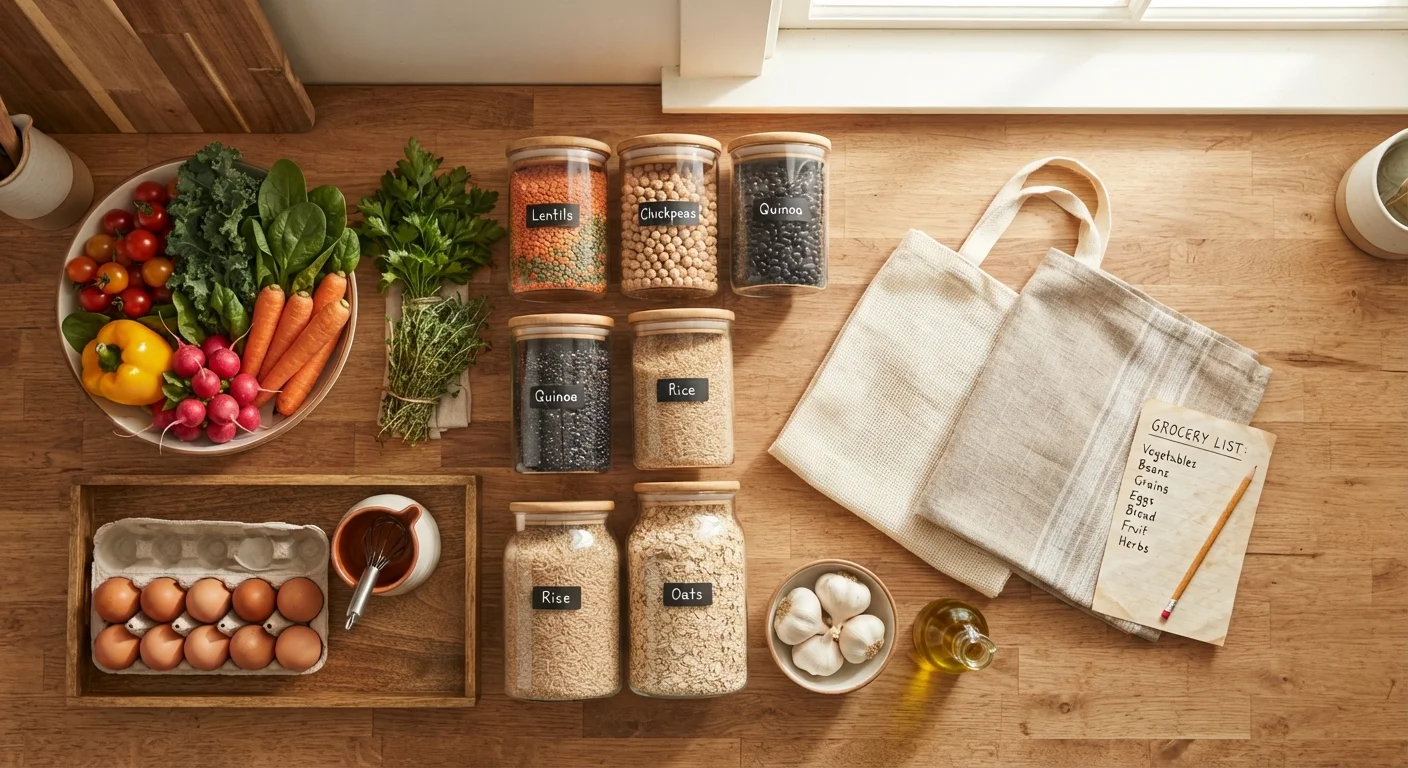
- Dried or canned legumes — beans, lentils, and chickpeas are protein-rich and among the least expensive foods available.
- Whole grains — oats, brown rice, and barley are filling, affordable, and store well.
- Eggs — a versatile, low-cost protein that works at any meal. Eggs go well beyond breakfast when you know a few simple preparations.
- Frozen vegetables — nutritionally comparable to fresh but with a much longer shelf life, reducing waste.
- Canned tomatoes and fish — affordable bases for sauces, soups, and quick protein additions.
- Cooking fats and basic spices — oil, salt, pepper, garlic, and a few dried herbs transform plain ingredients into actual meals.
You do not need to stock everything at once. Pick two or three items from each category and build from there over several shopping trips.
Smart Shopping Without Overwhelm
Walking into a grocery store without a plan is one of the easiest ways to overspend. A few straightforward habits make a real difference:
- Shop with a list — write it based on the meals you intend to make that week, not based on what looks appealing in the moment.
- Compare cost per unit, not sticker price — a larger package is not always cheaper per serving; check the unit price on the shelf label.
- Generic and store-brand products are often manufactured to the same standards as name-brand alternatives, at lower prices.
- Seasonal produce costs less and is typically fresher. When fresh vegetables are expensive or inconvenient, frozen is a practical substitute.
- Avoid shopping hungry — it is a well-documented driver of impulse purchases.
If you are also navigating a specific dietary pattern — vegetarian, gluten-free, or omnivore — costs and trade-offs vary. See how budget eating compares across different diets for a practical breakdown.
Simple Meal Planning That Actually Works
Meal planning does not need to be elaborate. At its most basic, it means deciding what you will eat for the week before you shop — then buying only what you need for those meals.
A workable approach for beginners:
- Choose three to four dinners for the week. Pick recipes that share ingredients to minimize waste.
- Plan for leftovers. Cooking a larger portion once means free meals later in the week.
- Keep lunches simple — leftovers, grain salads, or egg-based dishes are fast and inexpensive.
- Have two or three reliable breakfasts you rotate through (oatmeal, eggs, or whole-grain toast with a protein).
If you are new to cooking at home, start with the simplest possible meals and build confidence gradually. This introduction to home cooking is a helpful starting point. For quick meal ideas when you need inspiration, browse easy meal ideas organized for busy people on a budget.
Nutrition on a Budget: What Matters Most
A common worry about budget eating is that cheaper food means poorer nutrition. In practice, many of the most affordable foods — legumes, eggs, oats, frozen vegetables, canned fish — are genuinely nutritious. The real risk is not the cost of healthy food; it is building meals entirely around highly processed, low-nutrient options because they feel easier or cheaper in the moment.
A few practical nutrition principles worth keeping in mind:
- Prioritize protein at each meal. It supports satiety (feeling full) and helps prevent overeating later. Affordable sources include eggs, beans, lentils, and canned fish.
- Include vegetables daily — frozen counts. Even a small portion at each meal makes a meaningful difference over time.
- Whole grains over refined where possible — oats and brown rice offer more fiber and keep you fuller longer than white bread or instant noodles alone.
- Avoid skipping meals to cut costs. The trade-offs are worth understanding before making it a regular habit.
For a deeper look at eating nutritiously on a limited budget, see practical strategies for making every meal count. And if you are curious about reducing meat costs, plant-based eating is one practical avenue worth exploring.
This article provides general nutrition and food budgeting information for educational purposes only. It is not a substitute for advice from a qualified healthcare or nutrition professional. If you have specific dietary needs or health concerns, consult a registered dietitian or your healthcare provider.