

Key Takeaways
- Eggs are among the most affordable high-protein foods available at most grocery stores.
- They work equally well in lunch, dinner, and snack applications beyond the breakfast plate.
- Simple egg-based meals can be assembled in under 20 minutes with common pantry ingredients.
- Pairing eggs with vegetables, grains, or legumes stretches their nutritional value further.
- Learning a few core egg techniques — poaching, baking, frying — opens up dozens of meal possibilities.
Why Eggs Deserve a Spot at Every Meal
If there's one ingredient that punches well above its price tag, it's the humble egg. Each one delivers a complete protein — meaning it contains all nine essential amino acids — along with vitamins B12 and D, choline, and healthy fats. For budget-conscious households, that nutritional density per dollar is hard to beat. Our guide to affordable protein sources breaks down exactly how eggs compare to other options.
The real untapped opportunity with eggs isn't breakfast — it's every other meal of the day. Most home cooks default to scrambled or fried eggs in the morning, then overlook eggs entirely at lunch and dinner. That's a missed chance to save time, reduce food costs, and add variety to a weekly meal rotation. The ideas below are designed to be approachable, require minimal equipment, and use ingredients you likely already have on hand.
One Technique, Many Meals
Learning to poach, bake, and soft-boil eggs confidently opens up far more meal options than scrambling alone. Each technique takes less than 15 minutes to master and applies to a wide range of dishes. Practice one new method per week and you'll quickly expand your egg-based repertoire without any specialized equipment.
8 Egg Meal Ideas for Any Hour
Shakshuka for Lunch or Dinner
Shakshuka is a North African and Middle Eastern dish of eggs poached directly in a spiced tomato and pepper sauce. Use a can of crushed tomatoes, one bell pepper, onion, garlic, and spices like cumin and paprika. Crack eggs into the simmering sauce, cover the pan, and cook until the whites are just set. Serve with bread or over a grain like farro or bulgur for a complete, filling meal.
One pan, a can of tomatoes, and a few eggs produce a deeply satisfying dinner in under 25 minutes.
Frittata as a Flexible Fridge Cleanout
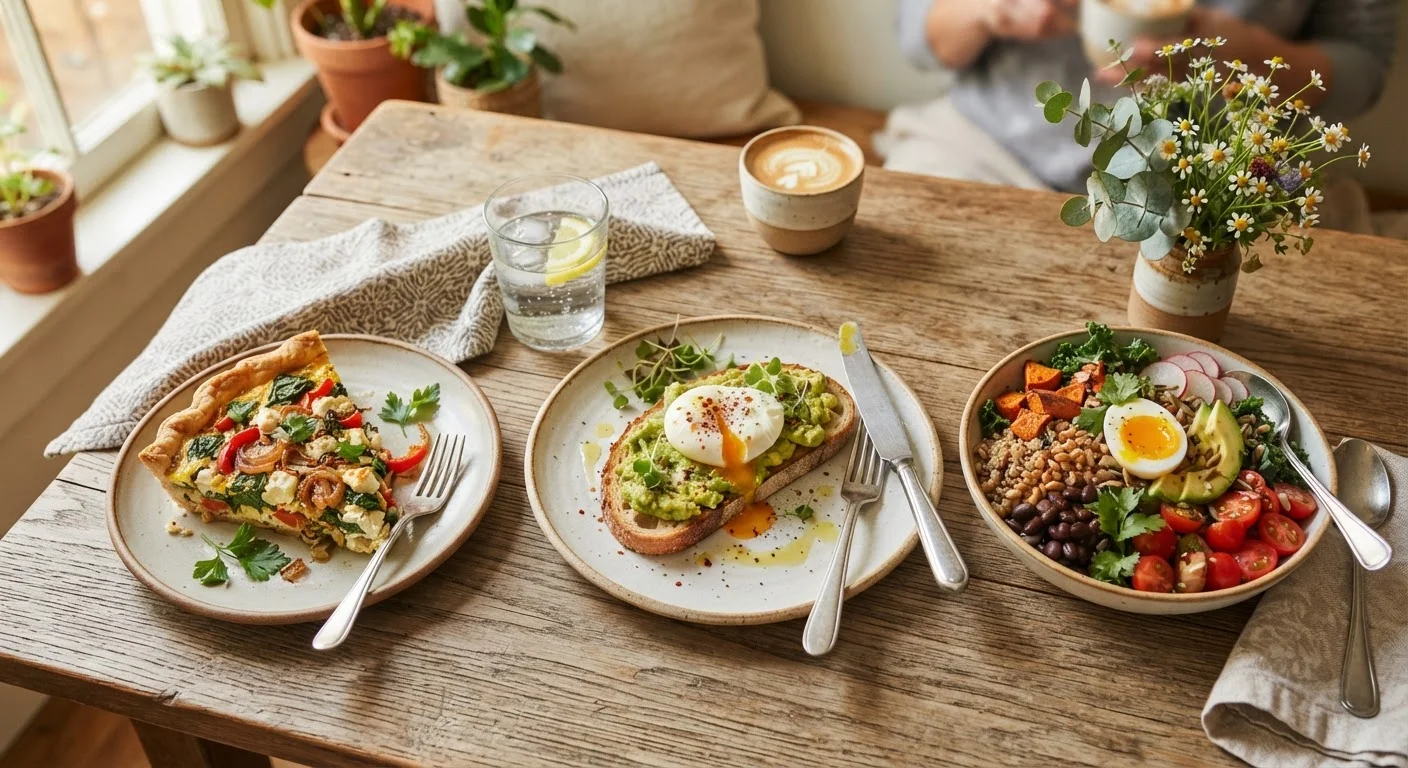
A frittata is essentially an open-faced omelet that finishes in the oven. It's ideal for using up whatever vegetables, cheese, or cooked grains are sitting in your refrigerator. Whisk eggs with a splash of milk, pour over sautéed vegetables in an oven-safe skillet, and bake at 375°F until puffed and set. It slices cleanly, reheats well, and works at any meal of the day.
A frittata is one of the most practical ways to reduce food waste while keeping meals interesting.
Grain Bowl with a Soft-Boiled Egg
A bowl of cooked grains — rice, quinoa, farro, or barley — topped with roasted or raw vegetables and a soft-boiled egg is a reliable, nourishing lunch. Soft-boil eggs by placing them in boiling water for exactly 6 to 7 minutes, then transfer to an ice bath. The jammy yolk acts as a sauce that ties the bowl together without needing a heavy dressing.
A soft-boiled egg's rich yolk replaces the need for calorie-heavy sauces on a grain bowl.
Egg Fried Rice
Leftover rice is practically made for egg fried rice. Heat a little oil in a wide pan, add cold rice and your choice of vegetables, then push everything to one side and scramble eggs directly in the pan before folding them through. A splash of soy sauce and a dash of sesame oil (if you have it) complete the dish. This takes about 10 minutes and uses ingredients most households already keep stocked.
Cold leftover rice and eggs are all you need for a fast, satisfying dinner that costs very little.
Baked Eggs with Beans and Greens
Combine canned white beans, a handful of leafy greens like spinach or kale, and a small amount of broth or tomato sauce in an oven-safe dish. Make small wells in the mixture, crack an egg into each, and bake at 400°F for about 12 to 15 minutes. The result is hearty, protein-rich, and deeply warming — a dinner that costs a fraction of takeout and comes together with pantry staples.
Beans and eggs together provide complementary proteins that make for a nutritionally complete dinner.
Egg Salad as a Versatile Spread
Hard-boiled eggs mashed with a small amount of mayonnaise, mustard, and seasoning produce an egg salad that works as a sandwich filling, a topping for crackers, or stuffed into lettuce wraps. It keeps refrigerated for a few days, making it a practical option for quick lunches throughout the week. Adding celery, pickle relish, or fresh herbs keeps the flavor from feeling repetitive.
Egg salad prepared in bulk delivers several days' worth of quick, affordable lunches from a single effort.
Spanish-Style Tortilla
A Spanish tortilla is a thick potato-and-egg omelet cooked slowly on the stovetop. Thinly slice potatoes and cook them gently in a little olive oil until tender, then combine with beaten eggs and cook over low heat, flipping once. It's filling, simple, and tastes just as good at room temperature as it does warm — making it a smart option for packed lunches or meal prep.
Spanish tortilla holds well at room temperature, making it one of the most travel-friendly egg preparations.
Deviled Eggs as a Protein-Rich Snack
Deviled eggs — halved hard-boiled eggs filled with a mixture of yolk, mustard, and a small amount of mayonnaise — are one of the most portable and satisfying protein snacks you can prepare. They require no special equipment and can be customized with paprika, hot sauce, or chopped herbs. Preparing a batch of hard-boiled eggs at the start of the week makes this snack available in minutes whenever hunger strikes.
A batch of deviled eggs prepared on Sunday provides a ready protein snack for the entire week.
On Egg Storage and Food Safety
In the United States, commercially sold eggs are washed and refrigerated, and should be stored in the refrigerator and used within three to five weeks of purchase. Hard-boiled eggs should be refrigerated and consumed within one week. Pregnant individuals, young children, older adults, and people with weakened immune systems should avoid undercooked eggs — consult a healthcare provider for guidance tailored to your situation.
Making Eggs Work Harder for Your Budget
Eggs are most cost-effective when they anchor a meal rather than sit alongside an expensive protein. Think of them as the main event — supported by whatever vegetables, grains, or pantry staples you have available. A bag of frozen spinach, a can of white beans, or leftover roasted vegetables can transform a simple egg dish into a satisfying, complete meal.
If you're building out a broader strategy for eating affordably, our complete starting point for budget eating covers meal planning and shopping principles that complement an egg-forward routine. And for overall nutrition guidance, the practical strategies in this nutrition guide can help you fill any gaps on a limited grocery spend.
This article is for general informational purposes only and does not constitute medical or dietary advice. If you have specific health conditions or nutritional needs, consult a qualified healthcare professional or registered dietitian.