

| Cost per serving (dried lentils) | Typically under $0.25 (USDA Food Data Central, general retail averages) |
| Shelf life (dried grains and legumes) | 1–2 years or more when stored properly (USDA Food Safety and Inspection Service) |
| Shelf life (canned goods) | 2–5 years for most commercially canned foods (USDA Food Safety and Inspection Service) |
| Protein in canned chickpeas (½ cup) | Approximately 7–8 grams (USDA FoodData Central) |
| Meals possible from core pantry | 20+ distinct meals from 15 ingredients (Editorial estimate based on common recipes) |
Why Pantry Staples Are Your Best Budget Tool
Grocery budgets get stretched thin when every meal requires a fresh shopping trip. The smarter approach is building a core pantry — a reliable set of affordable, shelf-stable ingredients that form the base of dozens of meals without constant restocking.
This isn't about buying in bulk for its own sake. It's about choosing versatile ingredients that pull double (or triple) duty across breakfast, lunch, and dinner throughout the month. A bag of dried lentils, for example, can become soup, a grain bowl topping, or a protein-rich side — all for very little per serving.
See our comprehensive guide to affordable eating for a broader framework around shopping, meal prep, and nutrition trade-offs. For now, let's focus on the specific ingredients worth keeping on your shelf.
| Cost per serving (dried lentils) | Typically under $0.25 (USDA Food Data Central, general retail averages) |
| Shelf life (dried grains and legumes) | 1–2 years or more when stored properly (USDA Food Safety and Inspection Service) |
| Shelf life (canned goods) | 2–5 years for most commercially canned foods (USDA Food Safety and Inspection Service) |
| Protein in canned chickpeas (½ cup) | Approximately 7–8 grams (USDA FoodData Central) |
| Meals possible from core pantry | 20+ distinct meals from 15 ingredients (Editorial estimate based on common recipes) |
The Core Pantry List: Category by Category
Grains and Starches
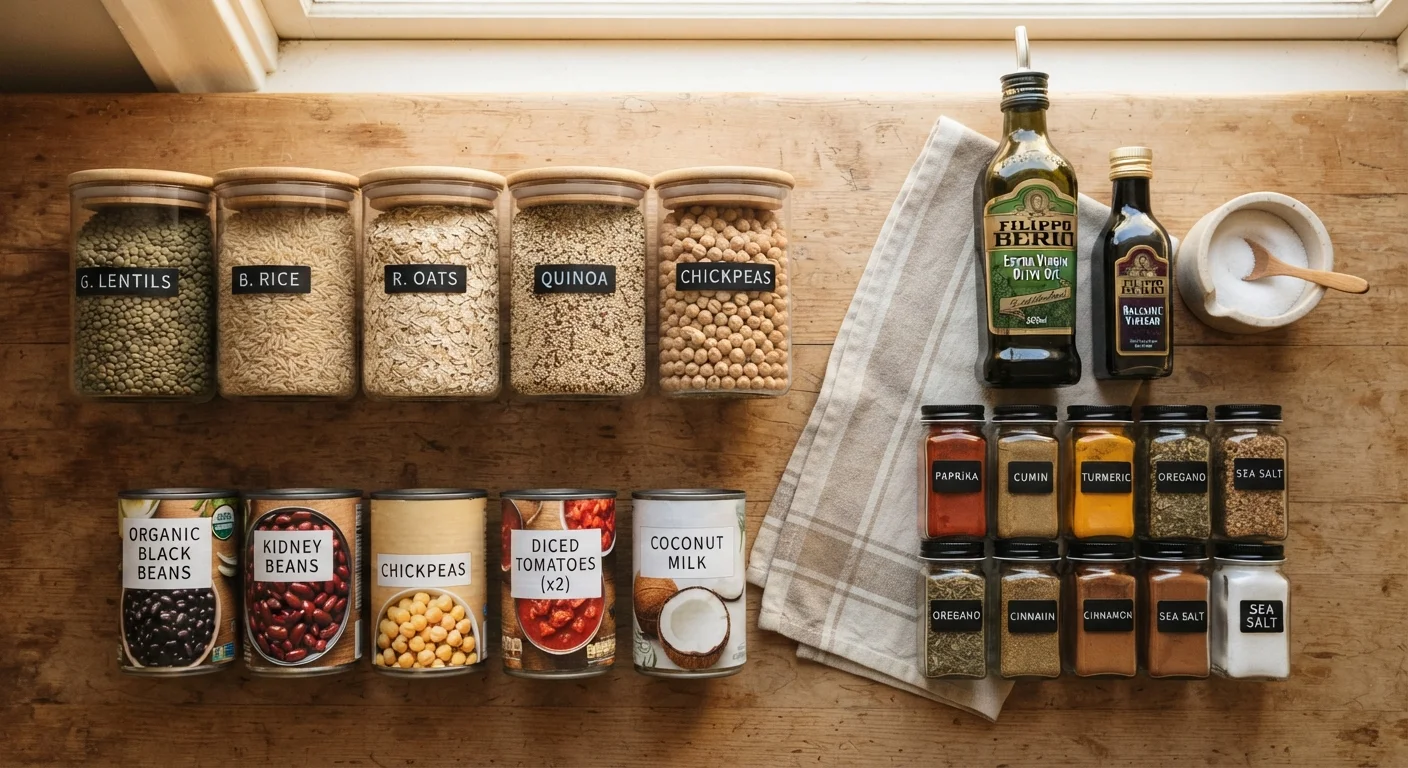
Rice, oats, and dried pasta are the workhorses of budget cooking. Brown rice adds fiber; white rice cooks faster. Rolled oats serve as breakfast, a binder for patties, or a base for no-bake snacks. Dried pasta in a few shapes covers everything from weeknight dinners to cold salads.
Cornmeal and flour extend your range further — think polenta, simple flatbreads, or homemade pancakes that cost a fraction of packaged versions.
Legumes
Few ingredients offer more nutrition per dollar than legumes. Dried lentils (red or green) require no soaking and cook in about 20 minutes. Canned chickpeas, black beans, and kidney beans trade a small cost premium for genuine convenience. Use them in soups, stews, grain bowls, or mashed as a sandwich spread.
Filling, inexpensive foods like lentils and beans also help manage hunger more effectively than many processed alternatives.
Canned and Jarred Goods
Canned tomatoes (diced, crushed, or paste) anchor sauces, stews, and braises. Canned fish — sardines, tuna, salmon — deliver protein and omega-3 fatty acids at a low per-serving cost. Stock a few cans of low-sodium broth or bouillon to add depth to grains and soups without much effort.
Tinned and frozen ingredients carry more nutritional value than many people assume — they're worth revisiting if you've dismissed them.
Fats and Flavor Builders
Cooking oil (such as canola or a neutral vegetable oil) and a bottle of olive oil for finishing cover most cooking needs. For flavor without the expense of fresh herbs, keep a rotation of dried spices: cumin, smoked paprika, garlic powder, oregano, chili flakes, and cinnamon cover an enormous range of cuisines.
Vinegar (white, red wine, or apple cider) and soy sauce or tamari add brightness and umami to simple dishes at minimal cost.
Sweeteners and Baking Basics
A small stock of sugar, baking powder, baking soda, and salt makes homemade versions of baked goods and sauces practical. Honey doubles as a sweetener and a glaze.
Shelf-stable
Foods that can be safely stored at room temperature for extended periods without refrigeration. Examples include dried grains, canned goods, and dried spices.
Legumes
A family of plants whose seeds are used as food, including beans, lentils, peas, and chickpeas. They are high in protein and fiber and are among the most affordable protein sources available.
Umami
Often described as a savory or meaty depth of flavor. Ingredients like soy sauce, canned tomatoes, and certain dried mushrooms add umami to simple pantry-based dishes.
Cost per serving
The total price of an ingredient divided by the number of servings it provides. This metric helps compare the true value of ingredients rather than just their sticker price.
Putting It All Together
A pantry built around these categories doesn't need to be assembled all at once. Add two or three items per shopping trip until the foundation is in place, then focus on rotating and using what you have before restocking.
Pair this reference with a planning approach — meal planning principles that actually work can help you turn these staples into a reliable weekly system rather than a collection of ingredients you're not sure what to do with.
For those looking to maximize the usefulness of each shelf item, stocking a pantry that makes meals almost cook themselves goes deeper on which ingredients earn their space and why.
The goal isn't a perfect pantry — it's a functional one. A modest, well-chosen set of staples consistently beats a large, disorganized stockpile. Start with the categories that match your household's eating habits, and build from there.
This article is for general informational purposes only and is not a substitute for advice from a qualified nutrition professional or healthcare provider.