

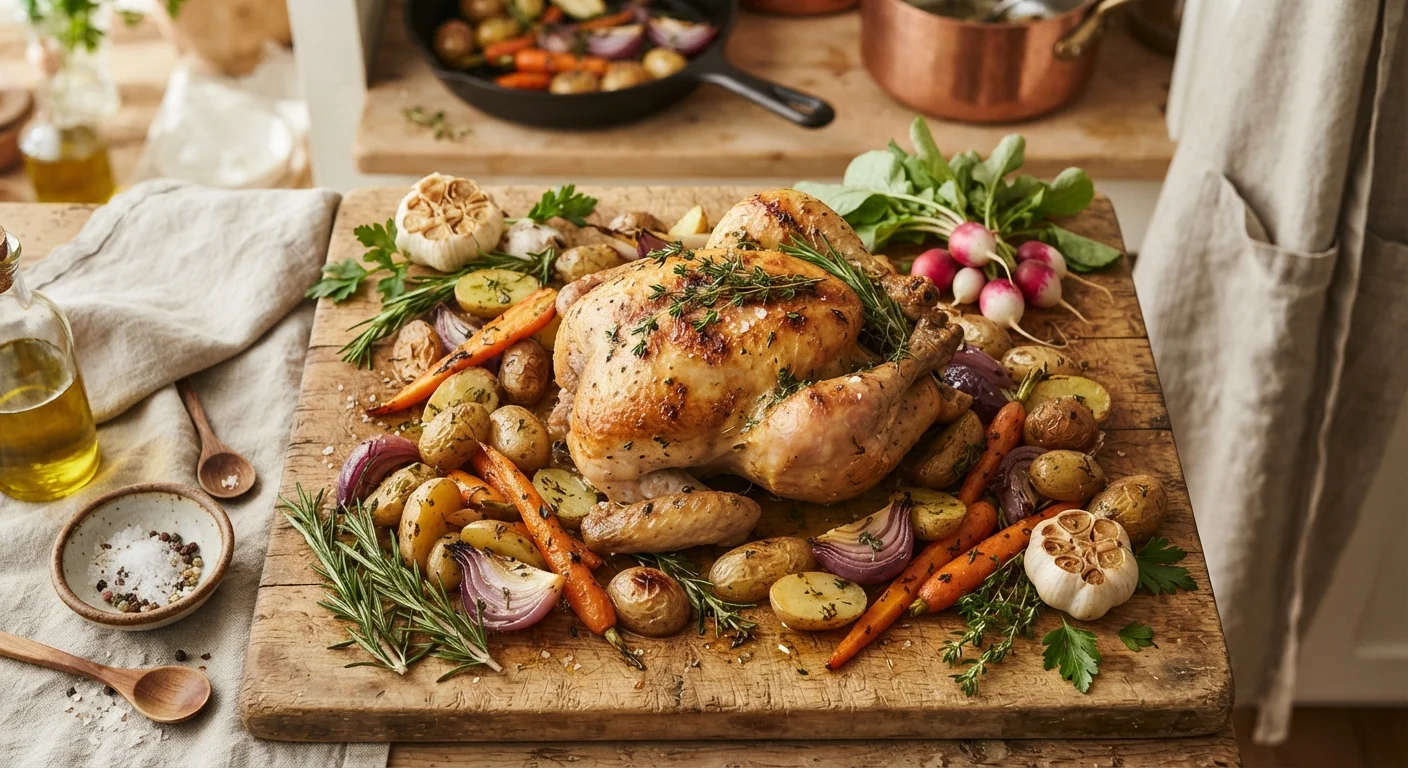
Key Takeaways
- A single whole chicken can yield four distinct dinners when portioned and stored strategically.
- Roasting the chicken first gives you flavorful meat and a carcass for homemade broth.
- Planning meals in sequence — from whole bird to soup — prevents waste and maximizes value.
- Proper refrigerator storage keeps cooked chicken safe for up to four days.
- This approach requires minimal extra cooking time beyond the initial roast.
What you will need
Why a Whole Chicken Beats Pre-Cut Pieces
Whole chickens are consistently among the most cost-effective protein options at the grocery store. Per pound, they typically cost less than boneless breasts or pre-cut thighs — and they come with built-in bonus ingredients: the carcass and any drippings you'd otherwise throw away.
The real savings come from planning. Without a sequence in mind, you may roast the bird, eat once, and let leftovers dry out in the fridge. With a four-meal plan, every part of the chicken gets used deliberately. This is the core idea behind cooking around anchor ingredients — one purchase, multiple distinct meals.
For budget-conscious households, this approach reduces how often you need to buy protein throughout the week, which is one of the key strategies covered in our comprehensive affordable eating guide.
What you will need
What You'll Need Before You Start
Gathering your tools and pantry basics before you begin saves time and helps each meal come together smoothly. You don't need specialty equipment — most of what's required is likely already in your kitchen.
Roasting pan or cast-iron skillet
Used to roast the whole chicken evenly in the oven on Day 1.
Large stockpot
Used to simmer the chicken carcass into homemade broth for soup on Day 4.
Airtight food storage containers
Keeps portioned chicken fresh and organized in the refrigerator across four days.
Fine mesh strainer
Strains solids out of homemade broth for a cleaner soup base.
Kitchen twine
Used to truss the chicken for more even roasting and a better presentation.
Roast the Whole Chicken (Day 1 Dinner)
Season the chicken inside and out with salt, pepper, garlic, and a drizzle of oil or softened butter. Roast at 425°F until the internal temperature at the thickest part of the thigh reaches 165°F — roughly 60 to 90 minutes depending on size. Let it rest 10 minutes before carving.
Serve the breast meat and one thigh for tonight's dinner alongside roasted vegetables or a simple salad. Reserve all drippings from the pan.
Shred Remaining Meat and Refrigerate (After Day 1)
Once the chicken has cooled slightly, pull all remaining meat from the bones — both dark and white meat. Separate the carcass (bones, back, neck) and store it in a zip-lock bag in the fridge or freezer. Place shredded meat in an airtight container.
You should have enough meat left for two more solid meals plus some for the soup.
Use Shredded Chicken for a Quick Weeknight Meal (Day 2 Dinner)
Use a portion of your shredded chicken in a high-assembly, low-cook meal: chicken tacos with pantry salsa and canned beans, a chicken grain bowl with rice and frozen vegetables, or a simple chicken quesadilla. These meals require little more than reheating and combining ingredients.
This is where the effort from Day 1 pays off — dinner in under 15 minutes. For more ideas on structuring these kinds of easy meals, explore the Easy Meal Ideas hub.
Make a Chicken-Based Pasta or Stir-Fry (Day 3 Dinner)
Use the remaining shredded meat in a heartier cooked dish — pasta tossed with chicken, olive oil, garlic, and parmesan; a simple stir-fry with frozen vegetables and soy sauce over rice; or a chicken and white bean skillet. These one-pan or one-pot meals stretch the remaining protein with inexpensive pantry ingredients.
Pair with sheet pan vegetables on the side for a balanced, low-cleanup dinner.
Make Broth and Chicken Soup (Day 4 Dinner)
Place the reserved carcass in your large pot. Add an onion (halved), a couple of celery stalks, a carrot, and a few peppercorns. Cover with cold water and bring to a gentle boil, then reduce to a simmer for 1 to 2 hours. Strain out solids.
Use the fresh broth as the base for a simple vegetable and noodle soup, adding any remaining bits of chicken meat. Season with salt to taste. This meal costs nearly nothing beyond the vegetables, yet it's the most comforting of the four.
Storing and Sequencing Your Meals
Timing matters as much as technique. The four meals below are designed to be eaten in order over four days, which keeps food safety simple and quality high. Cooked chicken stored in an airtight container in the refrigerator stays safe for up to four days, according to general food safety guidance from the USDA.
Label Your Containers
When you portion the chicken after Day 1, label each container with the planned use — 'tacos,' 'pasta,' 'soup.' It removes the daily question of what to cook and keeps the plan on track. Small habits like this are what separate a successful meal rotation from one that stalls by Wednesday.
If you won't finish all four meals within that window, freeze the pulled meat after Day 1 in a labeled bag. Pull it out the morning you plan to use it and thaw it in the refrigerator overnight.
This kind of sequential planning is also central to building a weekly meal rotation — having a structure means less daily decision fatigue and fewer wasted groceries. For more on the common traps that derail even well-intentioned meal planners, see where budget cooks go wrong with meal planning.
Nutritional Value Across All Four Meals
Chicken is a lean, complete protein source, meaning it provides all essential amino acids. Dark meat (thighs and drumsticks) contains slightly more fat than white meat but also more iron and zinc, making it nutritionally complementary rather than inferior. The homemade broth made from the carcass contributes minerals and collagen, though the exact nutrient content varies based on cooking time and ingredients used.
Pairing chicken with vegetables, whole grains, and legumes across your four meals ensures a well-rounded nutrient profile throughout the week. This kind of variety is at the heart of healthy eating on a tight budget. For more foundational guidance on eating well without overcomplicating things, the Nutrition Basics hub is a good reference point.
This article provides general food and nutrition information for educational purposes only. It is not medical or dietary advice. If you have specific health conditions or dietary needs, consult a qualified healthcare professional.