

Key Takeaways
- You can build a nutritionally sound meal using simple visual proportions — no apps required.
- Half your plate in vegetables or fruit, a quarter in whole grains, and a quarter in protein covers most bases.
- Healthy fats and water round out a balanced meal without adding complexity.
- These principles work across most dietary styles, from omnivore to plant-based.
- Consistency over weeks matters more than perfection at any single meal.
What you will need
Why Visual Eating Works
Counting calories or tracking macros can be useful for specific goals, but for most people eating everyday meals, it creates friction that's hard to sustain. The good news is that solid nutrition doesn't require a spreadsheet — it requires a useful mental model.
The visual plate method is one of the most practical frameworks in general nutrition guidance. Rather than measuring grams, you use the proportions on your plate as a reference. This approach is grounded in how nutrition researchers and dietitians often communicate portion and food-group balance to the general public, and it translates well to real kitchens and real budgets.
For a deeper look at how visual cues help with portion awareness, see how portion awareness works without calorie counting. And if you're working with a tight grocery budget, healthy eating on a tight budget offers complementary strategies.
Good Enough Is Genuinely Good
You don't need a perfectly balanced plate at every single meal. Aiming for this pattern most of the time — across the week rather than at every sitting — is both realistic and nutritionally sound. A meal that's mostly vegetables and protein but light on grains is still a good meal.
What Goes on the Plate — and How Much
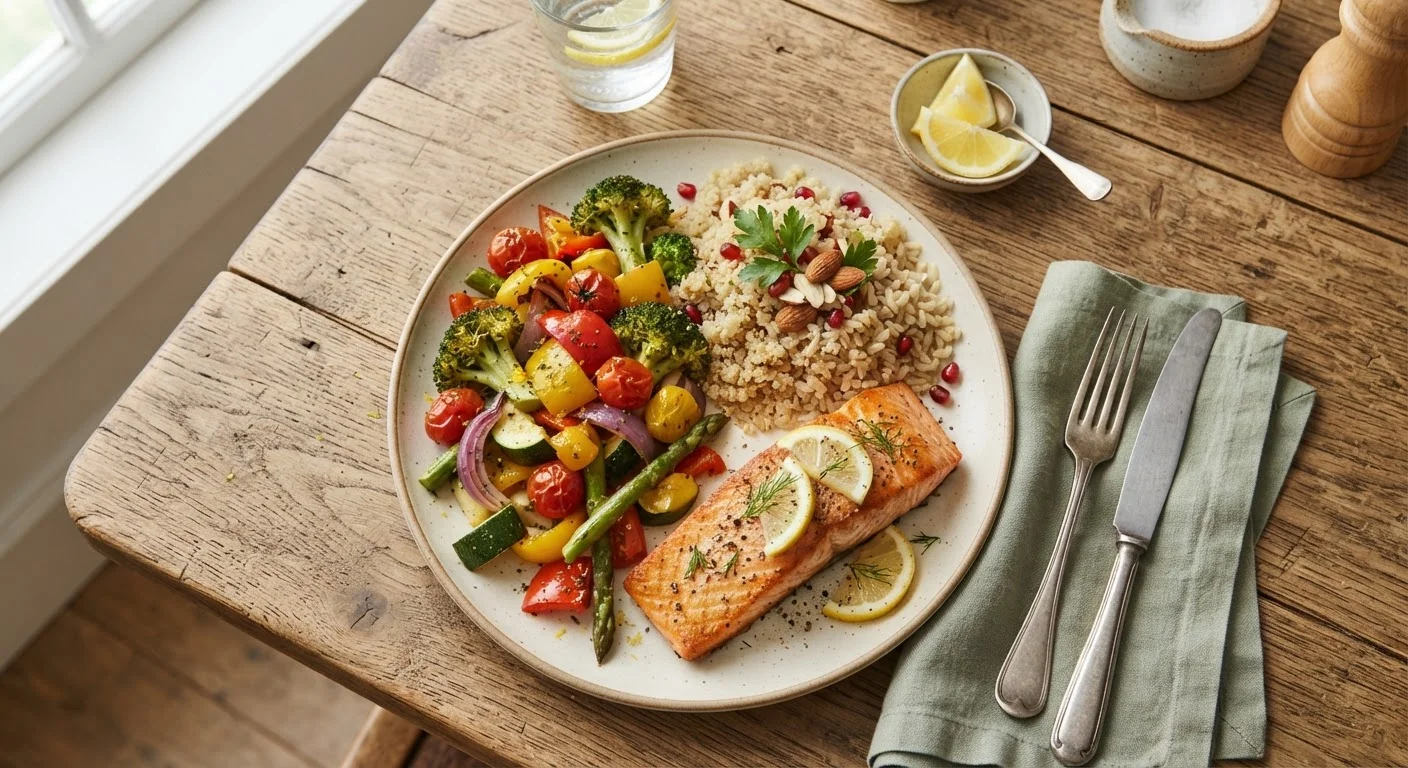
Think of your plate in three zones:
- Half the plate: non-starchy vegetables (and some fruit). This is where most people under-allocate. Vegetables provide fiber, vitamins, minerals, and volume without a heavy caloric load. Leafy greens, broccoli, carrots, peppers, tomatoes, and cucumbers all count. Frozen works just as well as fresh from a nutrition standpoint.
- One quarter: whole grains or starchy vegetables. Brown rice, whole wheat pasta, oats, quinoa, corn, potatoes, and sweet potatoes fit here. These provide sustained energy and fiber. Refined grains aren't automatically off-limits — they just offer less fiber and fewer micronutrients than whole versions.
- One quarter: a protein source. This can be animal-based (poultry, fish, eggs, lean meat) or plant-based (beans, lentils, tofu, tempeh, edamame). Protein supports muscle maintenance and keeps you feeling full longer.
Alongside those three zones, add a small amount of a healthy fat — a drizzle of olive oil, a few slices of avocado, a handful of nuts, or a spoonful of nut butter. Fats support nutrient absorption and meal satisfaction. Pair the meal with water or an unsweetened drink.
For a broader look at how these principles translate across different eating styles, building a balanced plate across different diets is a useful companion read.
This Framework Is a Starting Point
The visual plate method suits most generally healthy adults, but individual needs vary. People managing specific health conditions, food allergies, pregnancy, or certain life stages may need tailored guidance. Always consult a registered dietitian or healthcare provider if you have particular dietary requirements or medical concerns.
How to Apply This at Every Meal
The steps below don't require new tools or meal planning software — just a habit of thinking visually before you serve.
Start with your vegetable base
Before anything else, fill half your plate with vegetables. If that feels like a lot, start with whatever you have on hand — even a basic side salad or a handful of steamed frozen broccoli counts. The goal is volume and variety over time, not perfection right now.
Add your grain or starchy vegetable
Scoop your grain or starchy vegetable into roughly one quarter of the plate. A portion is typically about the size of your cupped hand. Whole grain options add more fiber, but any cooked grain or starchy vegetable is a reasonable choice. For real-life portion visual references, see portion sizes in real life.
Plate your protein
Fill the remaining quarter with your protein source. For meat or fish, a portion about the size of your palm is a reasonable guide. For plant proteins like beans or lentils, about half a cup is a standard serving. Mixing plant and animal proteins across different meals gives you a broader range of nutrients.
Add a small amount of healthy fat
A thumb-sized portion of fat — a drizzle of oil, a few slices of avocado, a small handful of nuts or seeds — helps your body absorb fat-soluble vitamins from the vegetables on your plate. It also makes the meal more satisfying. This doesn't need to be measured precisely; a modest amount is the goal.
Choose water or an unsweetened drink
What you drink alongside a meal matters. Water, plain sparkling water, unsweetened tea, or black coffee are straightforward choices that don't add hidden sugars or excess calories. Sugary drinks can quietly displace the nutrition balance of an otherwise solid meal over time.
Once this framework becomes second nature, you'll find it applies at home, at restaurants, and even when grabbing something on the go. For building this into a broader weekly plan, meal planning on a budget outlines practical systems that keep balanced eating affordable and consistent.
If you want to understand what's already in packaged foods you rely on, reading a nutrition label without the confusion helps you decode the numbers quickly.
This article is for general informational purposes only and is not a substitute for personalized nutrition or medical advice. If you have specific health conditions or dietary needs, consult a registered dietitian or qualified healthcare professional.