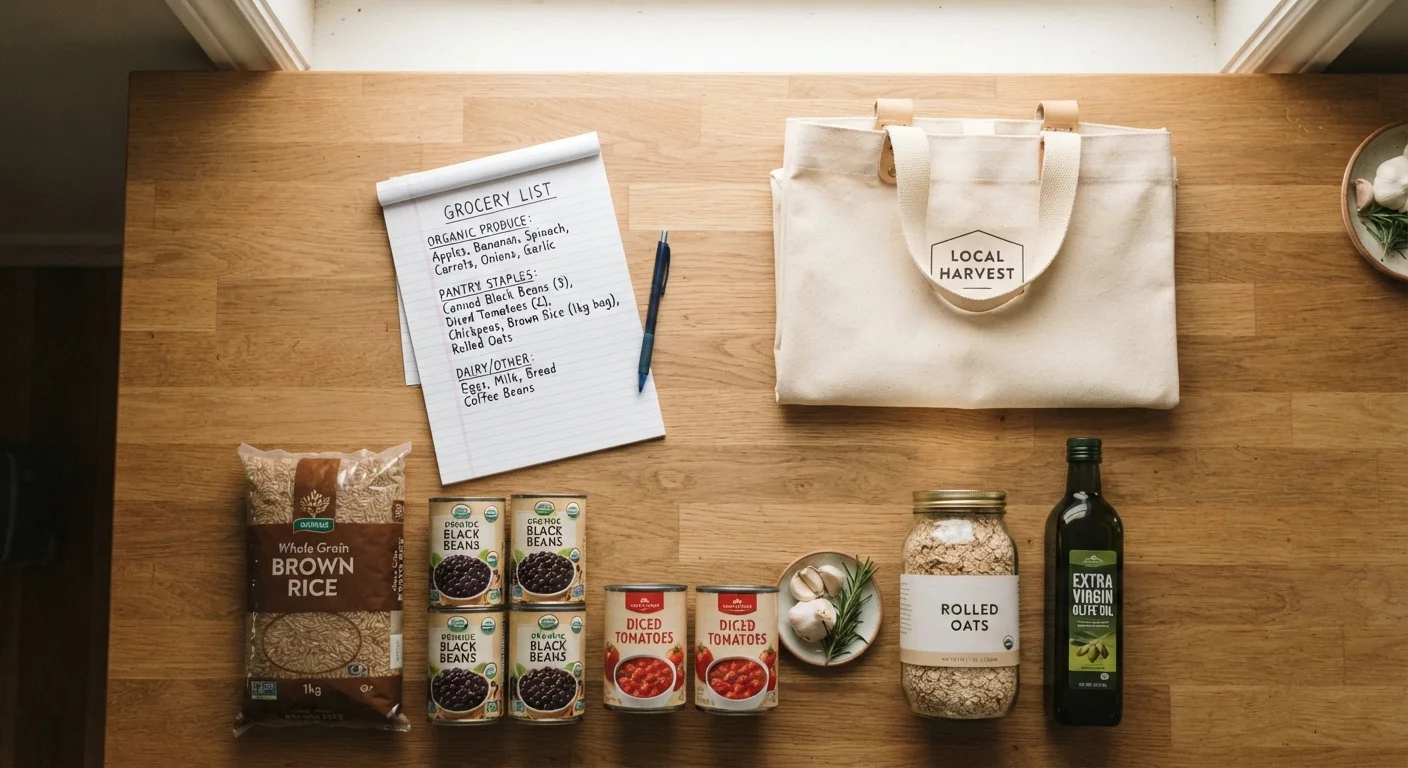
Checking your pantry and fridge before shopping prevents buying duplicates you don't need.
A written meal plan — even a rough one — dramatically reduces impulse purchases.
Setting a firm budget before you enter the store helps you stay accountable at checkout.
Shopping on a full stomach and without time pressure reduces unplanned spending.
Store loyalty programs and unit pricing tools are free ways to stretch your grocery dollar.
15–30 min
Summary
22 items · 15–30 minutes
Why What You Do Before You Shop Matters Most
Most grocery overspending doesn't happen in the store — it happens before you ever grab a cart. Walking in without a plan, a list, or a clear picture of what you already own is the fastest route to a bloated receipt. The good news: a short pre-shop routine can change that.
This checklist is designed to take 15–30 minutes and cover the four areas where budget leaks most often start: your pantry, your meal plan, your budget, and your mindset going in. Run through it before every major shop and you'll likely notice a difference by your second or third trip.
Do a quick scan of your fridge, freezer, and pantry shelves before writing any list — note what needs to be used up first.Must
Check expiration dates on perishables and plan meals around items approaching their use-by date.Must
Identify what staples you're genuinely out of (cooking oil, salt, canned goods) versus what you simply feel like buying.Must
Check your freezer for forgotten proteins, vegetables, or leftovers that could substitute for something on your planned list.Should
Meal Planning
Sketch out meals for the next 5–7 days, even roughly — breakfast, lunch, dinner, and at least one snack category.Must
Plan at least two meals that use the same core ingredient (e.g., roast chicken one night, chicken soup the next) to reduce waste and cost.Should
Include one or two pantry-based meals that require minimal fresh ingredients for low-spend flexibility mid-week.Should
Build your shopping list directly from your meal plan, item by item, rather than shopping from memory.Must
Check what easy meal ideas you can adapt using what's already in your kitchen before finalising your list.Nice to have
Budget & Price Awareness
Set a specific dollar target for your shop before you leave the house and write it at the top of your list.Must
Review the store's weekly circular or app for markdowns on items already on your list — never let sales add items to your list.Should
Identify two or three items where you're willing to swap to a store-brand or generic version to stay within budget.Should
Make a note of the unit price (price per ounce or pound) for your highest-frequency purchases so you can comparison-shop accurately in store.Nice to have
Mindset & Habit Checks
Eat a small snack before you go — shopping hungry reliably increases unplanned spending on ready-to-eat and impulse items.Must
Leave yourself enough time to shop without rushing — hurried shopping leads to missed prices, forgotten items, and repeat trips.Should
Decide in advance on your one-item rule: allow yourself one unplanned item per trip so you don't feel deprived, but cap it there.Nice to have
If you're shopping with children or others, align on the plan and budget expectations before entering the store.Should
Commit to sticking to your list in the centre aisles — the perimeter (produce, dairy, protein) is where most planned purchases live.Should
After your shop, spend two minutes comparing your receipt to your budget target — tracking this builds awareness over time.Nice to have
Tools That Make This Easier
You don't need special apps or gadgets to shop smarter, but a few simple tools make it considerably easier to follow through on this checklist consistently.
Required
Notepad or Notes App
Write your grocery list by category (produce, proteins, pantry) so you move efficiently through the store without backtracking.
Optional
Store Loyalty App
Access digital coupons and personalised discounts available through your primary grocery store's free loyalty program.
Required
Calculator or Phone
Use the calculator to track your running total as you shop and compare unit prices between package sizes.
Optional
Reusable Shopping Bags
Avoid per-bag fees at checkout — many stores charge 5–10 cents per bag, which adds up over dozens of trips.
Once you've built a solid shopping habit, pairing it with some upfront cooking prep compounds the savings. Our weekly cooking prep checklist shows how a few small tasks early in the week make every dinner faster and cheaper. You can also use our weekly grocery nutrition checklist alongside this one to make sure your cart covers all your nutritional bases — not just your budget.
Sales Don't Save Money If They Change Your List
A common budget trap is letting in-store promotions redirect your spending toward items you weren't planning to buy. A sale on something you don't need is still money spent, not saved. Only factor in promotions when the discounted item is already on your planned list — otherwise leave it on the shelf.
This article is for general informational purposes only. For personalised dietary guidance, consult a registered dietitian or qualified healthcare professional.
Food & Nutrition Editorial Team is the collective byline for our editorial team and contributor network. Articles published under this byline or an editorial pen name are researched, written, and reviewed according to our editorial standards for clarity, consistency, and independence before publication.
Disclaimer: The content on this site is for informational purposes only and is not a substitute for professional advice. Always consult a qualified professional for guidance specific to your situation.