

| Average time to a pantry-based meal | 15–25 minutes |
| Shelf life of dried pasta | Up to 2 years (unopened) (USDA FoodKeeper guidelines) |
| Shelf life of canned beans | 2–5 years (unopened) (USDA FoodKeeper guidelines) |
| Protein in one cup cooked lentils | Approx. 18g (USDA FoodData Central) |
| Minimum recommended spice varieties | 5–7 core spices |
| Cost advantage of pantry cooking | Typically lower per serving than takeout or convenience meals |
Why a Smart Pantry Changes How You Cook
Most weeknight cooking struggles start before the stove is even on — you open the fridge, see random ingredients, and either give up or order out. A deliberately stocked pantry solves that before it starts. When your shelves hold the right foundation ingredients, meals stop requiring trips to the store and start assembling themselves.
This isn't about hoarding or overbuying. It's about identifying a core set of versatile, long-shelf-life items that combine naturally into dozens of different meals. Once you know what that core looks like, grocery shopping gets simpler too — you're restocking a system rather than guessing each week. For a deeper look at why scratch cooking is worth it financially, see how convenience food really stacks up against home cooking.
| Average time to a pantry-based meal | 15–25 minutes |
| Shelf life of dried pasta | Up to 2 years (unopened) (USDA FoodKeeper guidelines) |
| Shelf life of canned beans | 2–5 years (unopened) (USDA FoodKeeper guidelines) |
| Protein in one cup cooked lentils | Approx. 18g (USDA FoodData Central) |
| Minimum recommended spice varieties | 5–7 core spices |
| Cost advantage of pantry cooking | Typically lower per serving than takeout or convenience meals |
The Core Categories Every Pantry Needs
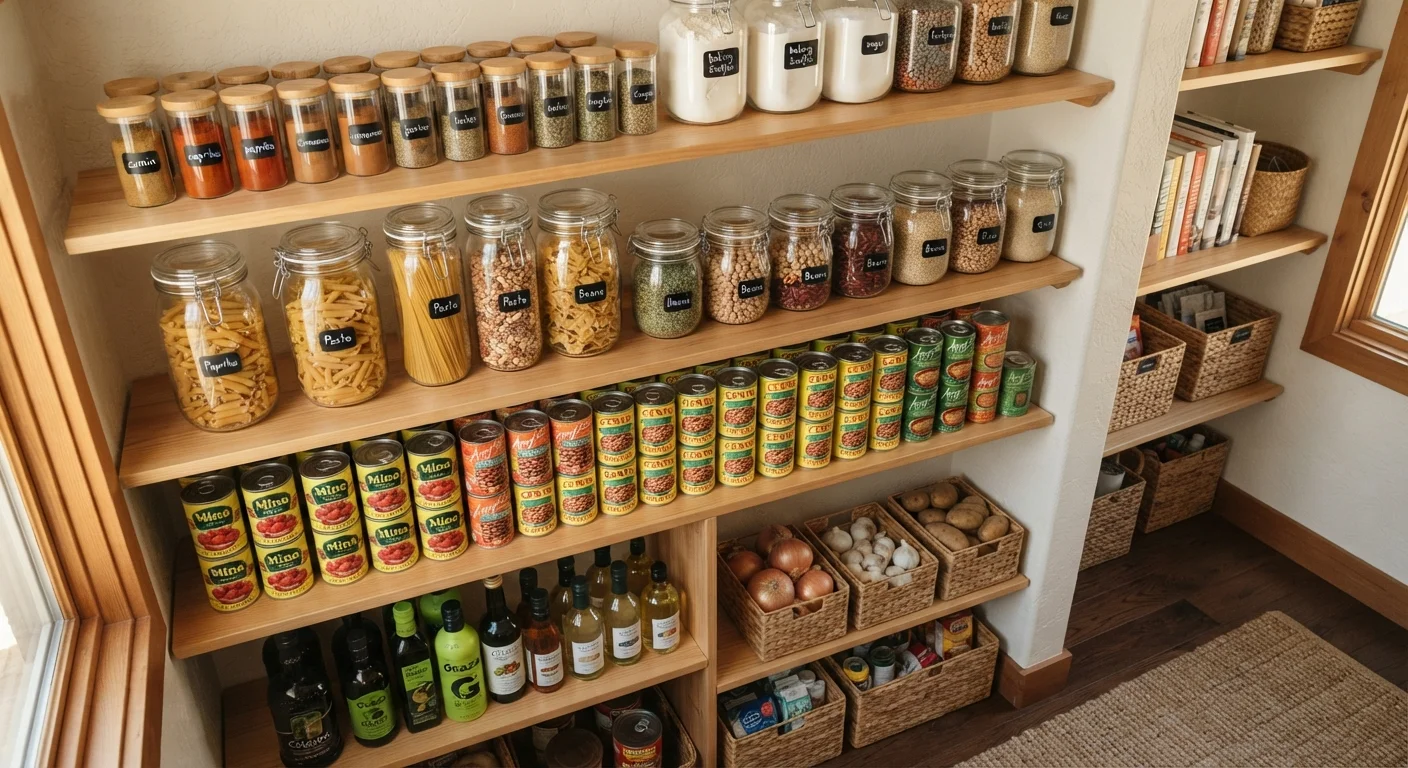
Think of pantry staples in five functional groups: grains and starches, proteins, acids and aromatics, fats, and flavor builders. Each group plays a distinct role in getting food to the table fast.
Grains and Starches
Dried pasta, white or brown rice, rolled oats, and canned or dried lentils are the backbone of quick meals. They provide filling carbohydrates and extend whatever protein or vegetable you add. Dried lentils deserve special attention — they cook in under 25 minutes with no soaking and deliver solid plant-based protein. For budget-minded cooks, these affordable staples keep food costs low across the whole month.
Canned and Shelf-Stable Proteins
Canned beans (chickpeas, black beans, white beans), canned tuna or salmon, and canned tomatoes anchor hundreds of meals. Beans add protein and fiber to grain bowls, soups, and wraps without requiring any cooking time beyond heating. Tinned proteins earn more credit than they usually get — research consistently shows canned fish retains most of its omega-3 content.
Acids, Aromatics, and Fats
Olive oil, garlic (fresh or jarred), onions, and an acid like apple cider vinegar or canned tomatoes make simple ingredients taste intentional. A drizzle of olive oil and garlic transforms plain pasta from bland to satisfying. These items last weeks or months and do the heavy lifting in almost every cuisine style.
Flavor Builders
A small, curated spice collection outperforms a cluttered one. Cumin, smoked paprika, dried oregano, red pepper flakes, and a general all-purpose seasoning blend let you shift the flavor profile of the same base ingredients dramatically. Soy sauce or a similar umami-rich condiment adds depth to grains, stir-fries, and marinades in seconds.
Pantry staple
A shelf-stable ingredient kept on hand consistently because it combines well with many other foods. Staples typically have long shelf lives and contribute to a wide range of meals.
Shelf life
The length of time a food stays safe and usable when stored correctly. Canned goods and dried grains have very long shelf lives — often one to several years.
Umami
A savory, deeply satisfying taste distinct from sweet, salty, sour, or bitter. Ingredients like soy sauce, tomato paste, and aged cheese contribute umami and make simple dishes taste more complex.
Anchor ingredient
A versatile core ingredient — such as cooked rice, canned beans, or dried pasta — that can be combined with different flavors and proteins to produce multiple distinct meals.
Putting It Into Practice: How Pantry Meals Actually Come Together
The real test of any pantry staple is whether it combines naturally with two or three other items you already have. A can of chickpeas plus canned tomatoes, cumin, and rice becomes a serviceable one-pot meal in about 20 minutes. Pasta plus olive oil, garlic, and a can of white beans is another. This is the logic behind cooking with anchor ingredients — one flexible base opens multiple meal paths.
Pair your pantry with a short weekly prep habit and meals become even faster. Rinsing and storing a can of beans on Sunday, or cooking a batch of grains, means you're assembling rather than cooking from scratch on busy nights. Our weekly prep checklist walks through which tasks make the biggest difference without turning Sunday into a project.
If your goal is also cutting down on cooking time, a well-stocked pantry pairs naturally with sheet pan dinners or slow cooker meals — both of which rely heavily on shelf-stable ingredients. See how sheet pan dinners work or compare slow cooker versus pressure cooker approaches to find what suits your routine.
Finally, don't overlook the freezer as an extension of your pantry. Frozen vegetables — peas, spinach, corn, edamame — keep for months and add nutrients and volume to any pantry-built meal with no prep required. A well-rounded approach to simple, jargon-free nutrition keeps the focus on eating well without overcomplicating it.
This article is for general informational purposes only and is not a substitute for advice from a qualified nutrition or healthcare professional. Individual dietary needs vary; consult a registered dietitian or your healthcare provider for personalized guidance.