

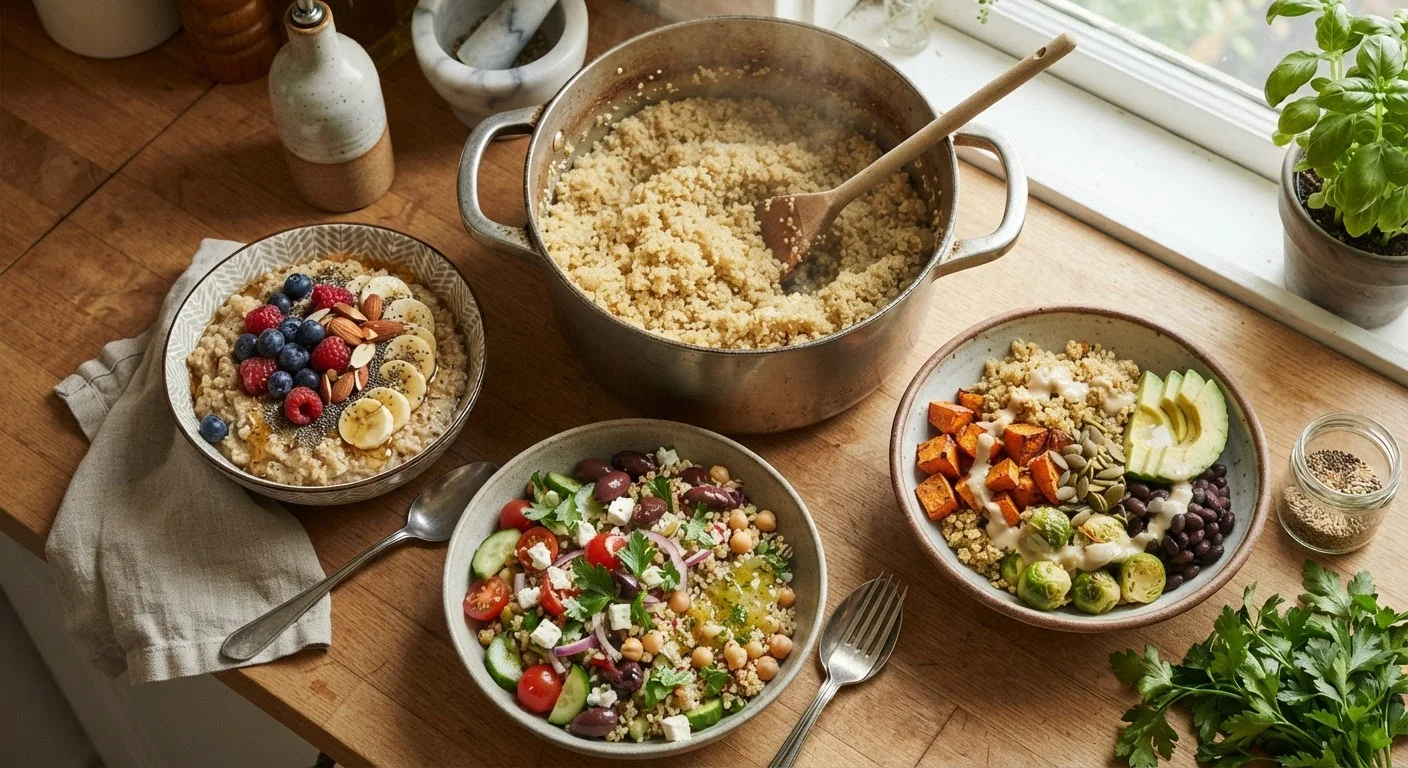
Key Takeaways
- Doubling one anchor ingredient during cooking can yield three distinct meals with minimal extra effort.
- Choosing versatile ingredients like grains, legumes, or roasted vegetables is the key to making this system work.
- Ingredient doubling reduces both cooking time and food waste across the week.
- Simple flavor pivots — different sauces, spices, or pairings — keep repeated ingredients from feeling repetitive.
What Ingredient Doubling Actually Means
Ingredient doubling isn't about making a giant batch of one finished meal and eating leftovers three nights in a row. It's a smarter approach: cook a single versatile base ingredient in a larger quantity, then transform it into three genuinely different dishes throughout the week.
The anchor ingredient does the heavy lifting. Think cooked brown rice, a pot of lentils, or a sheet pan of roasted sweet potatoes. Each of those can anchor breakfast, lunch, and dinner without the meals tasting the same. The savings — in time, money, and mental energy — add up fast. For anyone already exploring budget meal planning principles, ingredient doubling is one of the most practical systems to layer in.
How This Differs From Batch Cooking
Batch cooking typically means making full meals in large quantities. Ingredient doubling is more flexible — you're cooking a component, not a complete dish. This gives you more freedom to adjust flavors and formats throughout the week rather than committing to the same meal repeatedly.
Choosing the Right Anchor Ingredients
Not all ingredients scale well. The best anchors share three traits: they store safely for three to four days in the refrigerator, they absorb different flavor profiles easily, and they work across multiple meal types.
Choose grains with neutral flavor as your primary anchor ingredient.
Cooked grains like brown rice, farro, or quinoa absorb seasonings readily and pair with nearly any cuisine. Their mild flavor makes them the easiest ingredient to transform across three different meals without clashing.
Use legumes as a protein anchor for plant-based flexibility.
Dried or canned legumes like chickpeas, black beans, or lentils are low-cost, high-protein, and hold their texture well over several days. They shift easily between cuisines — Mediterranean, Latin, South Asian — with minimal added ingredients.
Roast a full sheet pan of mixed root vegetables in one session.
Roasted vegetables like sweet potatoes, carrots, and parsnips concentrate in flavor and reheat without becoming soggy. Their natural sweetness pairs with both savory and slightly sweet meal directions, extending their versatility.
Pre-cook a double portion of a lean protein and portion it immediately.
Dividing cooked protein into portions right after cooking — rather than refrigerating it as one large block — makes it easier to grab for different meals without thawing or reheating the entire batch. It also reduces the risk of repeated reheating, which can affect texture and safety.
Label and date every stored portion before it goes into the refrigerator.
Without clear labeling, doubled batches often get forgotten at the back of the refrigerator and wasted — defeating the purpose entirely. A simple sticky note or masking tape label takes seconds and prevents both food waste and the guessing game of mystery containers.
Avoid anchoring around delicate proteins like fish or leafy salads that wilt quickly. Heartier, starchier, or plant-based bases hold up best over several days of refrigeration and transform most naturally with simple seasoning swaps.
Making Three Meals Without Repeating Yourself
The trick to keeping ingredient doubling from feeling monotonous is the flavor pivot: the same base ingredient gets a completely different treatment each time it appears. A pot of chickpeas becomes a lemony grain bowl on Monday, a spiced tomato-based stew on Wednesday, and a quick mashed chickpea sandwich spread by Thursday.
Sauces, spices, and supporting vegetables do most of the transformation work — meaning your grocery list stays short and your pantry does the heavy lifting. For ideas on which staples enable this kind of flexibility, see our guide on building a pantry that makes meals almost cook themselves.
One common pitfall: over-planning by trying to anchor too many ingredients at once. Pick one or two per week. Overcomplicating the system is one of the ways budget cooks go wrong with meal planning — keep it simple to keep it sustainable.
This article is for general informational purposes only and is not medical or dietary advice. Consult a qualified healthcare professional or registered dietitian for personalized nutrition guidance.