

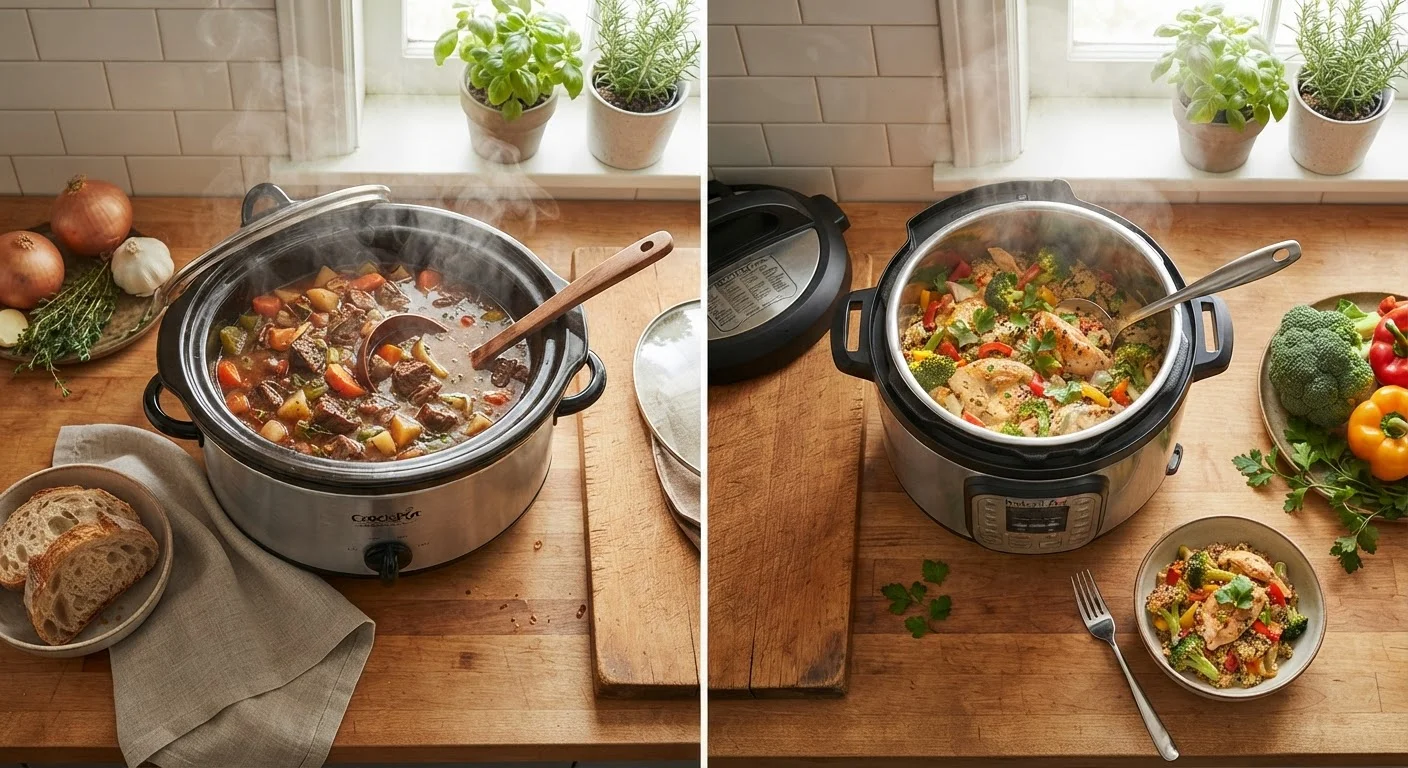
Key Takeaways
- Slow cookers excel when you have hours to spare; pressure cookers shine when you need dinner fast.
- Both appliances can cut grocery costs by turning inexpensive, tough cuts of meat into tender meals.
- Slow cookers require minimal active time but long planning ahead; pressure cookers demand less advance notice.
- Neither appliance is universally superior — your daily schedule determines which delivers better results.
- Both methods support batch cooking strategies that reduce weeknight stress and food waste.
Our Verdict
Slow cookers and pressure cookers each solve a different problem. One rewards early planners who want dinner waiting when they get home; the other rescues the day when meal planning slipped your mind until 5 p.m. For most households, understanding both — even if you only own one — helps you eat well without relying on expensive convenience food.
| Best for | Recommended |
|---|---|
| Busy households that plan meals the night before or in the morning | Slow Cooker |
| Evenings when time is short and dinner needs to happen quickly | Pressure Cooker |
| Budget-focused cooks using dried beans, lentils, or tough meat cuts | Pressure Cooker |
| Anyone who wants a hands-off, low-supervision cooking method | Slow Cooker |
How Each Appliance Actually Works
A slow cooker (sometimes called a Crock-Pot, which is a brand name) uses low, steady heat — typically between 170°F and 280°F — applied over several hours. Ingredients sit in a ceramic or porcelain pot, moisture stays trapped, and connective tissue in tougher cuts gradually breaks down. You set it in the morning and return to a finished meal.
A pressure cooker — including modern electric models often called multi-cookers — works by sealing steam inside a pot and raising the internal pressure. That higher pressure raises the boiling point of water above 212°F, which dramatically speeds up cooking. What might take three hours in a slow cooker can take 30 to 45 minutes under pressure.
Both methods use moist heat, which is why they share a talent for making cheaper, collagen-rich cuts tender. The difference is entirely about time — and that's exactly where your daily routine comes in.
What Each Appliance Does Best
Slow cookers are unbeatable for set-and-forget meals: chili, pulled chicken, pot roast, lentil soup, oatmeal, and braised vegetables. Because the temperature never spikes, there's a wide margin for error — slightly longer cooking usually doesn't ruin things. They're ideal for dried beans that have been soaked overnight, and for recipes that benefit from flavors melding over many hours.
Pressure cookers handle the same ingredient list but compress time. Unsoaked dried beans can cook through in 25 to 40 minutes. A whole chicken is done in under an hour. They also excel at things slow cookers can't manage well: rice, hard-boiled eggs, steamed vegetables, and quick stocks.
| Slow Cooker | Pressure Cooker | |
|---|---|---|
| Typical cook time | 6–10 hours on low | 20–60 minutes |
| Supervision needed | Very little — leave it running | Minimal, but must be present |
| Best proteins | Tough cuts, whole birds, beans (soaked) | Any cut, dried beans (unsoaked) |
| Ideal planning window | Morning or night before | Same evening |
| Learning curve | Very low | Moderate — valves and timing |
| Liquid reduction | Does not reduce (can be watery) | Slight reduction possible |
| Versatility | One function | Multiple (sauté, steam, slow cook) |
Both appliances reward a well-stocked pantry. If you keep dried legumes, canned tomatoes, and inexpensive grains on hand, either cooker turns those basics into a full meal. See how to stock a pantry that makes meals almost cook themselves for practical shelf-staple ideas.
Matching the Appliance to Your Day
The honest question isn't which appliance is better — it's which one fits your actual routine on any given day.
- Morning planners: If you're out of the house by 8 a.m. and home by 6 p.m., a slow cooker on low for 8–10 hours fits naturally. You prep ingredients the night before, switch it on, and walk in to a finished dinner.
- Late-deciders: If you reach late afternoon and haven't thought about dinner, a pressure cooker lets you go from raw ingredients to the table in under an hour — no pre-soaking, no long waits.
- Weekend batch cooks: Either appliance supports batch cooking strategies well. A slow cooker can run a big pot of beans while you do other things; a pressure cooker can cycle through two or three components in the time a slow cooker finishes one.
Own Just One? Prioritize Your Schedule
If your mornings are calm and organized, a slow cooker will serve you better most days. If your evenings are unpredictable and you often decide on dinner late, an electric pressure cooker (multi-cooker) is the more forgiving choice. Many households find that an electric multi-cooker covers both bases reasonably well, making it a practical single-appliance solution.
On days when neither appliance feels right, fifteen-minute stovetop meals are worth keeping in your back pocket as well.
Cost, Practicality, and a Realistic Assessment
Both appliances pay for themselves quickly if you use them to cook cheaper protein sources — chuck roast, chicken thighs, dried beans, and lentils. This is especially relevant when you consider the real cost gap between convenience food and cooking from scratch.
Slow cookers tend to be less expensive upfront and simpler to operate. Electric pressure cookers (multi-cookers) cost more but offer more functions — pressure cooking, sautéing, slow cooking, and steaming in one pot. If counter or storage space is limited, a multi-cooker that handles both modes may be more practical than owning two separate appliances.
One honest limitation: slow cookers can produce watery results if not used correctly, since liquid doesn't reduce. Pressure cookers have a learning curve around sealing, release valves, and timing. Neither is difficult once familiar, but expect a recipe or two while you calibrate.
A weekly prep checklist can help you plan which cooking method suits each night of the week before you're already hungry and tired.
This article is for informational purposes only. Individual results with cooking times and food safety may vary by appliance model; always follow the manufacturer's instructions for your specific appliance.