

Key Takeaways
- A short weekly prep session reduces decision fatigue and weeknight stress significantly.
- Checking what you already have before shopping prevents waste and saves money.
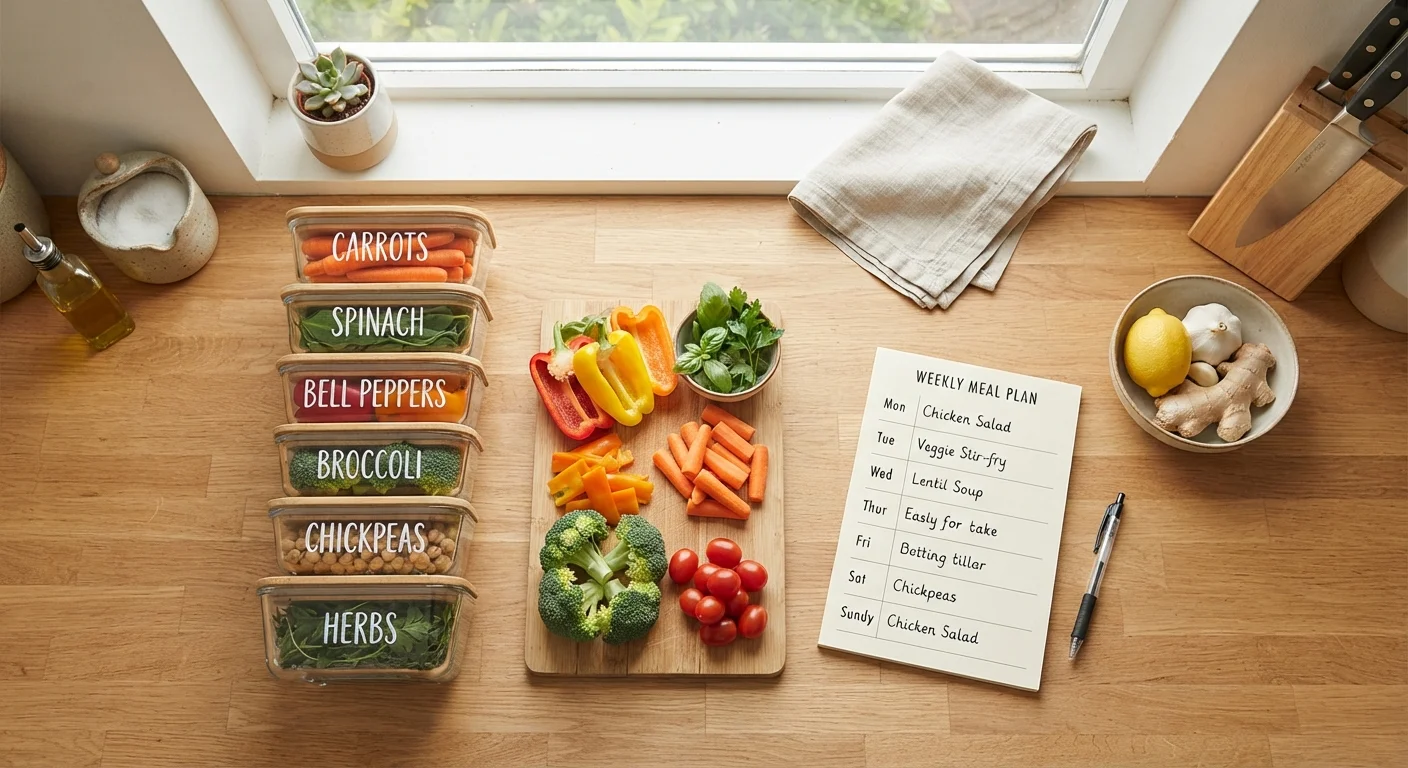
- Washing and chopping produce in advance cuts actual cooking time by half.
- Pre-portioning grains and proteins means meals come together in minutes.
- A loose weekly plan — not a rigid schedule — is all you need to stay on track.
Summary
18 items · 20–45 minutes
Why Weekly Prep Pays Off
Most weeknight cooking stress doesn't happen at the stove — it happens in the ten minutes before, when you're staring into the fridge trying to figure out what's for dinner. A small investment of time at the start of the week fixes that.
This checklist isn't about turning Sunday into a catering shift. It's about doing the small, unsexy tasks — checking the pantry, washing a bag of spinach, cooking a pot of rice — that make every other night genuinely easier. Think of it as removing friction rather than doing all the cooking upfront.
If you want to go deeper on either strategy, our guide to batch cooking vs. meal prepping explains how both approaches differ and which one might suit your lifestyle better. For now, this checklist keeps things simple and low-commitment.
Assess What You Have
Plan Your Week Loosely
Prep Produce
Cook a Few Foundations
Organise and Store
Kitchen Reset
Tools That Make This Easier
You don't need a fully kitted kitchen to do weekly prep well. A few basic items make the whole process faster and more organised.
Airtight food storage containers
Keep prepped produce, cooked grains, and portioned proteins fresh throughout the week.
Sharp chef's knife and cutting board
Speed up chopping vegetables safely and efficiently during your prep session.
Large rimmed baking sheet
Roast a full tray of vegetables in one go without crowding — a key prep shortcut.
Dry-erase marker or adhesive labels
Label containers with contents and prep dates so nothing gets lost or wasted.
Salad spinner
Wash and dry leafy greens quickly so they stay crisp in the fridge all week.
Putting It All Together
Once you've worked through this checklist a couple of times, most of it becomes automatic — a 20-minute sweep rather than a chore. The payoff shows up Tuesday through Friday, when you're not scrambling and not reaching for takeout.
A well-stocked pantry is the best backup to any prep session. Our article on stocking a pantry that makes meals almost cook themselves walks through exactly what staples earn their shelf space. And before your next grocery run, consider running through the weekly grocery nutrition checklist to make sure what you're buying actually covers your nutritional bases.
If you're looking for meals that play well with prepped ingredients, sheet pan dinners and slow cooker meals are natural fits — both are designed for ingredients you've already handled.
Don't Over-Prep and Risk Food Waste
It's tempting to chop and cook everything in sight, but prepped food has a shelf life. Most cut vegetables stay fresh for three to five days; cooked grains and proteins are best used within four days. Prep only what you realistically expect to eat — a smaller, well-used prep session beats a full fridge of forgotten containers.
This article is for general informational purposes only and does not constitute medical or dietary advice. Consult a qualified healthcare professional for personalised nutrition guidance.