

Key Takeaways
- A rimmed sheet pan and high heat are the only tools you really need.
- Matching cooking times is more important than matching flavors.
- Cheap, seasonal vegetables roast beautifully and cut meal costs significantly.
- One tray can cover protein, vegetables, and starch simultaneously.
- A few pantry seasonings transform simple ingredients into a satisfying dinner.
Why Sheet Pan Dinners Work
Sheet pan dinners have earned their popularity for a straightforward reason: roasting concentrates flavors, requires almost no supervision, and produces the kind of caramelized, slightly crispy results that most people associate with restaurant cooking. All of that happens while you're doing something else entirely.
For budget-conscious households, the format is especially practical. You're not buying specialty sauces or complicated ingredients. You're putting affordable proteins and vegetables on a tray, seasoning them simply, and letting the oven do the work. The cleanup is a single pan — often just a wipe-down if you line it with foil or parchment first.
If you're looking to build this into a broader dinner rotation, see our guide to building a weekly meal rotation for ideas on keeping things varied without extra effort.
~30 min
Average active prep time for a sheet pan dinner
Most sheet pan recipes require 10–15 minutes of preparation and 20–25 minutes of unattended oven time.
1 pan
Dishes to wash after a complete meal
Using foil or parchment lining often reduces cleanup to a simple wipe-down of a single rimmed baking sheet.
The Core Technique
The method is consistent across nearly every recipe: preheat your oven to 400–425°F (205–220°C), spread ingredients in a single layer with room between pieces, and roast until everything is cooked through and edges are browned. That's the whole framework.
A few details matter. Use a rimmed sheet pan — without a rim, juices run off into the oven. Lining the pan with foil or parchment paper makes cleanup trivial. Tossing ingredients in a light coating of oil before spreading them out helps with browning and prevents sticking.
Pat proteins dry with a paper towel before placing them on the pan. Moisture on the surface creates steam, which prevents browning — a dry surface gets you that roasted, slightly crispy exterior.
Browning occurs through the Maillard reaction, which requires surface moisture to evaporate first. Removing excess moisture shortens that window and produces better texture.
Preheat the sheet pan in the oven before adding ingredients. A hot pan starts the cooking process immediately on contact, giving vegetables a better sear from the underside.
This is a standard restaurant technique that translates easily to home cooking and requires no extra equipment or cost.
Overcrowding is the most common mistake. When ingredients are piled or touching, steam builds up and vegetables turn soft rather than roasted. Give everything space, even if that means using two pans for larger batches.
Choosing Your Ingredients Wisely
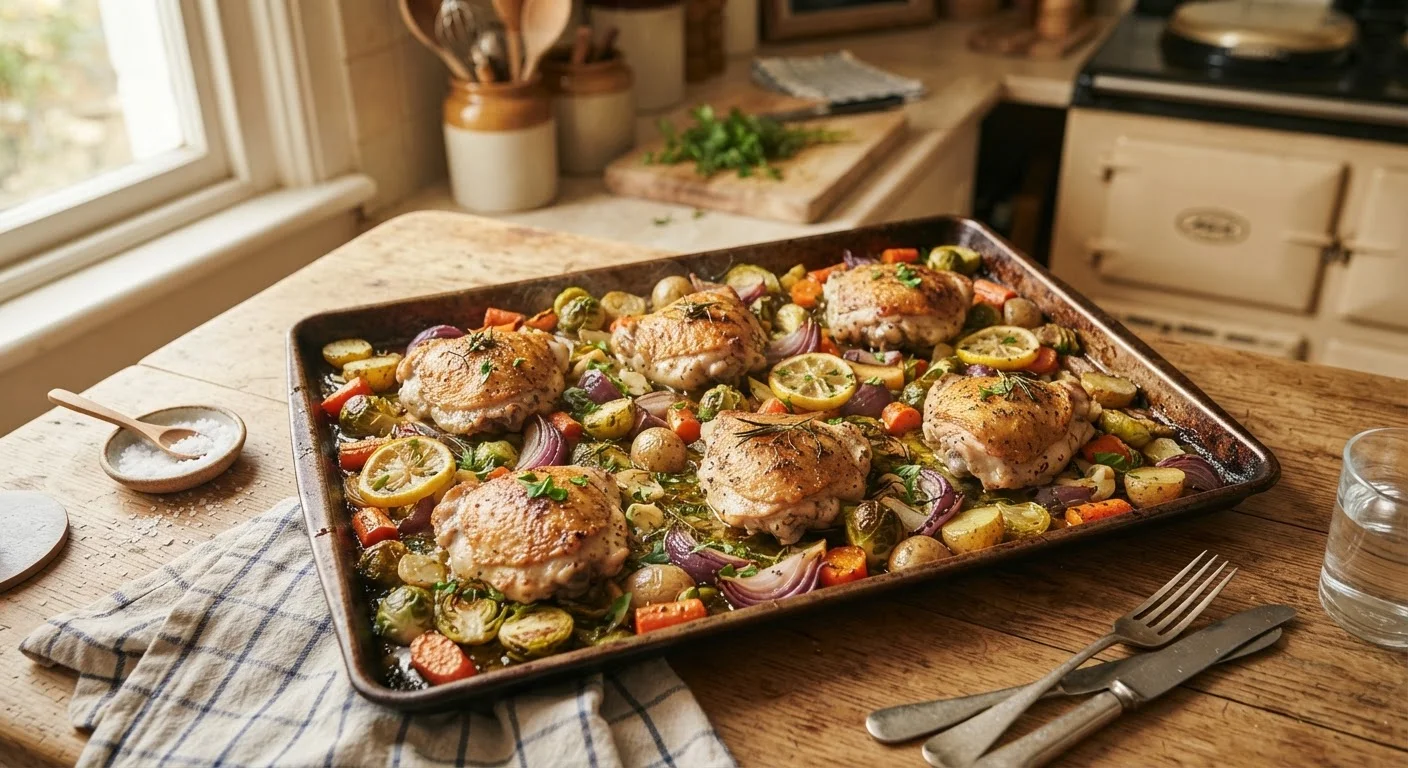
Sheet pan dinners are forgiving with ingredients. Nearly any protein works — bone-in chicken pieces, sausage links, salmon fillets, shrimp, or firm tofu. Vegetables that roast well include broccoli, bell peppers, zucchini, cherry tomatoes, onions, potatoes, sweet potatoes, carrots, and green beans. Most of these are among the most affordable produce options in any grocery store.
For budget stretching, root vegetables like potatoes and carrots are particularly economical and filling. If you want more ideas on making the most of affordable proteins, our article on stretching one chicken into four dinners offers a practical complement to this approach.
Pantry staples — olive oil, garlic powder, smoked paprika, dried herbs, salt, pepper — are all you need to season effectively. A well-stocked pantry means you can pull together a sheet pan dinner any night without a special shopping trip. Our pantry stocking guide covers exactly which staples earn their place.
Timing Tricks for Even Cooking
The single biggest challenge with sheet pan cooking is that different ingredients cook at different rates. A potato needs much longer than a zucchini. Solving this is simpler than it sounds: stagger your additions to the pan.
- Dense vegetables (potatoes, carrots, beets): go in first, usually 20–25 minutes before everything else.
- Proteins (chicken thighs, sausage): add roughly 20–30 minutes before serving, depending on thickness.
- Quick-cook vegetables (broccoli, green beans, cherry tomatoes): add 10–15 minutes before the end.
- Very fast items (shrimp, thin fish fillets, spinach): add only in the last 5–8 minutes.
Cutting ingredients to a consistent size also helps everything finish together. Roughly one-inch pieces for most vegetables is a reliable standard.
Don't Skip the Food Safety Check
Always verify that proteins are fully cooked before serving. Chicken should reach an internal temperature of 165°F (74°C); pork and fish have their own safe temperature targets. A simple instant-read thermometer removes all guesswork and is an inexpensive kitchen tool worth keeping on hand.
Simple Flavor Combos That Always Work
You don't need a recipe for every sheet pan dinner. A few reliable flavor combinations work across many ingredient variations:
- Mediterranean
- Olive oil, lemon zest, garlic, dried oregano — works well with chicken, zucchini, and cherry tomatoes.
- Smoky Southwest
- Smoked paprika, cumin, garlic powder, a pinch of cayenne — pairs naturally with sweet potatoes, black beans, and sausage.
- Simple Garlic-Herb
- Olive oil, minced garlic, rosemary or thyme — versatile enough to work with almost any protein or vegetable combination.
- Honey-Mustard
- A mix of mustard and a drizzle of honey as a glaze — especially good on chicken thighs and root vegetables.
These combinations use pantry staples and avoid the need for bottled sauces. Sheet pan dinners also make a useful contrast to pasta-based weeknight meals — our pasta nights guide covers that territory if you want variety in your rotation.
Making It a Weekly Habit
Once you're comfortable with the technique, sheet pan dinners slot naturally into a weekly cooking rhythm. Designating one or two nights per week to this format — varying the protein and vegetables each time — keeps meals from feeling repetitive while requiring almost no decision-making in the moment.
A small amount of prep at the start of the week makes this even easier. Chopping vegetables ahead and storing them in containers means weeknight assembly takes under ten minutes. Our weekly prep checklist walks through exactly what's worth doing in advance.
Sheet pan dinners won't solve every weeknight challenge, but they remove a lot of the friction that makes cooking feel hard. One tray, a hot oven, and ingredients you likely already have — that's a real meal most nights of the week.
This article is for general informational purposes only. Consult a registered dietitian or qualified healthcare professional for personalized nutrition guidance.