

Key Takeaways
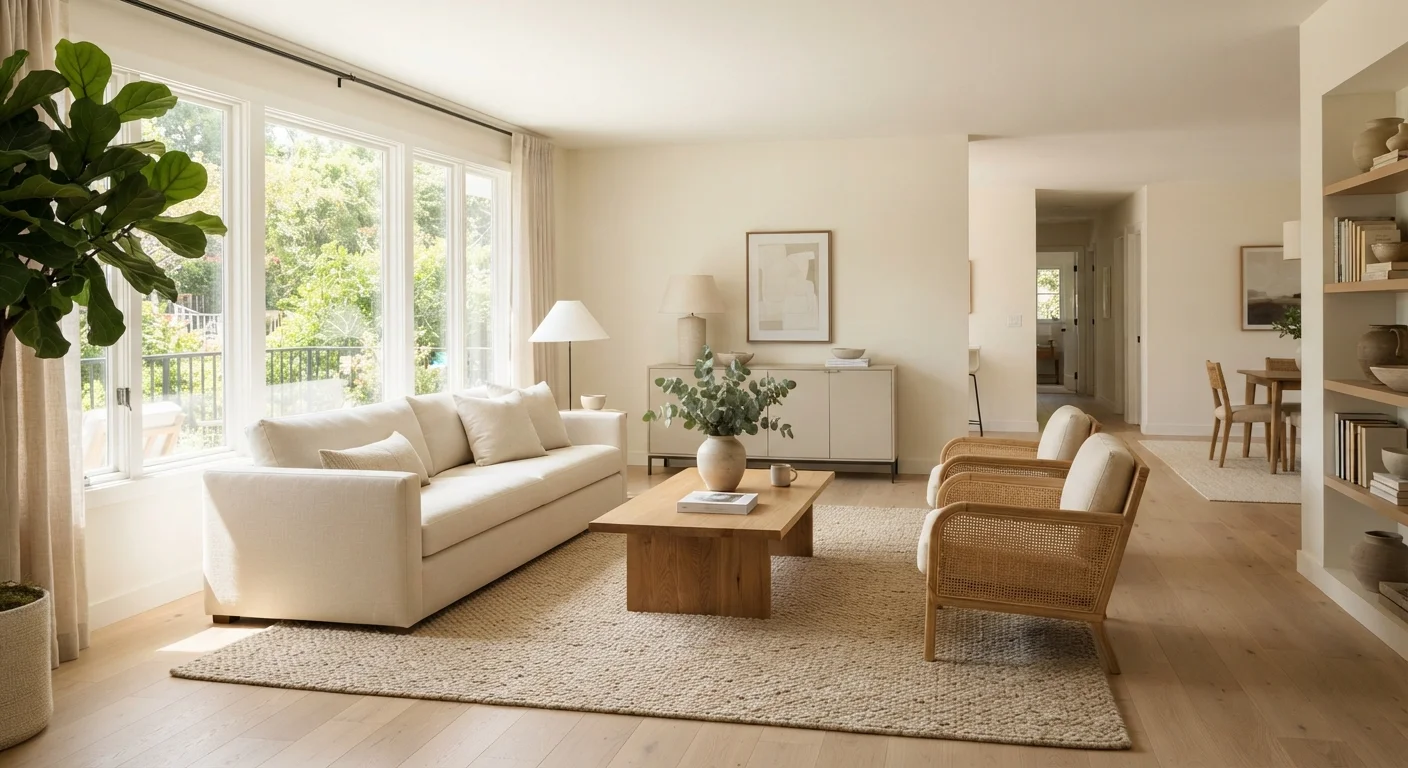
- Pulling furniture away from walls — not pushing it against them — typically makes rooms feel larger.
- Every room needs at least two clear pathways of 36 inches or more for comfortable movement.
- Anchoring a seating group with a rug creates visual order and prevents a scattered, cramped look.
- Scale matters: one oversized piece almost always works better than several small mismatched ones.
- Diagonal placement and floating furniture zones can dramatically improve flow in awkward floor plans.
The Wall-Hugger Mistake Almost Everyone Makes
The instinct to push furniture against every wall is nearly universal — and it's one of the most reliable ways to make a room feel smaller and less functional. When sofas and chairs line the perimeter, the center of the room becomes dead space, and conversational groupings stretch so far apart they stop working.
Moving seating pieces even 12 to 18 inches away from the walls creates a floating arrangement that defines a zone within the room. This is counterintuitive but well-supported by interior design practice: negative space around furniture actually makes the room's footprint read as larger. If you're curious about the psychological reasons behind this, why small rooms feel smaller than they are breaks down the visual factors at work.
Pathways, Anchors, and Traffic Flow
Before placing a single piece, identify the room's traffic lanes — the routes people naturally travel between doorways, windows, and key destinations. A general guideline is to keep main pathways at least 36 inches wide, with secondary pathways around 24 inches. Narrower than that and the room starts to feel like an obstacle course.
Once you've protected those lanes, choose an anchor — typically the largest piece or a focal point like a fireplace or window — and build outward from there. A rug placed under or in front of the primary seating group pulls the arrangement together visually. The rug should be large enough that at least the front legs of every major piece rest on it; an undersized rug floats awkwardly and fragments the space rather than unifying it.
Scale, Proportion, and the One-Big-Piece Rule
Rooms cluttered with small furniture almost always feel busier and more cramped than rooms anchored by one or two appropriately scaled pieces. If your room is modest in size, resist the urge to fill it with petite items — a single well-proportioned sofa reads as intentional, while four mismatched accent chairs of different heights create visual noise.
Height matters too. Low-profile furniture keeps sightlines open, making a space feel less boxed in. Tall bookcases and shelving, on the other hand, draw the eye upward — a useful trick for rooms with average or low ceilings. For more on using vertical space strategically, see how to use vertical space effectively.
If your situation calls for furniture that does double duty — storage ottomans, fold-out desks — it's worth reading about the real trade-offs of multifunction furniture before committing.
Working With Light and Shared Spaces
Furniture placement affects how light moves through a room. Blocking a window with the back of a sofa cuts off natural light at its source; positioning seating beside or across from windows lets light reach more of the room. Mirrors placed opposite windows amplify this effect considerably — something covered in more depth in paint, lighting, and mirrors as low-cost tools.
In shared or multi-use spaces, arrangement becomes about zones as much as aesthetics. A sofa angled slightly to divide a living and dining area, or a console table positioned behind a couch, can signal separate functions without a wall. For households with multiple people using the same space, making a shared living space work for different people offers practical strategies worth pairing with these arrangement principles.
The best floor plan isn't the one with the most furniture — it's the one where every piece earns its place, movement feels easy, and the room works for the people actually living in it.