

Key Takeaways
- Multifunction furniture can recover significant usable floor space in small rooms.
- Dual-purpose pieces often cost more upfront than single-function alternatives.
- Mechanical components — hinges, frames, pull-out tracks — add long-term maintenance risk.
- Comfort in one mode (e.g., sleeping) is frequently compromised to support another mode (e.g., sitting).
- The best multifunction pieces are those you'll genuinely switch between regularly, not hypothetically.
Recovers usable floor space in small rooms
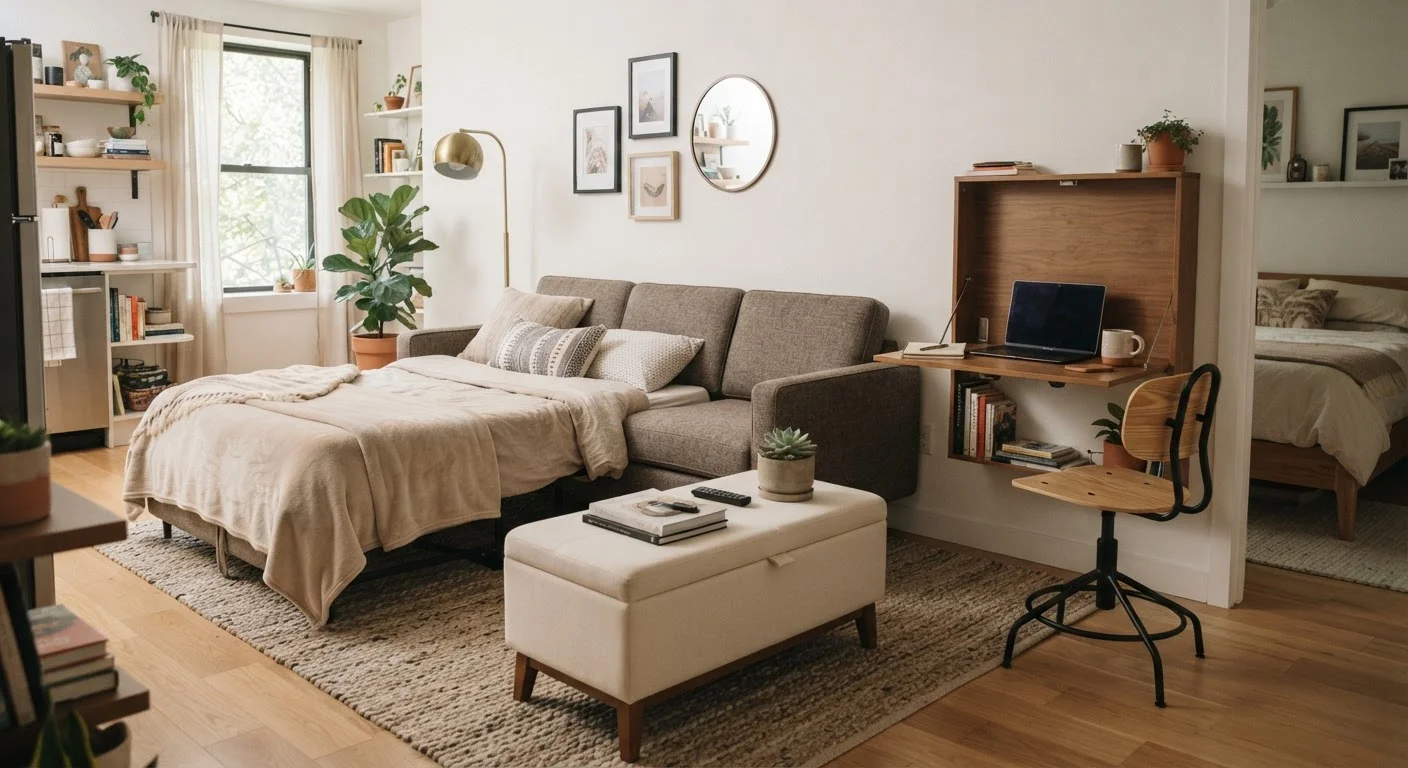
A sofa bed eliminates the need for a separate guest bedroom, and a storage ottoman can replace both a coffee table and a storage unit. In a studio or one-bedroom apartment, this can meaningfully open up the floor plan.
Can reduce the total number of pieces needed
Fewer individual furniture items means less visual clutter, simpler room layouts, and potentially lower overall furniture spending — particularly useful when furnishing a new place on a tight budget.
Adapts to changing household needs
A fold-down desk can become a dining extension when needed, or a guest room can revert to a home office the next day. This flexibility suits households whose routines shift seasonally or as family circumstances change.
Supports occasional-use needs without dedicated space
Hosting guests a few times a year doesn't justify a full guest room. A quality sofa bed or daybed fills that gap without permanently allocating square footage to a rarely-used function.
Higher upfront cost than single-function alternatives
A well-made sofa bed typically costs considerably more than a comparable sofa or a standalone bed frame. If both functions don't get regular use, the value case weakens quickly.
Mechanical parts add long-term maintenance risk
Hinges, pull-out frames, and folding mechanisms wear over time. Repairs can be difficult or expensive, and replacement parts aren't always available — especially for lower-cost imported pieces.
Comfort is often compromised in one or both modes
Sofa beds are a common example: the mattress is thinner than a standard bed, and the bar or joint can be felt through it. Similarly, the sofa cushions may be firmer than ideal to accommodate the folding frame beneath.
Conversion can be physically awkward or time-consuming
What looks effortless in a showroom may require clearing surrounding furniture, wrestling with stiff mechanisms, or lifting heavy sections at home. If conversion is a hassle, the secondary function goes unused.
May not fit the room in both configurations
A sofa bed fully extended can block walkways, doors, or windows that a standard sofa sits well clear of. Always measure both footprints before purchasing.
Storage compartments can become disorganised quickly
Ottoman and bench storage tends to become an unsorted pile without the structure of shelves or drawers. Items get buried and forgotten, reducing the practical value of the storage function.
Our Verdict
Multifunction furniture delivers real value in genuinely space-constrained homes where the dual purpose will be used consistently. The trade-offs — higher cost, more maintenance, and comfort compromises — become harder to justify when the secondary function is rarely needed or the piece is too awkward to convert easily. Think carefully about frequency of use before committing.
Best suited to renters, studio apartment dwellers, and budget-conscious households who regularly host overnight guests or work from shared living spaces with limited square footage.
Why Multifunction Furniture Has Become So Popular
Smaller homes and apartments have pushed a lot of households to rethink how every square foot gets used. A piece of furniture that can serve two or three roles sounds like an obvious win — and in many situations, it genuinely is. Sofa beds accommodate overnight guests without a dedicated guest room. Storage ottomans replace both a coffee table and a linen chest. Fold-down desks create a home office that disappears after hours.
The appeal goes beyond space-saving. For budget-conscious households, combining two pieces of furniture into one can look like a straightforward cost saving. And on paper, it often is — until you factor in what you're actually getting for that money. Understanding the real trade-offs helps you buy with confidence rather than regret.
If you're also thinking about how your layout affects the room overall, furniture arrangement principles can help you think through placement before anything lands in your cart.
The Genuine Advantages
There are solid reasons why multifunction furniture has earned its place in modern homes — and they go beyond marketing copy.
Recovers usable floor space in small rooms
A sofa bed eliminates the need for a separate guest bedroom, and a storage ottoman can replace both a coffee table and a storage unit. In a studio or one-bedroom apartment, this can meaningfully open up the floor plan.
Can reduce the total number of pieces needed
Fewer individual furniture items means less visual clutter, simpler room layouts, and potentially lower overall furniture spending — particularly useful when furnishing a new place on a tight budget.
Adapts to changing household needs
A fold-down desk can become a dining extension when needed, or a guest room can revert to a home office the next day. This flexibility suits households whose routines shift seasonally or as family circumstances change.
Supports occasional-use needs without dedicated space
Hosting guests a few times a year doesn't justify a full guest room. A quality sofa bed or daybed fills that gap without permanently allocating square footage to a rarely-used function.
~350 sq ft
Average US studio apartment size
The US Census Bureau's American Housing Survey consistently places studio apartment median sizes in the 300–400 square foot range, underlining how common space constraints are.
2–3 functions
Typical roles for multifunction pieces
Most multifunction furniture is designed around two primary uses — such as seating and sleeping — with a third occasional use like storage, making versatility practical but not unlimited.
Beyond the raw space savings, there's a psychological benefit to a room that can adapt. A living room that doubles as an occasional guest room removes the guilt of not having a dedicated spare bedroom — useful for anyone in an apartment or a home with one fewer room than they'd like.
The Real Limitations
The drawbacks of multifunction furniture tend to emerge over time, not on day one. Knowing them upfront prevents buyer's remorse.
Higher upfront cost than single-function alternatives
A well-made sofa bed typically costs considerably more than a comparable sofa or a standalone bed frame. If both functions don't get regular use, the value case weakens quickly.
Mechanical parts add long-term maintenance risk
Hinges, pull-out frames, and folding mechanisms wear over time. Repairs can be difficult or expensive, and replacement parts aren't always available — especially for lower-cost imported pieces.
Comfort is often compromised in one or both modes
Sofa beds are a common example: the mattress is thinner than a standard bed, and the bar or joint can be felt through it. Similarly, the sofa cushions may be firmer than ideal to accommodate the folding frame beneath.
Conversion can be physically awkward or time-consuming
What looks effortless in a showroom may require clearing surrounding furniture, wrestling with stiff mechanisms, or lifting heavy sections at home. If conversion is a hassle, the secondary function goes unused.
May not fit the room in both configurations
A sofa bed fully extended can block walkways, doors, or windows that a standard sofa sits well clear of. Always measure both footprints before purchasing.
Storage compartments can become disorganised quickly
Ottoman and bench storage tends to become an unsorted pile without the structure of shelves or drawers. Items get buried and forgotten, reducing the practical value of the storage function.
One overlooked issue is the conversion process itself. Many pieces that sound seamless in a showroom require clearing surrounding items, pulling out mechanisms stiffly, or lifting heavy sections. If the conversion feels like a chore, you'll avoid doing it — and that secondary function stops being a feature.
Questions to Ask Before You Buy
The most useful filter isn't "does this piece look good?" — it's "will I actually use both functions, regularly, without frustration?" Run through these before committing:
- How often will I realistically use the secondary function? Once a year for a guest visit is different from three nights a week for a work-from-home setup.
- What does conversion physically involve? Test it in the store, or watch a full demonstration. Count the steps and the effort.
- What happens to items on or around it when it switches modes? A fold-down desk may require clearing a shelf every time. A sofa bed may need moving cushions to a chair that doesn't exist yet.
- How durable are the moving parts? Ask about the mechanism warranty specifically, not just the frame warranty.
- Does it fit the room in both configurations? A sofa bed that fully extends may block a doorway or window that a standard sofa wouldn't.
Measure Both Configurations Before Buying
The footprint of a piece in its primary mode and its secondary mode can differ significantly. A sofa bed that works perfectly as a sofa may extend 3–4 feet further when opened flat, potentially blocking doorways or windows. Always measure the fully converted dimensions against your room before purchasing, not just the sofa or desk dimensions shown in product listings.
For rooms where storage is the core problem, vertical storage solutions can complement or even replace the need for bulky multifunction pieces — worth considering before you commit to a floor-heavy item.
When Multifunction Furniture Makes Sense — and When It Doesn't
A sofa bed makes strong sense if you host guests a handful of times a year and have no room for a dedicated guest bed. It makes less sense if your only guests are toddlers who'd sleep on an air mattress anyway, or if the sofa will be your primary seating every day and you need it to be genuinely comfortable.
A storage ottoman earns its place when you genuinely lack another storage option and use the space inside regularly. It loses its value if it becomes a permanent dumping ground that's rarely opened, or if you really needed a proper coffee table with a stable surface.
A fold-down desk is worth considering for anyone who works from home occasionally and doesn't want a permanent desk dominating a small room. It's less ideal if your work requires multiple monitors, large documents, or equipment that needs to stay set up.
If you share a space with others and need flexible room functions, the article on making shared living spaces work covers how to align on layout decisions that serve multiple people well.