

Key Takeaways
- Most rooms use only the bottom third of their available height for storage.
- Wall-mounted shelving and tall furniture can dramatically increase a room's storage capacity.
- Vertical organization often costs less than moving to a larger home or renting storage.
- High shelves work best for infrequently used items; eye level stays reserved for daily access.
- Visual height cues like tall shelving or vertical lines can make a room feel larger.
Vertical Space
Vertical space refers to the height dimension of a room — the area between your floor and ceiling that often goes unused for storage or display. Most people organize at eye level and below, leaving a significant portion of every room completely empty. Thinking vertically means deliberately using walls, height, and stacked arrangements to hold belongings without consuming more floor area.
In interior design and space planning, vertical storage is often described as the Z-axis of room organization — the dimension that offers the most untapped capacity in rooms with fixed footprints.
The Dimension Hiding in Plain Sight
Walk into most homes and you'll notice a pattern: storage is concentrated between ankle height and about five feet up. Above that, walls are bare. The upper reaches of closets sit empty. Space above cabinets collects dust but nothing useful. That gap — from roughly chest height to ceiling — is vertical space, and it's the most consistently wasted dimension in residential rooms.
Floor area is fixed. You can't expand it without renovation or a bigger lease. But height? In most homes, that dimension is barely touched. A standard room with 8-foot ceilings contains far more usable wall area than most people ever put to work. This is the organizing opportunity that costs the least and delivers some of the biggest gains in perceived and actual capacity.
Common organizing myths often focus on sorting and decluttering — both genuinely useful — but they rarely address the structural dimension of where things go once they're sorted. That's where vertical thinking fills the gap.
How Vertical Storage Actually Works
The principle is straightforward: stack upward rather than outward. Instead of a short, wide bookcase that eats floor space and fills quickly, a tall, narrow unit holds more volume while occupying a smaller footprint. Instead of a single row of hooks by the door, a vertical panel with hooks at multiple heights triples the hanging capacity in the same horizontal span.
Vertical storage generally works in three zones:
- Eye level to 6–7 feet: Prime real estate for frequently used items — books, everyday dishware, current projects.
- 7 feet to ceiling: Best reserved for seasonal items, archives, or rarely needed supplies. A step stool is required, so this zone should hold things you access only a few times a year.
- Floor to 18 inches: Often overlooked as vertical opportunity, but stacking shallow bins or using the underbed zone counts. Pairing low and high storage frees mid-wall space for lighter items.
Wall-mounted shelving, pegboards, magnetic strips, tall wardrobes, and stacking storage units are all tools that exploit this logic. The goal isn't to fill every inch of wall — it's to deliberately assign the height dimension a role rather than leaving it empty by default.
~33%
Average wall height used for storage in typical rooms
Interior designers commonly note that most households utilize only the lower third of available wall height for storage or display purposes.
8–9 ft
Standard ceiling height in US homes
The US Census Bureau reports that 8- to 9-foot ceilings are standard in most American single-family homes, leaving substantial unused vertical capacity in nearly every room.
Room-by-Room Applications
Vertical space works differently depending on the room, but the core opportunity exists in nearly every one.
Kitchen: Upper cabinet space is often underused above the first shelf. Open shelving above counters — where accessible — can hold items used weekly. The trade-offs between open and closed kitchen storage are worth weighing, but height remains available in almost every kitchen layout.
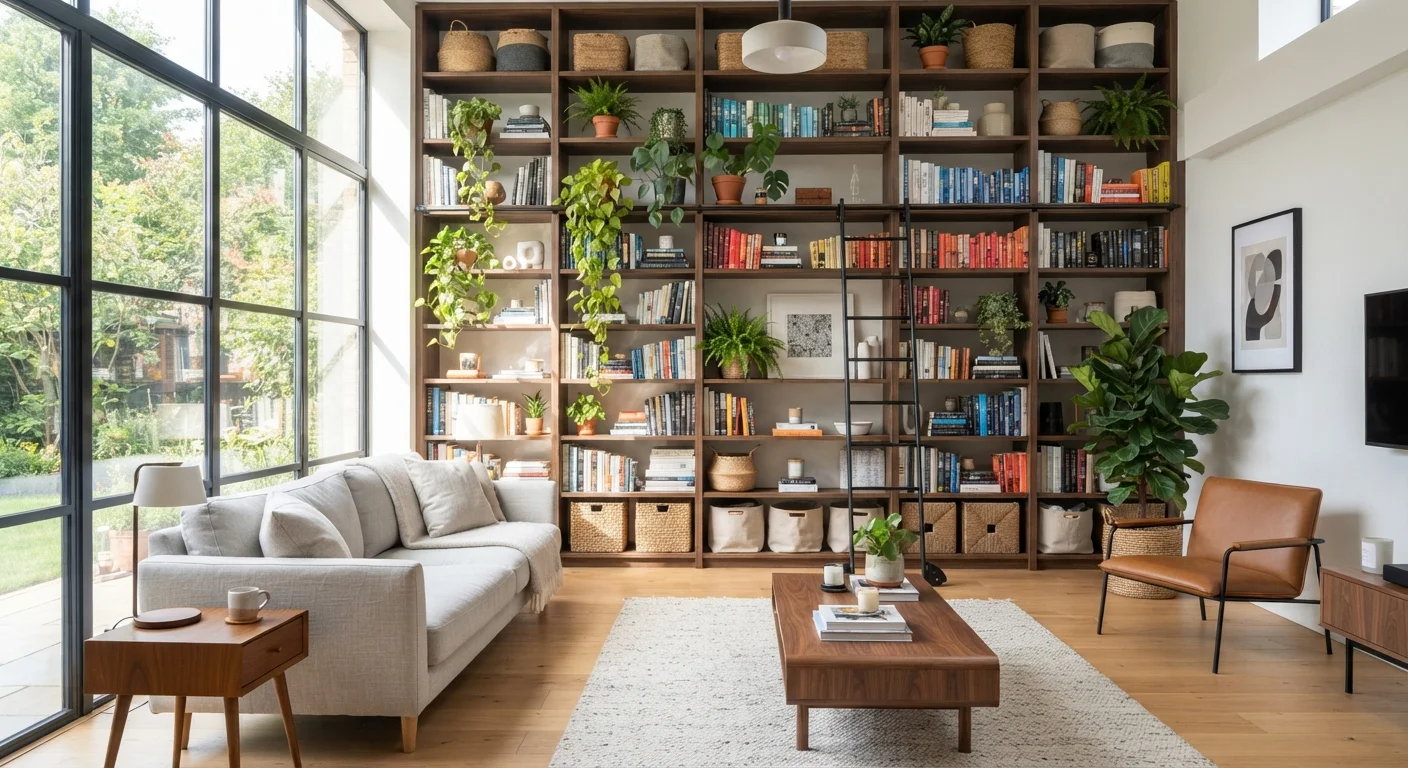
Living room: Floor-to-ceiling bookcases double as both storage and visual anchors that make rooms feel more considered and complete. If built-ins aren't an option, tall freestanding units achieve a similar effect.
Bedroom: Wardrobes with double-hang rods use vertical space inside; adding a high shelf above the rod recovers another foot or more. Headboard shelving units replace the need for bedside tables while keeping the floor clear.
Entryway: A narrow hall benefits most from vertical thinking — a tall coat rack, stacked hooks, or a slim shelving column transforms a cramped entry without blocking movement.
If floor clutter is the visible problem, vertical storage is often the structural fix. For more on what's actually creating the squeeze, see hidden storage spots most households overlook.
Visual Effects Worth Understanding
Beyond storage, vertical elements have a measurable effect on how spacious a room feels. Tall shelving draws the eye upward, making ceilings appear higher. Vertical lines — whether from floor-length curtains hung close to the ceiling or a narrow, tall piece of furniture — lengthen the perceived height of a room. This is why designers often hang curtain rods several inches above the window frame: it's a simple visual trick that costs almost nothing.
The flip side is that very full or visually dense shelving can feel cluttered if not organized thoughtfully. Mixing storage with a few open, styled sections — a plant, a small piece of art — keeps tall shelves from feeling oppressive. The goal is organized height, not packed height.
Furniture arrangement principles and vertical storage often work together: once floor furniture is positioned to improve flow, the walls above become more visually available for height-based solutions.
“The floor plan is what you're given. The walls are what you make of it. Most people stop organizing at shoulder height and wonder why they're always running out of room.”
— Sarah Susanka, Architect and author known for writing about home design and livable space