

Key Takeaways
- Timing matters more than technique — pruning at the wrong moment can cost a full season of blooms.
- Never remove more than one-third of a plant's total growth in a single season.
- Spring-blooming shrubs should be pruned right after they flower, not in fall or early spring.
- Dead, diseased, and crossing branches are always safe to remove regardless of season.
- Clean, sharp tools make better cuts and reduce the risk of spreading disease between plants.
What you will need
Why Timing Is the Most Important Variable
Most pruning mistakes aren't about technique — they're about timing. Cut a lilac in late winter and you'll have removed every flower bud it spent the previous summer developing. Cut a butterfly bush in fall and you've potentially exposed fresh wounds to harsh winter conditions. The plant won't die from either mistake, but you've set it back by a full season, sometimes more.
The underlying reason timing matters is that plants operate on internal schedules tied to light, temperature, and growth cycles. Pruning interrupts whatever the plant is currently doing — storing energy, setting buds, pushing new growth — so the goal is to interrupt it at a moment when the disruption causes the least harm and, ideally, channels the plant's energy in a useful direction.
A few general rules hold across most garden plants in most US climates:
- Late winter (just before new growth emerges) is the default safe window for most woody plants, trees, and summer-flowering shrubs.
- Immediately after flowering is the safe window for spring bloomers.
- Avoid heavy pruning in late summer or early fall — new growth stimulated then may not harden off before frost.
If you're just getting started with garden maintenance, the beginner's guide to garden care covers foundational concepts that put pruning in broader context.
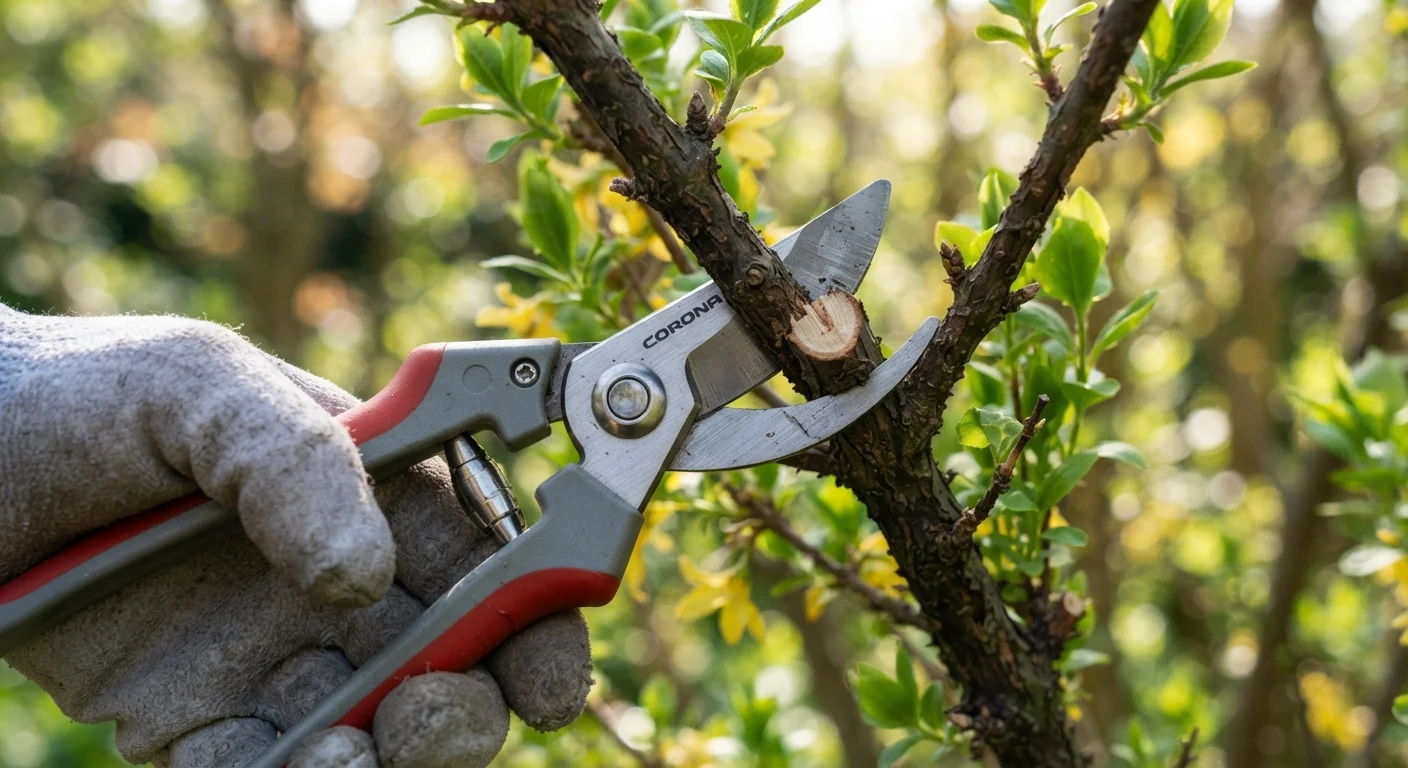
Bypass hand pruners
Used for clean cuts on stems and branches up to about ¾ inch thick.
Loppers
Extends your reach and cutting leverage for branches between ¾ inch and 2 inches thick.
Pruning saw
Needed for woody branches thicker than 2 inches where loppers can't cut cleanly.
Rubbing alcohol or diluted bleach solution
Used to disinfect tool blades between cuts when removing diseased material.
Gloves
Protects hands from thorns, sap, and rough bark during pruning work.
Step-by-Step: How to Prune Correctly
Follow these steps in order for any shrub, perennial, or small tree in your yard. Having the right tools on hand before you start makes a real difference.
What you will need
Identify what type of plant you're pruning
Before you cut anything, know what you're working with. The single most common pruning mistake is treating every plant the same. Broadly, you're dealing with one of three categories:
- Spring-blooming shrubs (lilacs, forsythia, azaleas): These set their flower buds in late summer on old wood. Prune them after they bloom in spring, not before.
- Summer- or fall-blooming shrubs (butterfly bush, panicle hydrangeas, roses): These bloom on new growth. Pruning them in late winter or early spring encourages vigorous new shoots.
- Trees and evergreens: Light shaping is usually fine in late winter while they're dormant. Heavy pruning of oaks and elms is best avoided in spring and early summer when disease-spreading insects are active.
If you're unsure what you have, a local cooperative extension office or a reliable plant identification app can help you narrow it down before you start cutting.
Inspect the plant and mark your priorities
Walk around the plant slowly before picking up any tool. Look for three things first — these are your unconditional priorities regardless of season:
- Dead wood: Brittle, hollow, or completely brown. Remove it. Dead wood doesn't recover and can harbor pests.
- Diseased or damaged branches: Discolored bark, cankers (sunken lesions), or unusual growths. Cut these out and disinfect your blades immediately after.
- Crossing or rubbing branches: Where two branches rub together, they create wounds that invite disease. Remove the weaker of the two.
Once you've handled these, step back and assess the overall shape. Ask yourself what the plant naturally wants to be before you impose any form on it.
Apply the one-third rule
A healthy plant can handle losing up to one-third of its total growth in a single pruning session. Removing more than that stresses the plant and triggers a defensive survival response — often a flush of weak, unproductive growth called water sprouts or suckers.
For most routine maintenance, you'll remove far less than one-third. This rule is mainly a ceiling, not a target. If a shrub is badly overgrown and needs more than one-third removed to get it under control, spread the work over two or three seasons rather than doing it all at once.
Make clean cuts at the right location
Where and how you cut matters for how well the plant heals. Follow these guidelines:
- Cut just above a bud or lateral branch, angled slightly away from it (about 45 degrees). This directs new growth outward rather than inward.
- Don't leave stubs. A stub — a section of branch with no bud or side branch attached — can't heal cleanly and usually dies back, creating an entry point for rot.
- Don't cut flush with the trunk on larger branches. Leave the branch collar — the slightly swollen ring of tissue at the base of the branch — intact. This tissue is what allows the wound to seal over.
Use the right tool for the diameter you're cutting. Forcing a hand pruner on a branch too thick for it crushes tissue instead of cutting it cleanly.
Know what to leave alone
Not every branch that looks odd needs to go. Leave the following alone unless there's a clear health reason to remove them:
- Flower buds on spring bloomers if you're pruning at the wrong time of year — you'll lose this season's display. Better to wait.
- Strong, outward-facing branches that give the plant its natural structure. Removing these just to tidy things up weakens the overall framework.
- New growth on recently transplanted plants. Freshly moved shrubs and trees are already under stress. Minimal pruning — just dead or damaged material — is enough for the first season.
For a fuller picture of what each season calls for, the Seasonal Garden Maintenance month-by-month reference covers pruning alongside other key tasks throughout the year.
Sharp Tools Are Worth the Effort
A dull blade tears plant tissue instead of cutting it cleanly, leaving ragged wounds that take longer to heal and are more vulnerable to disease. Sharpening hand pruners takes about five minutes with a basic whetstone and is worth doing at the start of each season. Quality tools, properly maintained, go a long way further than cheap ones replaced every year.
Don't Prune Oaks in High-Risk Periods
Oak wilt is a serious fungal disease spread by beetles that are most active from spring through early summer. In regions where oak wilt is present, avoid pruning oaks during this window. If a branch must be removed due to storm damage, seal the wound promptly with pruning paint — the one context where wound sealants are generally recommended. Check with your local cooperative extension service for specific timing guidance in your area.
Pruning Trees Near Power Lines or Structures
Do not attempt to prune large branches near overhead power lines, or any limb that could fall on a structure, fence, or person. This work carries real risk of serious injury and is best handled by a certified arborist. Many utility companies also handle trimming near their lines at no cost to homeowners — contact your utility provider to ask.
Once you've finished pruning, a layer of mulch around the base of the plant helps retain moisture and moderate soil temperature while the plant recovers. The guide to garden mulching explains what materials work best and when to apply them.