

Key Takeaways
- Clearing diseased plant debris now prevents pests and fungal problems from carrying over to next season.
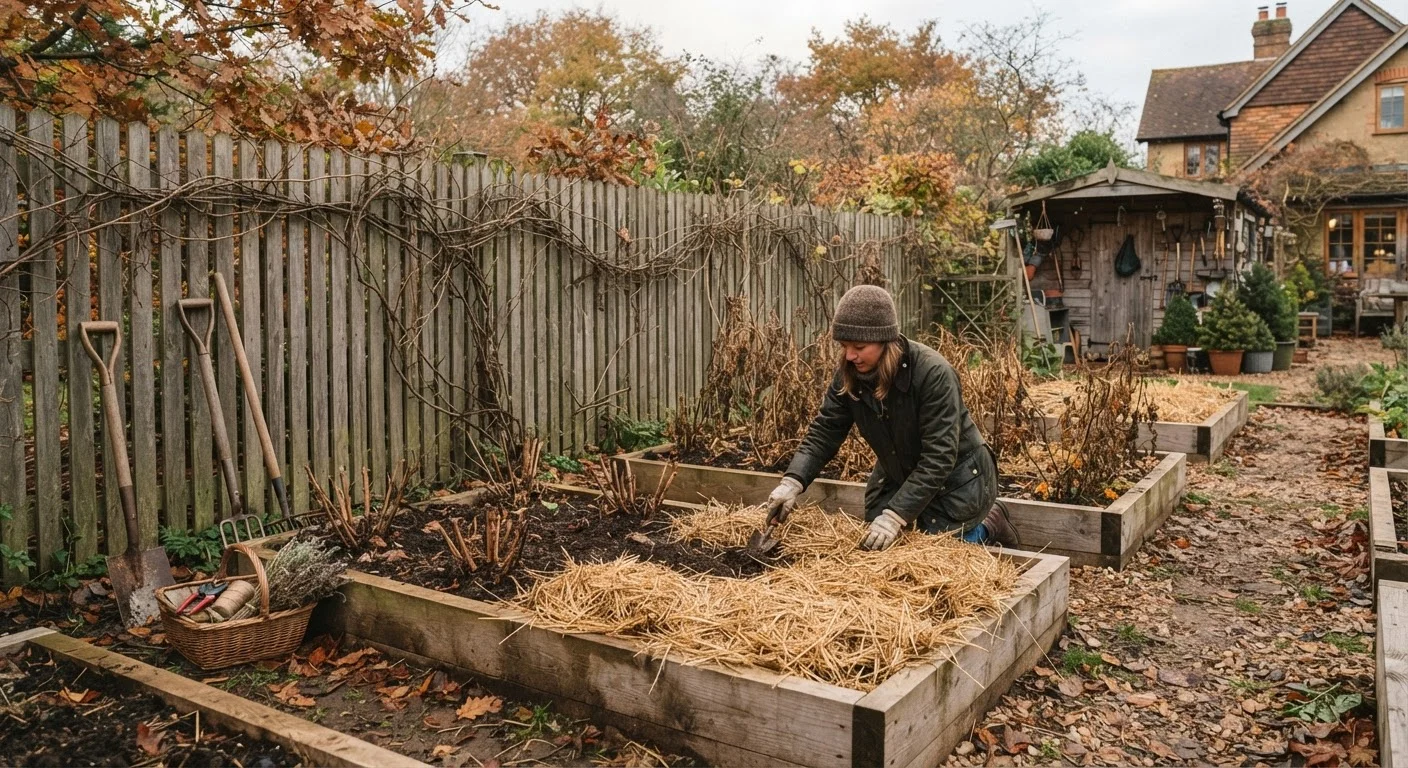
- Mulching garden beds before a hard freeze helps protect roots and soil structure at no great cost.
- Tender perennials and potted plants need to move indoors or be wrapped before temperatures drop consistently below freezing.
- Cleaning and storing tools properly extends their life and saves money over time.
- Composting spent plant material turns garden waste into free fertiliser for spring.
Summary
22 items · 1.5–3 hours spread over a weekend
Why End-of-Season Prep Pays Off
Skipping the autumn tidy-up is one of the most common — and costly — mistakes home gardeners make. Leaving diseased foliage, unprotected roots, and dirty tools to sit through winter sets you back before spring even begins. A couple of hours now can mean fewer pest problems, healthier soil, and lower replacement costs next year.
This checklist walks through everything worth tackling before hard frost arrives. It's designed for everyday homeowners working with ordinary tools and a realistic schedule. For a broader view of what each season demands from your garden, see our month-by-month garden maintenance reference.
Work through the groups in order — clearing first, protecting second, storing last. That sequence keeps you from tracking debris through areas you've already tidied.
Clearing and Cleaning
Pruning and Cutting Back
Soil and Bed Preparation
Protecting Tender Plants
Composting
Tool and Equipment Storage
Tools and Supplies You'll Need
Most end-of-season tasks require basic equipment you likely already own. A few inexpensive extras — like burlap or straw mulch — go a long way. If you're unsure where to spend versus where to save on garden supplies, our guide on keeping a garden on a tight budget breaks down the trade-offs clearly.
Garden fork or spade
Used for turning compost, loosening soil, and removing deep-rooted weeds and spent plants.
Pruning shears (secateurs)
Essential for cutting back perennials, trimming roses, and removing dead or damaged branches.
Garden rake
Used for gathering fallen leaves and levelling mulch across beds.
Wheelbarrow or trug
Makes moving plant debris, compost, and mulch considerably faster and easier.
Straw or bark chip mulch
Applied over beds to insulate roots and help regulate soil temperature through winter.
Horticultural fleece or burlap
Wraps borderline-hardy shrubs and pots to buffer against frost damage.
Linseed or mineral oil
Applied to clean metal tool heads to prevent rust during storage.
Kneeling pad
Protects knees during extended ground-level work, particularly useful for bulb planting and weeding.
Pruning: Know Before You Cut
Not everything in the garden should be cut back in autumn. Ornamental grasses, seed heads, and certain perennials provide winter interest and shelter for beneficial insects — cutting them too early does more harm than good. Roses, on the other hand, benefit from a light trim to reduce wind rock, but major pruning should wait until late winter.
Don't Cut Everything Back in Autumn
Cutting back too aggressively in autumn can leave plants vulnerable and remove beneficial overwintering habitat. Many perennials — especially ornamental grasses, echinacea, and rudbeckia — are best left standing until late winter or early spring. Check the specific needs of each plant before reaching for the pruners.
When in doubt about timing or technique, our article on when and how to prune covers the principles behind sound cutting decisions. Getting this right protects plants from unnecessary stress heading into cold weather.
Don't Forget the Rest of Your Home
The garden is only one piece of the pre-winter picture. Gutters clogged with autumn leaves, drafty window seals, and neglected heating systems all become bigger problems once cold weather sets in. Once you've wrapped up the garden checklist, it's worth running through our pre-winter home maintenance checklist to make sure the rest of your property is equally prepared.
Avoid Working on Frozen or Waterlogged Ground
Walking on or digging compacted, waterlogged soil destroys its structure — undoing months of conditioning. Wait for a dry spell before doing any soil work. If the ground has already frozen, hold off until it thaws and drains, even if that pushes some tasks into early spring.
Taking a whole-property approach over a weekend — garden one day, house the next — keeps the effort manageable and avoids the scramble that comes with the first hard freeze.