

Key Takeaways
- A meal rotation assigns dish categories to specific days, reducing daily decision fatigue.
- Using flexible frameworks like grain bowls or stir-fries keeps meals varied without extra planning effort.
- Rotating proteins and cuisines on a two-week cycle prevents the repetition that kills motivation.
- Anchor ingredients cooked in bulk once can carry multiple different meals through the week.
- A well-stocked pantry makes your rotation resilient when schedules change unexpectedly.
What you will need
Why a Meal Rotation Works Better Than Weekly Scratch Planning
Most people who try to meal plan from scratch every Sunday eventually quit. The decisions pile up, the process takes longer than dinner itself, and variety feels impossible to maintain on a budget. A meal rotation solves this by shifting the question from "what should I cook this week?" to "what category does tonight call for?"
Think of it as a repeating template — one that you gradually refine rather than rebuild. Monday might always be pasta night; Thursday might always be something from a sheet pan. The category stays fixed, but the specific dish within that category changes. This structure shrinks mental load without sacrificing variety. For a deeper look at the principles that make budget planning sustainable, see our guide to budget meal planning.
What You'll Need Before You Start
Building a rotation doesn't require special tools, but a few inputs make the process faster and stickier.
What you will need
Meal category list
Assign broad dish types (pasta, soup, stir-fry, etc.) to each weeknight as the backbone of your rotation.
Two-week calendar template
Map out two rotating weeks so meals don't repeat identically every seven days.
Pantry inventory
Know what staples you have on hand so recipes can flex around what's already stocked.
Shared household notes app or whiteboard
Keep the rotation visible to everyone in the household to reduce repeated questions about dinner.
How to Build Your Rotation
Follow these steps to set up a rotation you'll actually stick to. The goal is a working draft by the end — not perfection.
List your household's reliable meals
Start by writing down every meal your household already eats without complaint. Aim for 12–16 dishes. Don't add aspirational recipes you've never made — just the reliable ones. This is your working library.
Assign a category to each weeknight
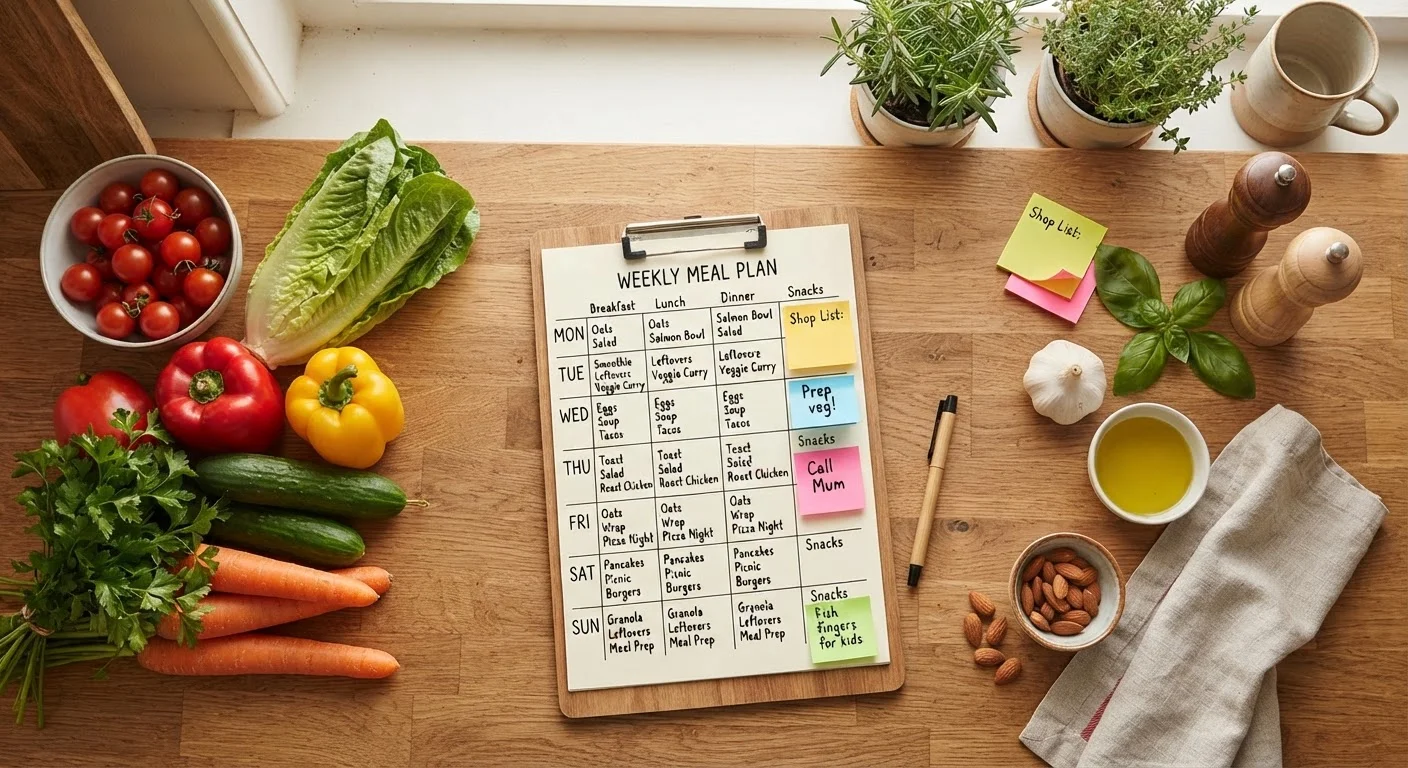
Rather than assigning specific dishes to days, assign categories. Examples: Monday = pasta or noodles, Tuesday = protein + roasted veg, Wednesday = soup or stew, Thursday = sheet pan meal, Friday = wraps or tacos, Saturday = freestyle or takeout, Sunday = batch cook for the week.
Categories create structure without locking you into one dish forever.
Slot your existing meals into the categories
Go back to your list from Step 1 and match each meal to its natural category. A spaghetti bolognese goes under pasta night; a roasted chicken with potatoes goes under protein + veg. Most meals will slot in easily. If a dish doesn't fit any category, either create a new category or set it aside for later.
Build a two-week draft
Fill out two weeks of dinners using your categories and meal library. Week 1 and Week 2 should share the same category structure but use different specific dishes under each one. This simple alternation doubles your variety without doubling your planning effort.
Test it for two weeks, then adjust
Run the rotation as written for two full weeks before making changes. Note which nights felt hard or which meals nobody wanted to eat. After two weeks, swap out the weakest entries and replace them with alternatives from your library or a new recipe you want to try.
Treat this as a living document — small quarterly updates keep it current without requiring a full rebuild.
Keeping the Rotation Fresh Over Time
The most common reason rotations fail isn't laziness — it's monotony. Here are three practical ways to keep things interesting without rebuilding from scratch.
Run a two-week cycle instead of one. Rather than repeating identical meals every seven days, build two slightly different versions of your rotation and alternate them. Week A's pasta night might be marinara; Week B's might be a white bean and greens variation.
Swap one protein per season. If your Tuesday protein has been chicken thighs for three months, rotate in canned salmon, lentils, or eggs for a stretch. This keeps nutrition varied, too — a helpful habit to track with a weekly grocery nutrition audit.
Use flexible meal frameworks. Dishes like grain bowls, stir-fries, and tacos are not single recipes — they're structures. Swap the grain, the protein, or the toppings and you have a new meal with zero extra planning. Our grain bowl formula guide breaks down exactly how this works.
One Anchor Ingredient, Many Meals
Cooking a large batch of one ingredient — rice, lentils, or roasted vegetables — at the start of the week lets it appear in different forms across multiple dinners. This cuts active cooking time mid-week and reduces food waste significantly. Check out our article on reducing food waste at home for more strategies that keep variety high and waste low.
Making Your Rotation Stretch Further
A smart rotation doesn't just plan meals — it plans ingredients. When one item does double or triple duty across the week, your grocery bill drops and food waste shrinks. For example, a whole roasted chicken on Sunday can become a grain bowl on Monday, a quick soup on Wednesday, and tacos on Friday. Our article on stretching one chicken into four dinners maps out exactly how this works.
The same logic applies to grains, legumes, and roasted vegetables. Cook a large batch of brown rice or chickpeas on a prep day, then assign them to different meals throughout the week. This approach pairs well with the ingredient doubling method, which turns one cooking session into three distinct meals.
To keep your rotation running smoothly even on chaotic weeks, make sure your pantry can fill in the gaps. A well-organized pantry turns last-minute plan changes into five-minute fixes rather than takeout orders — our pantry stocking guide covers exactly what to keep on hand. Once your rotation is set, pair it with a quick weekly prep checklist to make each dinner faster than the last.