

Key Takeaways
- A £1 box of dried spaghetti provides roughly 4–5 servings, making it one of the most affordable staples available.
- Flavor comes from technique — garlic, olive oil, pasta water, and seasoning do more than expensive jarred sauces.
- Protein and vegetables can be added inexpensively using eggs, canned legumes, or frozen produce.
- Cooking pasta correctly — salted water, al dente texture — dramatically improves the final dish.
- Leftover pasta can be repurposed the next day with minimal effort, reducing food waste.
What you will need
Why Pasta Is a Budget Cook's Best Friend
Dried spaghetti is about as close to a perfect budget staple as food gets. A standard 500g box costs around £1, feeds four to five people, stores for up to two years, and takes fewer than 12 minutes to cook. If you're building a reliable, low-cost meal rotation, pasta belongs at the center of it. For a broader foundation on affordable eating, see our guide to eating well on a tight budget.
The real opportunity with pasta isn't the noodle itself — it's what you pair with it. Many home cooks default to jarred sauces, which are convenient but add cost and often contain excess sodium and sugar. With a few pantry regulars, you can build flavors that are just as satisfying, often more nutritious, and significantly cheaper. That starts with understanding a handful of core techniques rather than relying on a recipe every single time.
Pasta Water Is a Secret Weapon
The starchy, salty water left over after cooking pasta is genuinely useful — don't pour it all down the drain. Just a few tablespoons added to your pan while tossing pasta and sauce together helps everything bind into a cohesive, restaurant-style coating. Keep a ladle or heatproof cup nearby before you drain.
What You'll Need Before You Start
You don't need much. Most of the ingredients below are items worth keeping stocked regularly — they form the backbone of dozens of meals beyond pasta. For a comprehensive list of budget-stretching staples, check out staple pantry ingredients that keep food costs low all month.
What you will need
Large pot (4–5 litre capacity)
Pasta needs plenty of room and water to cook evenly and avoid sticking.
Colander or pasta strainer
Drains the cooked pasta while allowing you to reserve pasta water easily.
Wide frying pan or sauté pan
Used to build the sauce and toss the pasta so it coats evenly.
Ladle or heatproof cup
Scoops starchy pasta water to add to the sauce — a key technique for glossy, cohesive results.
Box grater
For grating hard cheese such as Parmesan or a budget alternative like Gran Padano, if using.
How to Make the Most of a Box of Spaghetti
Follow these steps for a reliably good pasta meal using minimal ingredients. Once you have the process down, it becomes automatic — no recipe needed.
Salt your water generously and bring it to a full boil
Fill your large pot with plenty of cold water and bring it to a rolling boil over high heat. Add a generous amount of salt — the water should taste pleasantly seasoned, not bland. This is the only opportunity to season the pasta itself; unsalted cooking water produces flat-tasting results no matter how good your sauce is.
Cook spaghetti to al dente — not beyond
Add the spaghetti to the boiling water and stir immediately to prevent sticking. Cook according to the packet time, but begin tasting 1–2 minutes before the suggested time. Al dente pasta — tender but with a slight firmness when you bite through — holds sauce better and has a more satisfying texture than overcooked pasta. Before draining, scoop out at least one full cup of the cloudy cooking water and set it aside.
Build your base in a separate pan
While the pasta cooks, warm two tablespoons of oil in your frying pan over medium-low heat. Add two to three cloves of thinly sliced garlic. Cook slowly — you want the garlic to turn golden and fragrant, not brown or burn. Burned garlic turns bitter and will dominate the entire dish. If adding canned tomatoes, pour them in at this stage and let them simmer for five minutes.
Toss the pasta in the pan with pasta water
Transfer the drained spaghetti directly into the pan with your oil and garlic base. Add a splash of the reserved pasta water and toss everything together over low heat. The starchy water emulsifies with the oil to create a light, glossy coating that clings to every strand. Add more pasta water, a little at a time, until the sauce reaches a consistency you like — silky but not soupy.
Season, finish, and serve immediately
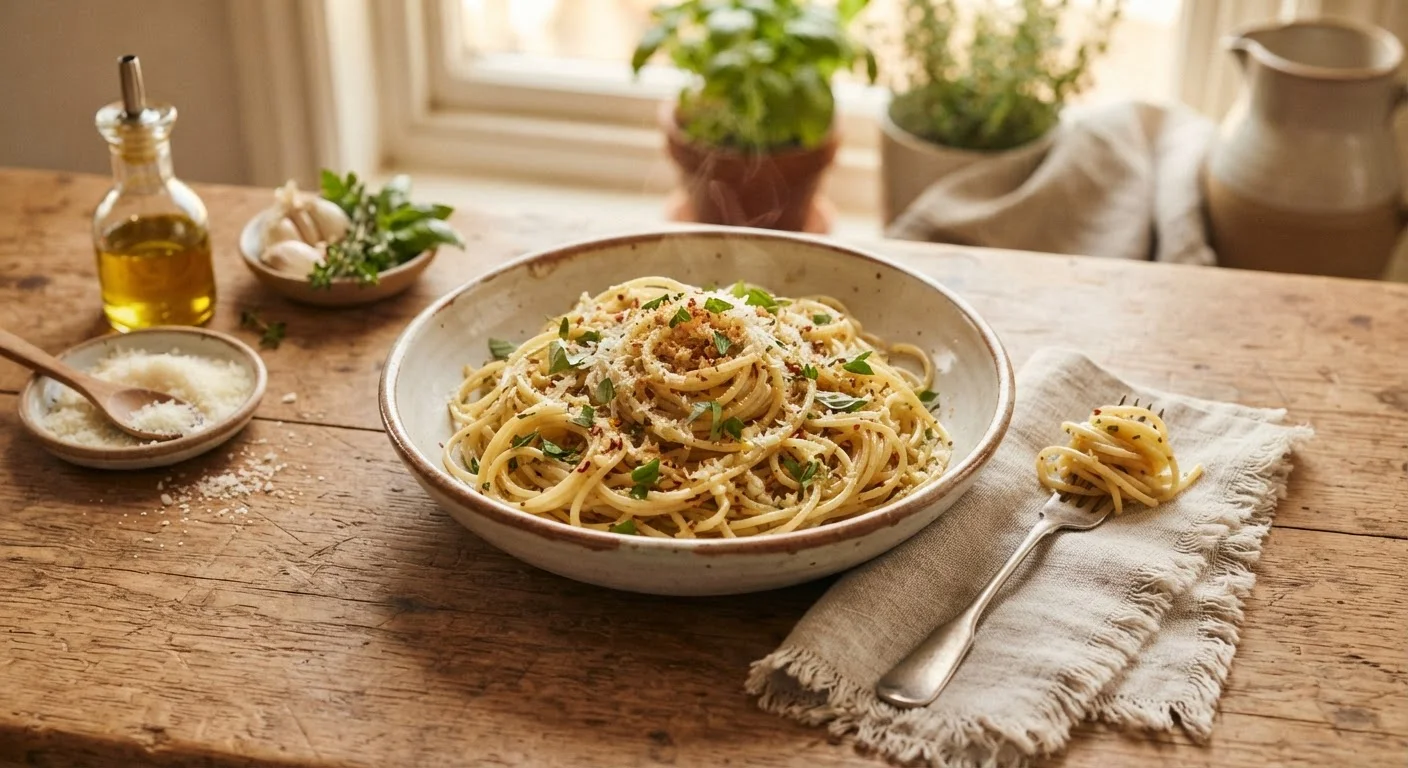
Taste the pasta and adjust seasoning with a little more salt and a crack of black pepper if you have it. Serve right away — pasta waits for no one. If adding a fried egg, place it on top of the plated pasta rather than mixing it into the pan. Grated hard cheese, a squeeze of lemon, or chopped fresh parsley (all optional) can be added just before serving.
Flavor Variations Without Extra Spending
Once you're comfortable with the base technique, simple variations keep meals interesting without increasing cost. A pinch of red pepper flakes adds heat. A fried or poached egg laid over dressed pasta adds protein and richness — this is effectively a budget-friendly version of the Italian classic spaghetti aglio e olio con uovo. Drained canned chickpeas or white beans stirred in during the last minute of cooking add fiber and staying power.
Frozen spinach, defrosted and squeezed dry, wilts easily into hot pasta. Canned chopped tomatoes — cooked down for five minutes in the same pan used to sauté garlic — make a quick fresh-tasting sauce that outperforms many jarred options. These additions require almost no extra prep time and fit comfortably within a budget-conscious kitchen. For a complementary approach to stretching ingredients across meals, our piece on soups and stews as a budget strategy covers similar principles.
Watch Sodium in Store-Bought Add-Ins
Canned beans, chopped tomatoes, and similar pantry staples can vary widely in sodium content. Where possible, choose no-added-salt or low-sodium versions, especially if you're already salting your pasta water. Rinsing canned legumes under cold water before use also reduces sodium noticeably.
Handling Leftovers the Smart Way
Cooked spaghetti keeps well in the refrigerator for up to three days in an airtight container. To prevent clumping, toss it with a small drizzle of oil before storing. Reheat in a pan with a splash of water over low-medium heat — this revives the texture better than a microwave alone.
Leftover plain pasta can be turned into a quick frittata (mix with beaten eggs and cook in an oiled pan), or served cold with a simple dressing of olive oil, vinegar, and whatever vegetables you have on hand. Getting two meals from one box is one of the most effective ways to lower your per-meal cost, and it fits naturally into the kind of budget meal planning principles that make weekly grocery spending predictable.
This article is for general informational purposes only. Nutritional needs vary between individuals; consult a qualified healthcare or dietetics professional for personalized dietary guidance.