

Key Takeaways
- A four-part formula — base, protein, toppings, sauce — covers virtually every grain bowl you'll ever make.
- Batch-cooked grains stored in the fridge cut weeknight assembly time to under 15 minutes.
- Swapping just one component creates enough variety to prevent meal fatigue across a full week.
- Grain bowls are naturally budget-friendly because they stretch small amounts of protein across filling meals.
- Almost any sauce — store-bought or homemade — works as the flavor anchor that ties the bowl together.
What you will need
Why Grain Bowls Work as a Weeknight Strategy
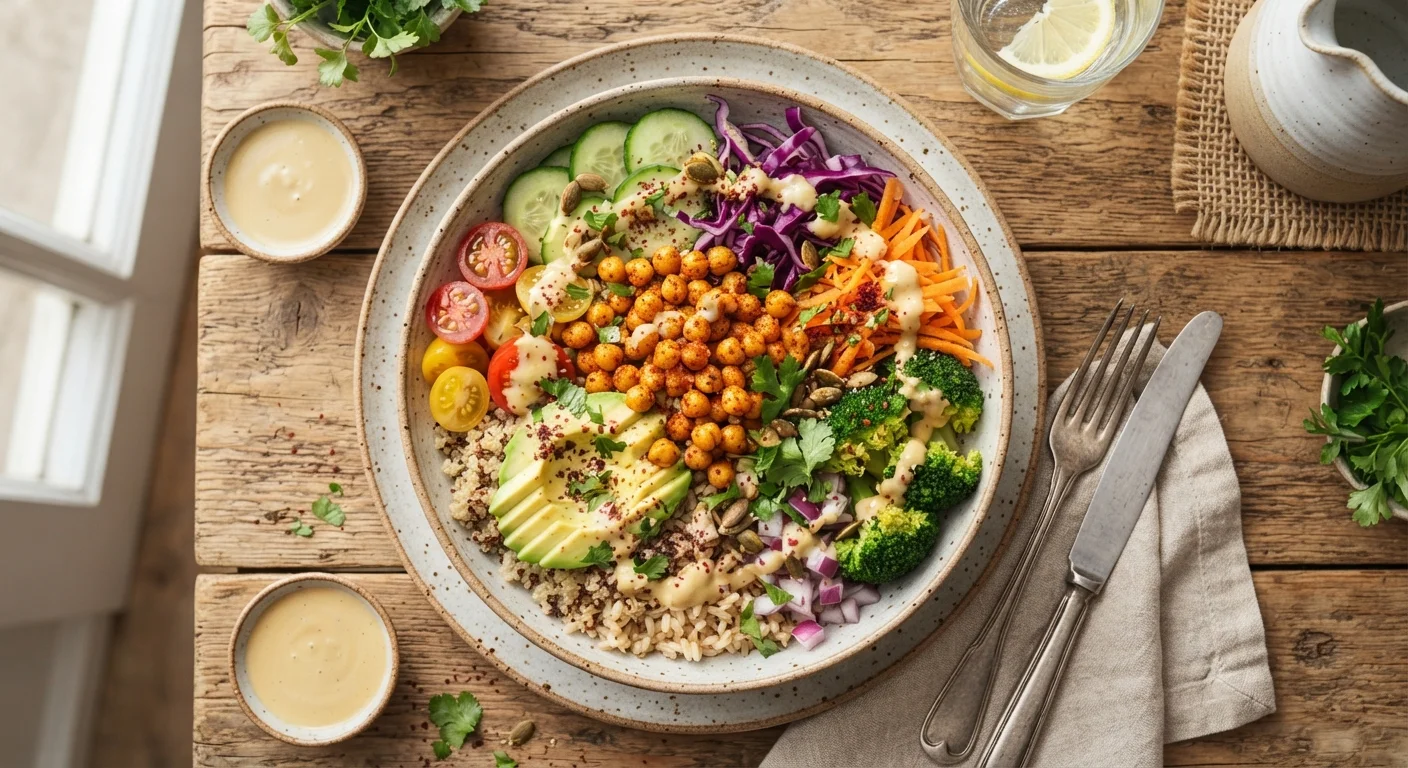
Grain bowls earn their place in a regular rotation not because they're trendy, but because they follow a framework that tolerates substitutions without falling apart. Unlike recipes that require every ingredient to be present, a grain bowl succeeds as long as each of four roles is filled: a grain base, a protein, toppings, and a sauce. What fills each role can change every night based on what's already in your kitchen.
That flexibility directly supports a budget. Because the grain base is the largest component by volume, expensive proteins stretch further — a single chicken thigh or half a can of beans is genuinely enough when paired with a well-stocked bowl. For more on how this fits into a broader budget-eating approach, see our complete affordable eating resource.
Grain bowls also align naturally with balanced plate principles — a sturdy carbohydrate base, a protein source, plenty of vegetables, and a source of fat in the form of sauce or toppings. You're building a nutritionally sound meal without tracking a single number.
One Batch, Multiple Bowls
Cooking a double portion of grains on Sunday is one of the most effective ways to cut weeknight cooking time in half. Pair it with a batch of roasted vegetables and you have the building blocks for three or four completely different meals. Varying only the protein and sauce is enough to prevent repetition from setting in.
What You'll Need Before You Start
You don't need specialty ingredients or equipment. The list below covers the practical tools that make grain bowl prep faster and the pantry staples worth keeping stocked.
Medium saucepan with lid
Cooks grains evenly and holds enough for 3–4 servings to batch-prep at once.
Sheet pan
Roasts vegetables and proteins at high heat for better texture and caramelization.
Airtight storage containers
Keeps batch-cooked grains fresh in the refrigerator for up to five days.
Small whisk or fork
Emulsifies homemade sauces quickly without extra equipment.
What you will need
If you're building grain bowls into a weekly plan, a simple meal planning system can help you decide which grains and proteins to batch-cook so weeknight assembly stays genuinely quick. And if monotony is a concern, rotating your meal structure weekly gives you a method for keeping things varied without extra planning effort.
Follow the Formula: Step by Step
Work through the five steps below in order the first time you make a grain bowl. After a few rounds, the sequence becomes instinct and the whole process moves faster.
Choose and cook your grain base
Pick one whole grain that fits your time and budget. Brown rice, farro, quinoa, and barley are all reliable choices. Cook a larger batch than you need right now — stored in an airtight container, most cooked grains keep in the refrigerator for up to five days. That single prep session becomes the foundation for multiple quick meals.
Add a protein source
Your protein does not need to be elaborate. Canned chickpeas or black beans drained and rinsed, a soft-boiled egg, shredded rotisserie chicken, pan-seared tofu, or even a scoop of cottage cheese all work. Aim for a portion that fits comfortably in one section of the bowl — roughly a quarter of the total volume is a common visual guide. See how to eyeball balanced portions without counting anything for more on this approach.
Layer on vegetables and toppings
This is where color, texture, and nutrition expand quickly. Mix at least one cooked vegetable (roasted broccoli, sautéed zucchini, wilted greens) with one raw element (sliced cucumber, shredded cabbage, cherry tomatoes). Add a small amount of healthy fat — a few avocado slices, a sprinkle of seeds, or a small handful of nuts — to round out the bowl. Using whatever vegetables you already have on hand is the most budget-conscious approach.
Finish with a sauce
The sauce is what transforms a collection of ingredients into a cohesive meal. A simple tahini dressing (tahini, lemon juice, water, garlic), a plain vinaigrette, soy-ginger sauce, or a spoonful of harissa all work. Drizzle it over the assembled bowl just before eating to keep textures intact. The sauce is also the easiest lever to pull when you want a completely different flavor profile without changing anything else.
Assemble and adjust seasoning
Arrange each component in its own section of the bowl rather than mixing everything together — this keeps textures distinct and makes the meal more visually appealing. Taste before eating and add a pinch of flaky salt, a squeeze of lemon, or a dash of hot sauce if anything feels flat. Small finishing touches consistently make the difference between a meal that feels thrown together and one that feels intentional.
Watch Sodium in Store-Bought Sauces
Many bottled dressings and sauces are high in sodium, which adds up quickly when used generously across multiple meals. Read the nutrition label and use a measured amount rather than free-pouring. Diluting a concentrate with water, vinegar, or citrus juice is an easy way to stretch it further while lowering the per-serving sodium.
This Is General Nutrition Information
The guidance in this article is intended for general educational purposes and does not constitute medical or dietary advice. Individual nutritional needs vary based on health status, age, activity level, and other factors. If you have specific health conditions, food allergies, or dietary requirements, please consult a registered dietitian or qualified healthcare provider.
This article is for informational purposes only and is not a substitute for professional dietary or medical advice. Consult a qualified healthcare provider for guidance specific to your health needs.