

Key Takeaways
- Plant-based eating emphasizes whole foods from plants — it does not require strict veganism.
- Protein, vitamin B12, iron, and omega-3s are nutrients worth monitoring on a plant-forward diet.
- Beans, lentils, tofu, and whole grains are affordable, nutritious staples that form the backbone of plant-based meals.
- Starting gradually — like adding one plant-based meal per day — is more sustainable than an overnight overhaul.
- A registered dietitian can help tailor plant-based eating to your specific health needs.
Start here
What 'Plant-Based' Actually Means
Next
Key Nutrients to Pay Attention To
Then
Building a Balanced Plant-Based Plate
Watch out for
Common Beginner Mistakes (and How to Avoid Them)
Take action
How to Start Without Overhauling Everything
What 'Plant-Based' Actually Means
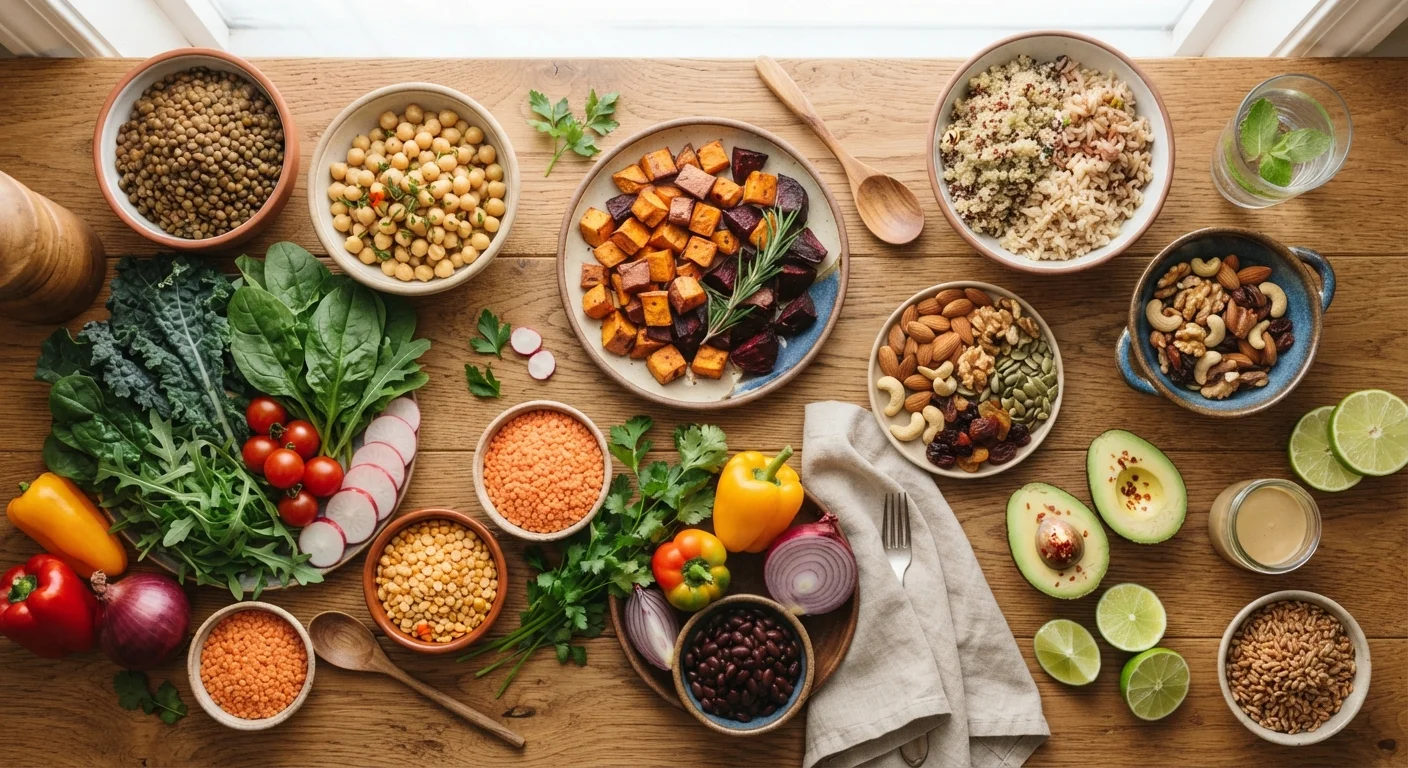
The phrase plant-based eating gets used in a lot of different ways, which can make it confusing. At its core, it simply means building your meals primarily around foods that come from plants: vegetables, fruits, legumes, whole grains, nuts, and seeds.
It does not automatically mean vegan or vegetarian. Many people who eat plant-based still include some eggs, dairy, fish, or meat — just in smaller amounts and less frequently. The emphasis is on what you're adding to your plate, not just what you're removing.
Think of it as a direction rather than a destination. You can move along a spectrum at your own pace, based on your health goals, preferences, and budget. For a broader look at eating well without overcomplicating things, the Nutrition Basics hub is a good place to explore.
Legumes
A food family that includes beans, lentils, chickpeas, and peas. They are rich in protein, fiber, and minerals, and are among the most affordable plant foods available.
Whole grains
Grains that retain all three parts of the grain kernel (bran, germ, endosperm), providing more fiber and nutrients than refined grains like white bread or white rice.
Non-heme iron
The form of iron found in plant foods. The body absorbs it less efficiently than the iron in meat, but eating it alongside vitamin C helps improve absorption.
Vitamin B12
A vitamin essential for nerve function and red blood cell production. It is found almost entirely in animal products, making it a key nutrient to monitor on a plant-heavy diet.
Omega-3 fatty acids
A type of healthy fat important for heart and brain health. Plant sources like flaxseeds and walnuts contain a form of omega-3 that the body must convert to use — a process that is less efficient than getting it directly from fish.
Key Nutrients to Pay Attention To
Plant foods are rich in fiber, vitamins, minerals, and antioxidants. But a plant-forward diet does require some attention to a handful of nutrients that are less abundant or less easily absorbed from plant sources.
- Protein: Beans, lentils, tofu, tempeh, and whole grains all provide protein. Eating a varied diet covers most people's needs without complicated tracking.
- Vitamin B12: This vitamin is found almost exclusively in animal products. If you eat little or no animal food, a B12 supplement is generally advisable — discuss options with a healthcare provider.
- Iron: Plant sources (like spinach and lentils) contain non-heme iron, which the body absorbs less efficiently than iron from meat. Pairing iron-rich plant foods with vitamin C sources (like bell peppers or citrus) improves absorption.
- Omega-3 fatty acids: Flaxseeds, chia seeds, walnuts, and hemp seeds contain a plant form of omega-3. Whether this fully meets your needs depends on your individual situation — something worth discussing with a dietitian.
- Calcium and Vitamin D: Fortified plant milks, leafy greens, and tofu made with calcium sulfate contribute calcium. Vitamin D is harder to get from food alone for most people, regardless of diet.
This article is general nutrition education, not medical advice. Always consult a qualified healthcare professional before making significant changes to your diet, especially if you have an existing health condition.
Building a Balanced Plant-Based Plate
A practical way to build balanced plant-based meals is to think in three zones on your plate:
- Half vegetables or fruit — fresh, frozen, or canned (low-sodium or rinsed) all count.
- A quarter whole grains — brown rice, oats, whole wheat pasta, barley, or quinoa provide fiber and sustained energy.
- A quarter protein-rich plant foods — beans, lentils, chickpeas, tofu, tempeh, or edamame.
Add a small amount of healthy fat — a drizzle of olive oil, a handful of nuts, or a quarter of an avocado — to help your body absorb fat-soluble vitamins from vegetables.
This structure maps well onto affordable pantry staples. Dried beans and lentils, oats, brown rice, and frozen vegetables are consistently among the least expensive items at most grocery stores. See our guide to eating on a tight budget for practical shopping strategies that pair well with plant-based eating.
Frozen Vegetables Are a Smart Shortcut
Frozen vegetables are picked at peak ripeness and flash-frozen, which preserves most of their nutrients. They're typically less expensive than fresh, last much longer, and require no prep work — making them one of the most practical tools for eating more plants on a budget.
Common Beginner Mistakes (and How to Avoid Them)
A few patterns trip up people who are new to plant-based eating:
- Relying heavily on packaged "plant-based" products. Many processed meat alternatives and plant-based convenience foods are high in sodium and additives, and they tend to cost significantly more than whole food staples. They can work as an occasional bridge food, but shouldn't be the foundation.
- Not eating enough calories overall. Whole plant foods tend to have more fiber and water, which means you may feel full faster. If you feel fatigued or hungry soon after meals, you may need larger portions or more calorie-dense foods like legumes, nuts, and whole grains.
- Ignoring nutrient gaps. Assuming a plant-based diet automatically covers everything can lead to overlooking B12 or other shortfalls over time. A periodic check-in with a healthcare provider can catch gaps early.
- Expecting overnight results. Your taste preferences and digestion adjust gradually. Increased fiber can cause bloating at first — this typically settles within a few weeks as your gut adapts.
Special Populations Need Extra Care
Children, pregnant individuals, older adults, and people managing chronic conditions have higher or more specific nutrient needs. A plant-based diet can work for these groups, but it requires more careful planning. Always consult a registered dietitian or your healthcare provider before making significant dietary changes if you fall into one of these categories.
How to Start Without Overhauling Everything
The most sustainable approach for most beginners is incremental change. A few concrete starting points:
- Pick one meal per day to make plant-based — breakfast is often the easiest starting point (oatmeal with fruit and nuts, for example).
- Try a "plant-forward" swap in a dish you already make: replace half the ground meat in a chili or pasta sauce with lentils or black beans.
- Stock a few pantry staples: canned beans, dried lentils, oats, canned tomatoes, and frozen vegetables let you build meals with minimal planning.
- Focus on adding rather than subtracting. When you add more vegetables, legumes, and whole grains, there's naturally less room for less nutritious foods — without feeling deprived.
If cooking from scratch feels intimidating, our introduction to home cooking covers the basics in plain terms. And for budget-minded strategies that align well with plant-based principles, the Budget Eating hub has you covered.
Plant-based eating doesn't require perfection. Every meal with more plants in it is a step in a useful direction.