

Key Takeaways
- Serving size is the foundation of every number on the label — always check it first.
- The % Daily Value column tells you at a glance whether a nutrient is high or low in a food.
- Sodium, added sugars, and saturated fat are the three nutrients most worth watching for most people.
- Ingredient lists are ordered by weight — the first few ingredients make up the bulk of the food.
- Nutrition labels are a comparison tool, not a verdict — context and whole diet still matter most.
What you will need
Why the Label Exists and What It's Telling You
The Nutrition Facts label is a standardized panel required by the FDA on nearly all packaged foods sold in the United States. Its purpose is straightforward: give consumers consistent, comparable information so they can make informed choices regardless of brand or packaging design. The format was updated in 2016 to reflect current nutrition science, and the version you see today emphasizes the information researchers consider most relevant to everyday health.
Before diving into each section, it helps to understand the label as a reference tool tied to a specific amount of food — not the whole package. That's why the serving size line comes first. If you need a plain definition of any nutrition term you encounter, the Everyday Nutrition Glossary is a useful companion.
The 5%/20% Rule Is Your Shortcut
For any nutrient on the label, a % Daily Value of 5% or less means that food is a low source of that nutrient per serving; 20% or more means it's a high source. This two-number rule lets you evaluate sodium, fiber, saturated fat, and more in seconds — no math needed.
Step-by-Step: Reading Every Section of the Label
Work through the label from top to bottom — each section builds on the one above it.
Start with the Serving Size
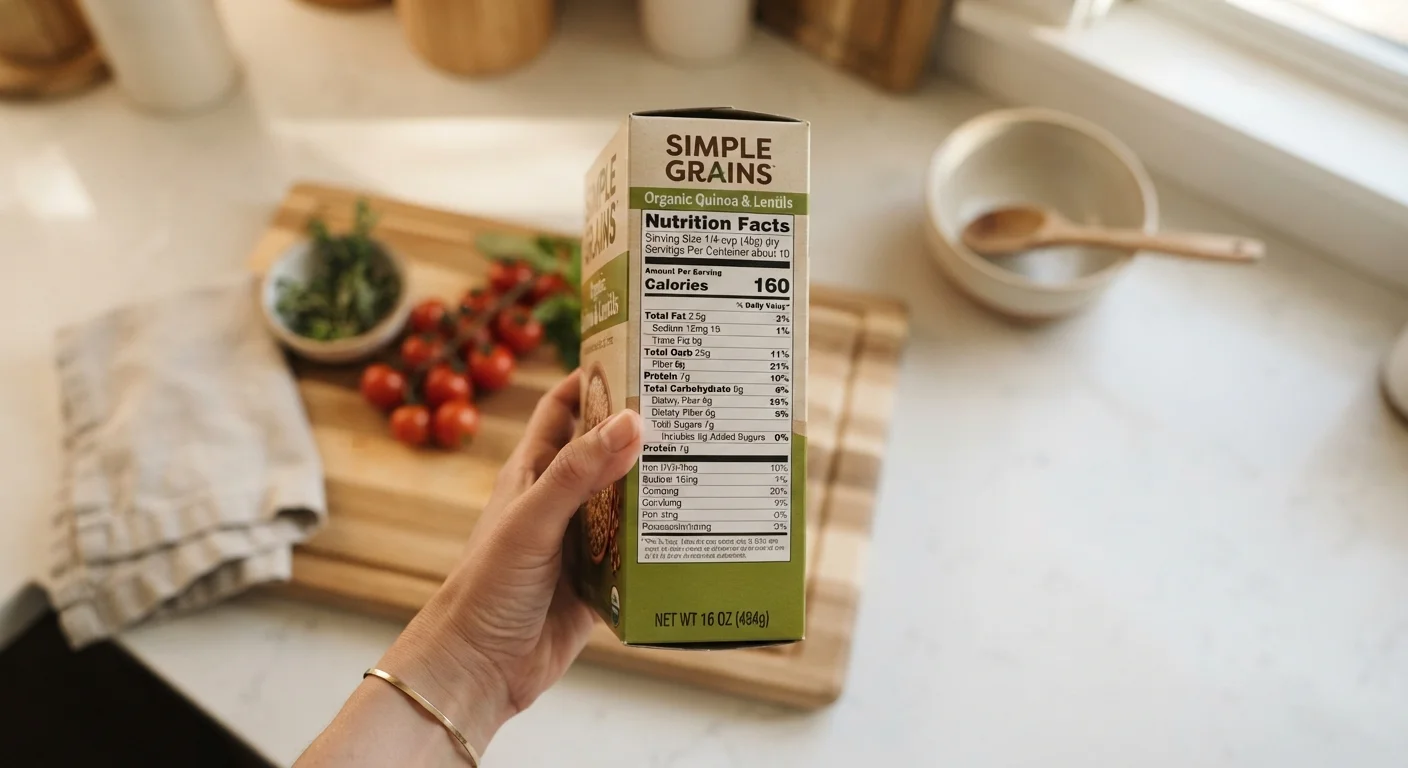
The very first line after the bold "Nutrition Facts" header tells you the serving size — for example, "2 crackers (30g)" — and how many servings are in the entire container. Every single number below this line applies only to that stated amount. If you eat twice the serving size, you consume twice the calories, sodium, and everything else listed.
Check the Calories
Calories measure the energy one serving provides. This number is printed in the largest font on the label. It's useful context, but calories alone don't tell you whether a food is nourishing — a 200-calorie food packed with protein and fiber affects your body very differently than 200 calories of pure sugar. Use calories alongside the nutrient details below, not instead of them.
Review Total Fat, Saturated Fat, and Trans Fat
The fat section breaks down total fat into its types. Saturated fat is the one to watch — current dietary guidance generally recommends keeping it moderate, as higher intake is associated with elevated LDL cholesterol levels. Trans fat should ideally be as close to zero as possible; artificial trans fats have largely been removed from the US food supply but can still appear in small amounts.
Look at Sodium
Sodium is one of the most important nutrients to monitor for most Americans, since typical US diets tend to run high in it. The % Daily Value (% DV) next to sodium is a quick reference: 5% DV or less is generally considered low, and 20% DV or more is considered high. Processed and packaged foods are the primary source of dietary sodium for most people.
Understand Total Carbohydrates, Fiber, and Added Sugars
Total carbohydrates include fiber, naturally occurring sugars, and added sugars. Dietary fiber supports digestive health and contributes to feelings of fullness — higher is generally better here. Added sugars (listed separately since the 2016 label update) are the ones added during manufacturing, distinct from sugars naturally present in fruit or dairy. Health authorities commonly recommend limiting added sugars.
Note Protein and Key Vitamins and Minerals
Protein is listed in grams but doesn't carry a % DV on the standard label. Use the gram count to compare options — especially useful when evaluating snacks or meals. Below protein, the label lists select vitamins and minerals. The nutrients currently required are Vitamin D, Calcium, Iron, and Potassium — all nutrients that US consumers commonly under-consume.
Use the % Daily Value Column as Your Quick Guide
The % Daily Value (% DV) column runs down the right side of the label and shows what percentage of a day's recommended intake one serving provides, based on a 2,000-calorie reference diet. The 5%/20% rule applies across the board: 5% DV or less means a nutrient is low in that food; 20% DV or more means it's high. Use this column to compare two products at a glance without doing any math.
Scan the Ingredient List
The ingredient list sits below the Nutrition Facts panel and is ordered by weight — the first ingredient is present in the greatest amount. A short ingredient list isn't automatically better, but it can signal less processing. Look for recognizable ingredients near the top, and note where sugars and oils appear — multiple sugar names scattered through the list can add up to a significant total. For a clear breakdown of what processing levels actually mean, see Whole Foods vs. Processed Foods.
Once you're comfortable reading individual labels, the next step is using that knowledge while shopping on a budget. The Affordable Eating guide shows how label literacy fits into a broader grocery strategy.
What to Do With This Information
Reading a label doesn't mean every food needs to score perfectly on every nutrient. A food high in sodium might be fine in a meal that's otherwise low in sodium. A higher-calorie item might deliver meaningful protein, fiber, or vitamins. The label is a comparison tool — use it to weigh options, not to judge foods in isolation.
For most people, the most practical habit is checking just three things quickly: the serving size, the added sugars, and the sodium. Those three data points will flag most of the high-concern patterns found in ultra-processed foods. For a deeper look at why calorie totals alone don't capture the full picture, see Calories vs. Nutrients.
Label reading also pairs naturally with understanding real-world portion sizes, since the label's serving size rarely matches how much most people actually eat in one sitting.
Labels Don't Capture Everything
A nutrition label reflects the nutrients in a food but not how that food fits your overall eating pattern, health history, or individual needs. People managing conditions such as diabetes, kidney disease, or heart disease often need specific guidance that goes beyond general label reading. Always work with a qualified healthcare provider or registered dietitian when managing a health condition through diet.
This article is for general informational purposes only and is not a substitute for professional medical or dietary advice. If you have a health condition that requires specific nutritional management, please consult a registered dietitian or qualified healthcare provider.