

Key Takeaways
- Your hand is a reliable, portable tool for estimating portion sizes at any meal.
- Portion awareness focuses on food volume and balance rather than precise calorie numbers.
- Simple plate-division habits can reduce overeating without tracking apps or scales.
- Eating slowly and recognizing hunger cues supports appropriate portion control naturally.
- Consistency matters more than perfection — small daily adjustments add up over time.
What you will need
What Portion Awareness Actually Means
Portion awareness is the practice of tuning into how much you're eating relative to your body's actual needs — without logging every gram or obsessing over nutrition data. It's distinct from dieting: the goal isn't restriction, it's developing a realistic sense of food volume so meals feel satisfying rather than accidental.
Most people underestimate how much they eat not because they're careless, but because modern servings — from restaurant plates to packaged snacks — have grown significantly over recent decades. Recalibrating your baseline doesn't require a food scale. It requires a few reliable reference points you can use anywhere.
If you want to understand how serving sizes on packaging relate to what you actually eat, our guide to real-life portion sizes breaks it down using everyday objects. This article focuses on the habits and techniques that make portion awareness stick day to day.
What you will need
Your Built-In Measuring Tools
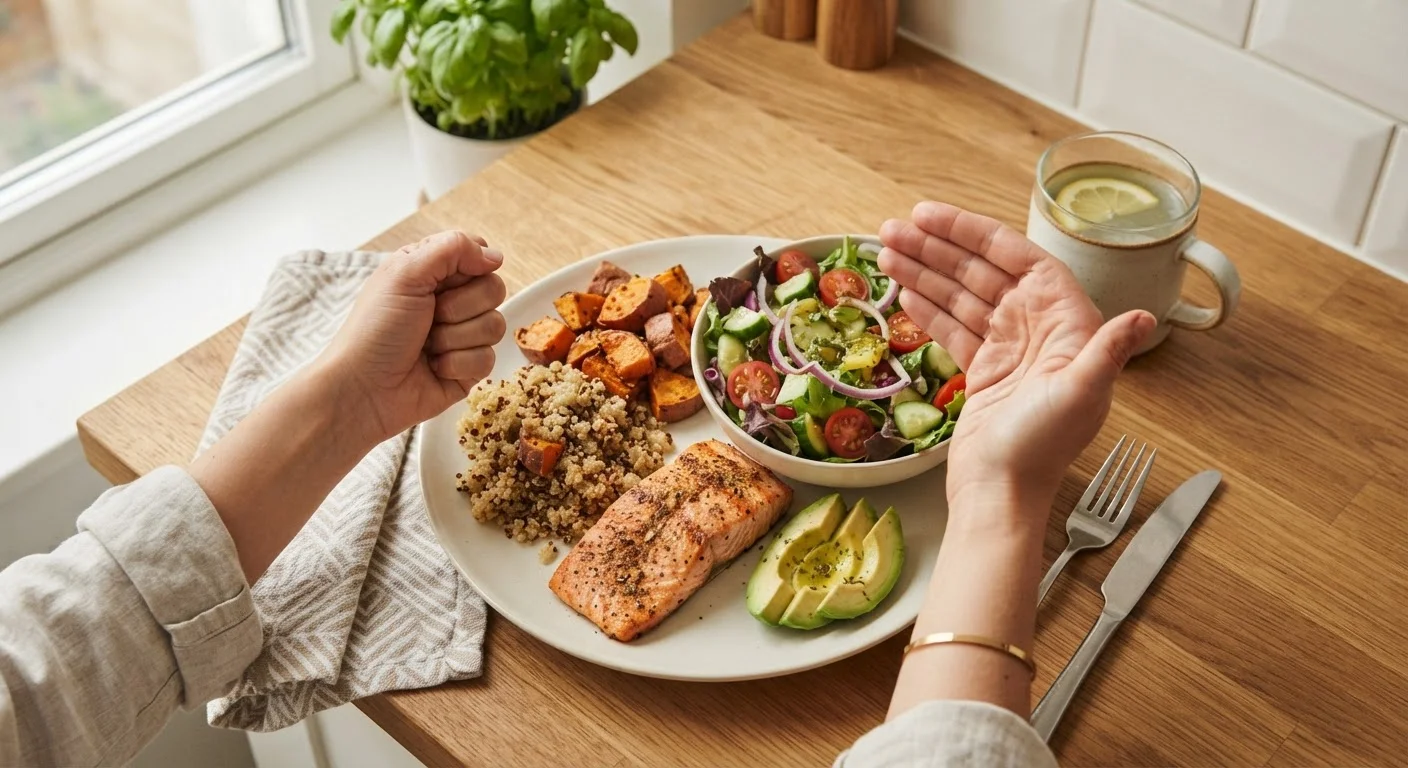
The most practical starting point is your own hand. Because hand size roughly scales with body size, these references are naturally personalized:
- Palm: A good benchmark for a serving of protein — think cooked chicken, fish, or legumes.
- Cupped hand: Roughly one serving of grains, cereal, or a snack like nuts or dried fruit.
- Fist: A useful reference for vegetables or fruit — aim for at least two fist-sized portions per meal.
- Thumb: Approximates a serving of fats like nut butter, oil, or cheese.
These aren't medical prescriptions — they're ballpark guides that help you stay consistent without measuring cups. Over time, using them regularly builds an intuitive sense of proportion that transfers to any setting, including restaurants.
For a more visual breakdown of how packaged serving sizes compare to these hand-based estimates, see how to decode a nutrition label.
Hand Sizes Vary — That's the Point
Hand-based portion guides are self-calibrating: a larger person generally has a larger hand and proportionally higher energy needs. This makes them a surprisingly practical tool across different body types. Use them as a starting point and adjust based on how satisfied you feel after meals.
The Divided Plate Method
One of the most research-supported frameworks for portion awareness is dividing your plate visually before you eat. A widely used approach suggests roughly half the plate filled with non-starchy vegetables, one quarter with a lean protein source, and one quarter with a grain or starchy food. A small portion of healthy fat rounds out the meal.
This method doesn't require any math. It simply restructures the proportion of what lands on your plate, which naturally moderates calorie-dense foods without eliminating them. It also pairs well with budget-friendly eating habits — vegetables and legumes filling half your plate are among the most cost-effective foods available. Our guide to building a balanced plate expands on this framework in practical detail.
For those managing grocery costs, the affordable eating resource connects portion habits to smart shopping strategies.
Habits That Support Portion Awareness
Tools and visual cues are only part of the picture. The habits surrounding how you eat shape portion awareness just as much as what you put on the plate.
Serve food before sitting down
Plate your food in the kitchen rather than eating from serving dishes at the table. When large bowls are within reach, research consistently shows people eat more, regardless of hunger level. Pre-plating creates a natural pause that makes your portion visible before you start eating.
Eat slowly and pause mid-meal
It takes roughly 15 to 20 minutes for fullness signals to travel from your stomach to your brain. Eating quickly makes it easy to overshoot comfort before those signals arrive. Try putting your fork down between bites, or setting a loose timer for the first half of your meal before checking in with your hunger level.
Check in with hunger before seconds
Before returning for more food, pause for two to three minutes and assess how you feel. Hunger scales — rating your hunger from 1 (very hungry) to 10 (uncomfortably full) — can help you recognize a comfortable stopping point around 6 or 7. This isn't about rigid rules; it's about creating a moment of awareness between impulse and action.
Pre-portion snacks rather than eating from the package
Snacking directly from a bag or box removes visual feedback about how much you've consumed. Decant a reasonable amount into a small bowl or cup before snacking. This single habit tends to reduce unintentional overeating more than almost any other snack-related change. For understanding what a listed serving size actually looks like, reading a nutrition label can provide useful context.
Build consistency, not perfection
Portion awareness is a long-term skill, not a short-term fix. Aim to apply these practices most of the time rather than every single meal. One large meal doesn't undo a week of mindful eating, just as one small portion doesn't compensate for consistent overeating. The goal is a reliable baseline that you return to naturally.
This article is for general informational and educational purposes only and is not a substitute for professional medical or dietary advice. Consult a qualified healthcare provider or registered dietitian for guidance specific to your health needs.