

Key Takeaways
- Keeping a high-mileage car is often cheaper than buying new, but only with proactive maintenance.
- Several key components — timing belt, coolant, and transmission fluid — have service intervals that cluster near 100,000 miles.
- Budgeting $1,000–$1,500 per year for preventive repairs on a high-mileage vehicle is a reasonable planning figure for many drivers.
- A complete maintenance log significantly reduces diagnostic time and helps you avoid paying for work already done.
- Knowing when a repair cost exceeds the car's remaining value is as important as knowing how to maintain it.
Why the Math Often Favors Keeping the Car
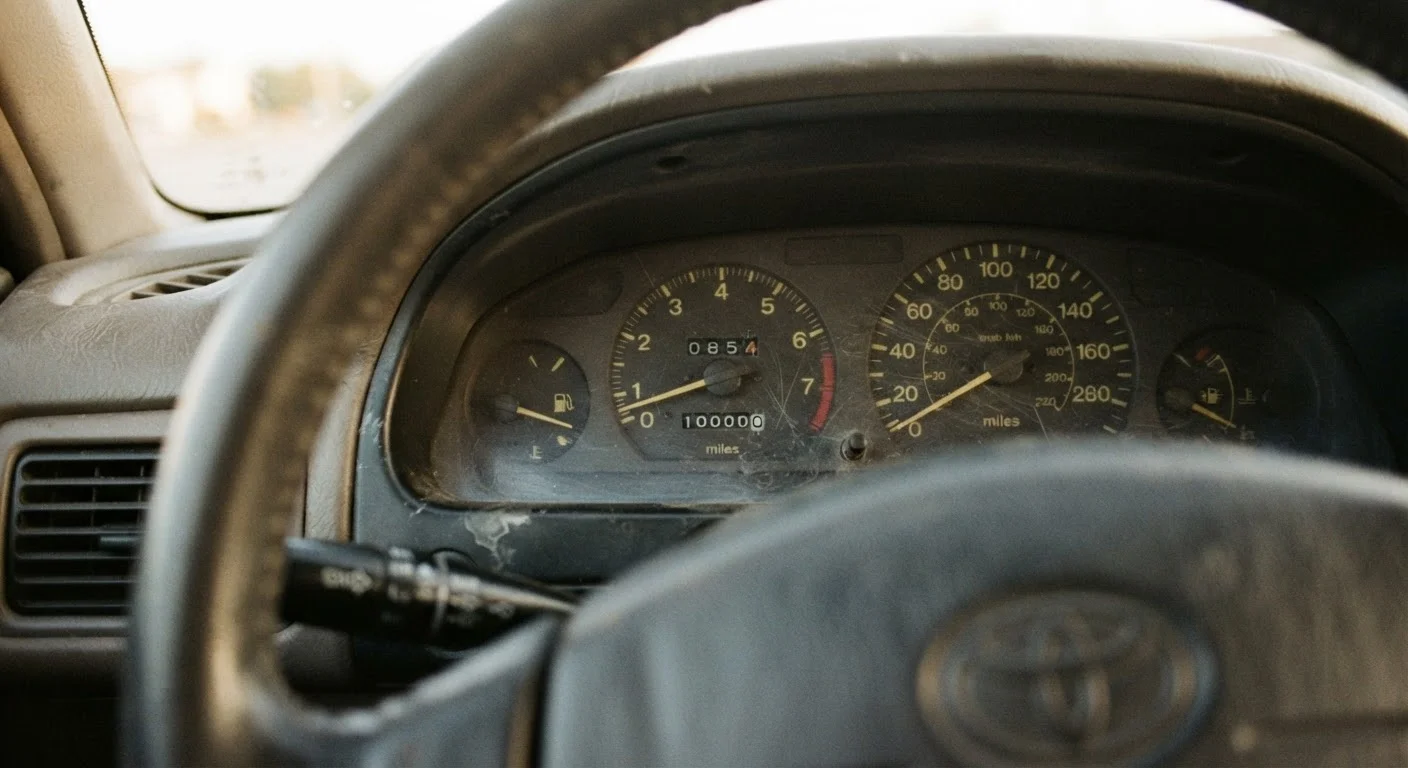
A car with 100,000 miles on the clock gets a bad reputation it doesn't always deserve. If you've kept up with routine service, the engine and transmission are often in solid shape. What changes past this mark is that several components reach the end of their designed service life roughly simultaneously — and if you're not ready for them, the repair bills feel like they're coming out of nowhere.
Compare that to buying new: even a modest replacement vehicle carries depreciation, sales tax, registration fees, and a monthly payment. Depreciation alone erases thousands of dollars in value in the first year. Keeping a paid-off car and spending deliberately on maintenance is frequently the better financial position — the key word being deliberately.
Understanding your full annual cost picture — insurance, fuel, registration, and maintenance combined — is the foundation for making that call honestly.
What Actually Changes at High Mileage
Past 100,000 miles, rubber and plastic components become the primary concern. Hoses, belts, and seals that have been through years of heat cycles start to harden and crack. Coolant hoses, the serpentine belt, and any rubber vacuum lines should be inspected carefully if they haven't been replaced recently.
The timing belt — if your vehicle uses one rather than a timing chain — is often due for replacement between 90,000 and 105,000 miles. This is not optional: a snapped timing belt typically destroys the engine. Timing chain engines are more forgiving but still require clean, correctly changed oil to prevent stretch and wear.
Transmission fluid, coolant, and brake fluid all degrade chemically over time and mileage. Many drivers overlook these because they're not as visible as oil. Contaminated or depleted transmission fluid is one of the more common causes of expensive automatic transmission failures in high-mileage vehicles.
Tire Wear Reveals Suspension Problems
Uneven tire wear — feathering, cupping, or one-sided wear — is often the first visible sign of a suspension or alignment issue. If you notice unusual wear patterns when rotating your tires, have the suspension inspected before simply replacing the tires. New tires on a misaligned or worn suspension will wear out prematurely, costing you twice.
Suspension components — struts, shocks, bushings, and ball joints — also wear in ways that aren't always obvious until the ride quality degrades noticeably or a tire shows uneven wear. An alignment check and basic suspension inspection at 100,000 miles is money well spent.
Best Practices for High-Mileage Ownership
The following practices reflect what experienced mechanics and automotive researchers consistently point to as the difference between high-mileage cars that last and those that don't.
Replace all time-and-mileage-sensitive fluids on schedule, not just when they look dirty.
Transmission fluid, coolant, and brake fluid degrade chemically before they show visible signs of contamination. Waiting until there's a problem means the fluid has already been causing wear or corrosion for some time.
Inspect and replace rubber components — belts, hoses, and seals — proactively rather than reactively.
Rubber hardens and cracks with age and heat exposure regardless of visual appearance on the outside. A hose that looks intact can fail under pressure. Replacing rubber on a schedule prevents roadside breakdowns and secondary damage.
Stick to the manufacturer's oil specification and change interval, not a shorter generic interval.
Modern engines are engineered for specific oil viscosities and formulations. Using the correct spec oil and following the actual change interval — often longer than older rules of thumb — keeps internal tolerances clean without unnecessary cost. Several common oil-change myths lead drivers to spend more than necessary.
Address warning lights and small issues before they become expensive compound problems.
A misfiring cylinder stresses the catalytic converter. A small coolant leak leads to overheating. A worn wheel bearing, left too long, damages the hub and sometimes the axle. In high-mileage vehicles, deferred small repairs have an outsized tendency to cascade.
Have a full inspection done by an independent mechanic annually, not just when something feels wrong.
Many wear items degrade gradually and don't produce obvious symptoms until they're at or past their safe limit. An annual inspection catches developing problems — worn brake pads, cracked CV boots, weak battery — before they strand you or become safety issues.
Building a Realistic Maintenance Budget
The most common mistake high-mileage owners make is treating repairs as surprises rather than expected costs. A useful rule of thumb: set aside $80–$125 per month in a dedicated car repair fund. That's roughly $1,000–$1,500 per year — enough to cover most scheduled service and absorb one moderate unplanned repair without financial stress.
Track every service, part replaced, and inspection result. A consistent maintenance log reduces diagnostic time when something does go wrong, and it demonstrates to any future buyer that the car was cared for. See our guide to keeping a vehicle maintenance log for a straightforward system that doesn't require any special software.
Some tasks are genuinely manageable for a mechanically inclined owner; others — timing belt replacement, for instance — carry enough risk that most drivers are better served by a qualified mechanic. Knowing which is which prevents both overspending on simple jobs and underspending on complex ones.
~200,000
Miles many modern vehicles can reach with proper maintenance
Consumer Reports and automotive longevity researchers note that vehicles maintained according to manufacturer schedules increasingly reach 200,000 miles without major mechanical failure.
$1,000–$1,500
Reasonable annual maintenance budget for a high-mileage vehicle
Industry estimates from automotive service associations suggest this range covers most scheduled and incidental repairs on a well-maintained vehicle with over 100,000 miles.
Knowing When to Stop
High-mileage ownership has a break-even point. When a single repair — or a cluster of repairs needed at the same time — approaches or exceeds the vehicle's current market value, the calculus shifts. A $2,800 transmission repair on a car worth $3,500 is a harder call than the same repair on a car worth $9,000.
Structural rust, frame damage, or a compromised safety system (airbags, anti-lock brakes) that would cost more to restore than the car is worth are the clearest signals that it's time to reassess. Keeping small maintenance current makes this decision easier because you're dealing with one large problem, not a pile of deferred costs all demanding attention at once.
For a broader look at what running any vehicle actually costs across all categories, this breakdown of total ownership costs provides useful context. And for the routine checks that delay expensive repairs in the first place, small maintenance checks that cut running costs is worth reviewing.