

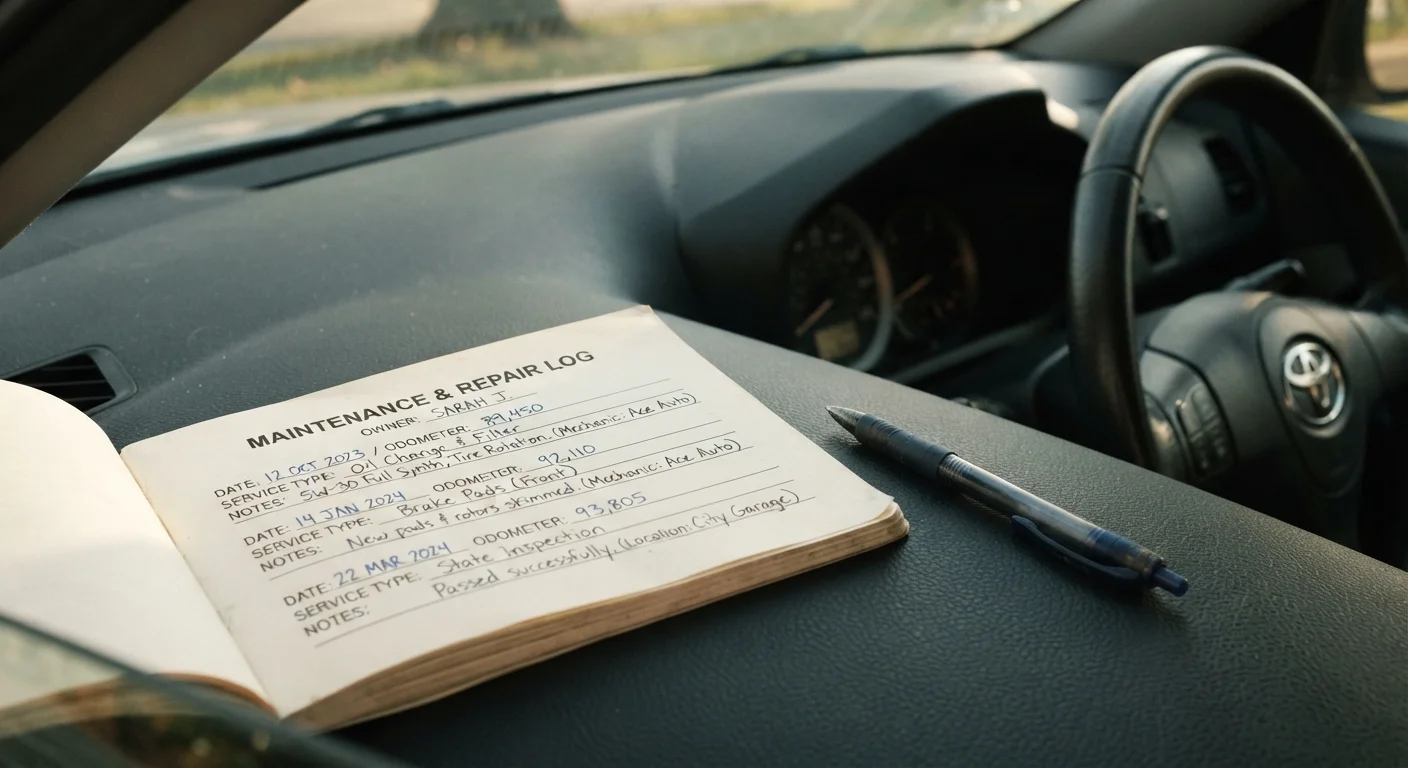
Key Takeaways
- A maintenance log creates a verifiable service history that can increase a vehicle's resale value.
- Recording dates, mileage, and costs helps you spot patterns and catch problems early.
- Digital apps and simple paper notebooks both work — consistency matters more than format.
- Buyers and mechanics trust documented vehicles more than ones with verbal-only histories.
- A log helps you stay on schedule with manufacturer-recommended service intervals.
What a Maintenance Log Actually Is
A vehicle maintenance log is a running record of every service, repair, and inspection performed on your car. It can be as simple as a pocket notebook in your glove box or a dedicated app on your phone. The goal is the same either way: create a clear, dated history of what has been done and when.
At minimum, each entry should include the date, the odometer reading, a description of the work performed, and what you paid. If a shop did the work, note the name of the business. If you did it yourself, note the parts used. These four data points are all you need to build a log that is genuinely useful.
If you're new to tracking your vehicle's upkeep, the basics of car maintenance for first-time owners is a practical starting point for understanding what tasks to log and how often they typically occur.
Why It Pays Off — Financially and Practically
A documented service history is one of the clearest signals to a potential buyer that a vehicle has been cared for. Private buyers and dealerships alike tend to assign more value to cars with paper trails because the risk of hidden neglect is lower. Anecdotally, sellers often report faster sales and stronger negotiating positions when records are available — though exact dollar differences vary by vehicle, market, and buyer.
Up to 10%
Potential resale value advantage with full service records
Industry observers and used-car appraisers commonly note that documented vehicles command a pricing premium, though exact figures vary widely by make, age, and local market.
1 in 3
Used-car buyers who cite service history as a top purchase factor
Consumer surveys from automotive research organizations consistently rank service history among the most influential factors for used-vehicle buyers in the US.
Beyond resale, a log protects you as an owner. When a warning light appears or a mechanic says a component is worn, your log tells you whether that part was recently serviced or is overdue. That context helps you make smarter decisions — and makes it harder for anyone to upsell you on work you've already done.
For higher-mileage vehicles, good records become even more important. See our guide on keeping a car past 100,000 miles for a closer look at how documentation affects long-term ownership costs.
Best Practices for Keeping Your Log
Record every service entry immediately after the work is done.
Memory fades and receipts disappear. Logging the date, mileage, and job right away keeps your record accurate and eliminates gaps. Gaps are exactly what skeptical buyers and mechanics will notice.
Include costs alongside every entry.
Tracking what you spend makes it easy to calculate your true annual maintenance cost and spot whether a vehicle is becoming more expensive to keep than it's worth. It also helps you budget more accurately for future service.
Note who did the work — shop name or 'DIY' — for every entry.
If a repair fails or a related problem develops, knowing who performed the work helps you follow up under warranty or ask informed questions. Buyers also value knowing whether work was done by a professional.
Flag upcoming service needs at the end of each entry.
Adding a simple note like 'next oil change at 38,000 miles' turns your log into a proactive reminder system, not just a backward-looking record. This reduces the chance of letting intervals slip.
Keep all related receipts and inspection reports alongside the log.
A written entry is useful, but an original shop invoice or state inspection certificate adds credibility a buyer can independently verify. Physical documentation also protects you if a warranty dispute arises.
Staying consistent is the hardest part. A log you update sporadically is still better than none, but a habit of recording each service right after it happens is far more reliable. Many drivers find it easiest to log entries immediately after leaving a shop or finishing a DIY job — before the receipt gets lost or the details fade.
Understanding your manufacturer's service schedule makes it easier to know what to log and when. Our article on understanding your car's service schedule explains how service intervals are calculated and what different service tiers actually include.
Quick Wins to Get Started Today
If your vehicle is already a few years old and you have no records, start fresh from today. Pull together any receipts, shop invoices, or oil change stickers you can find and back-fill what you can. An incomplete log that grows from here is still far more useful than waiting for a perfect starting point.
For seasonal planning, pair your log habit with a regular check of season-specific tasks. The seasonal car maintenance checklist covers what to inspect before summer and winter — tasks worth logging every time you complete them.