

Key Takeaways
- Raw diets can provide minimally processed nutrition but carry real food safety risks for pets and humans in the household.
- Commercially prepared pet food is convenient and regulated, but quality varies widely across product lines.
- Neither approach is universally superior — your pet's health, your budget, and your household situation all matter.
- Consulting a veterinarian or veterinary nutritionist before switching diets is strongly recommended.
- Reading pet food labels carefully helps you evaluate both commercial and raw feeding options.
Our Verdict
Both raw diets and commercially prepared foods can meet a pet's nutritional needs when done correctly — but both carry risks when done poorly. The raw feeding debate is less about which approach is inherently better and more about whether pet owners have the knowledge, resources, and household circumstances to execute either safely. Most veterinary organizations currently recommend commercial foods that meet established nutritional standards, while acknowledging that well-formulated raw diets may work for some pets under veterinary guidance.
| Best for | Recommended |
|---|---|
| Pet owners prioritizing convenience and regulatory oversight | Commercially prepared pet food |
| Owners with time, budget, and veterinary support to manage risks | Raw diet with professional guidance |
| Budget-conscious households needing predictable monthly costs | Commercially prepared pet food |
| Pets with specific protein needs discussed with a vet | Vet-guided raw or home-prepared diet |
Why This Debate Matters for Everyday Pet Owners
The conversation around raw feeding has grown louder in recent years, and with it, a lot of confusion. Passionate advocates argue that raw diets reflect how animals evolved to eat. Critics — including most major veterinary organizations — point to real concerns about bacterial contamination, nutritional imbalance, and cost. If you're trying to make a sound choice for your pet without falling into either camp's rhetoric, it helps to understand what each side is actually arguing about.
At its core, the debate touches on three things: nutrition quality, food safety, and practical cost. Understanding how each approach handles these issues gives you a far more useful framework than any single endorsement or warning. For a broader perspective on how processing affects food nutrition generally, see what the processed vs. whole food distinction really means.
What Raw Diets Actually Involve
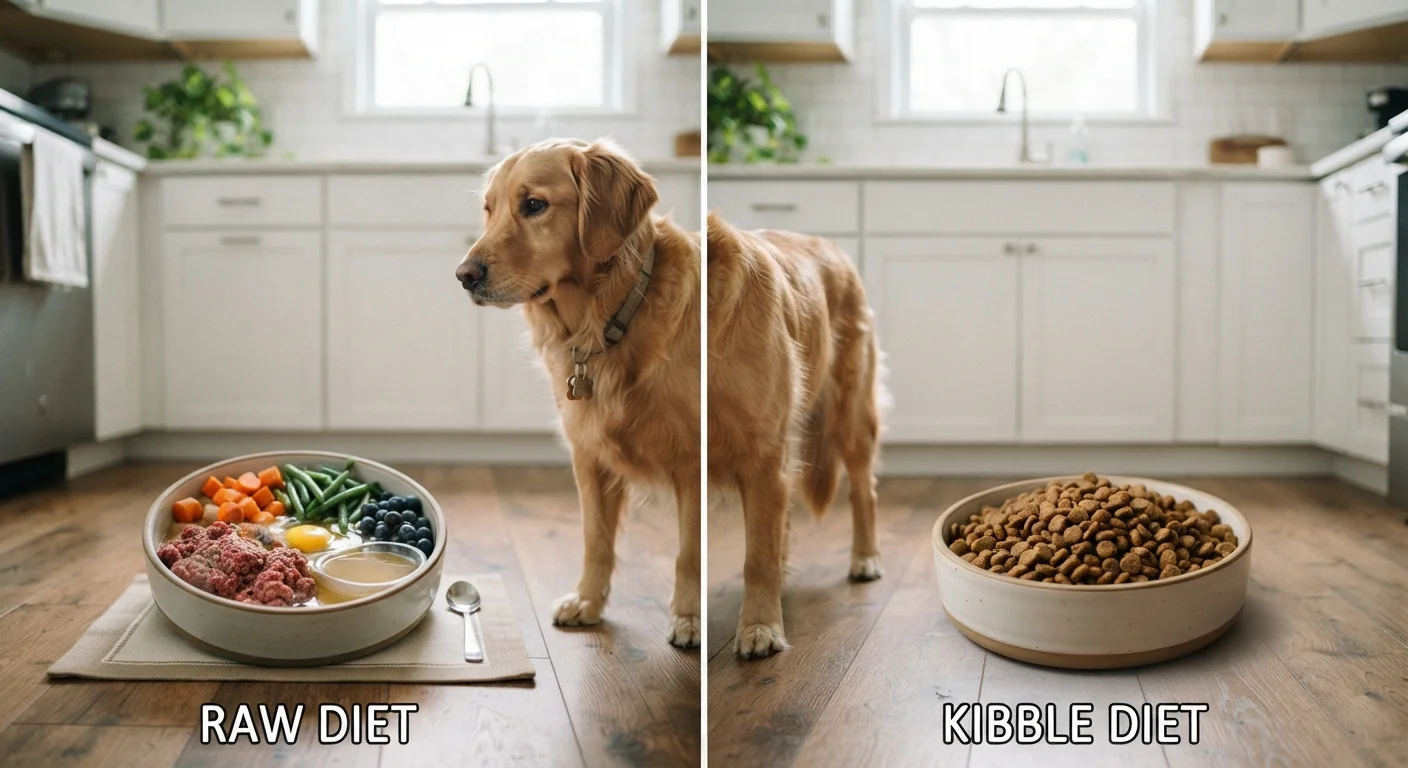
A raw diet for pets — sometimes called a BARF diet (Biologically Appropriate Raw Food) — typically includes uncooked muscle meat, organ meat, raw meaty bones, and sometimes fruits, vegetables, or eggs. The premise is that cooking destroys enzymes and nutrients, and that pets thrive on ingredients closer to what their wild ancestors consumed.
Proponents note that raw diets give owners direct control over ingredients and avoid preservatives or fillers sometimes found in lower-quality commercial foods. However, preparation demands are significant. Achieving complete and balanced nutrition requires careful formulation — without it, pets can develop serious deficiencies over time. Raw diets also require safe food handling to reduce the risk of pathogens like Salmonella and E. coli, which can affect both animals and the people in their households.
Household Safety Is a Real Consideration
Raw meat — even handled carefully — can harbor bacteria that pose health risks to humans, not just pets. Households with young children, pregnant individuals, older adults, or anyone with a compromised immune system should discuss these risks with both their veterinarian and their own healthcare provider before starting a raw feeding regimen. Proper refrigeration, dedicated prep surfaces, and thorough handwashing are essential minimums, not optional steps.
The American Veterinary Medical Association and the FDA have both issued guidance cautioning against raw protein diets, particularly for households with young children, elderly individuals, or immunocompromised people. This doesn't mean raw feeding is impossible to do responsibly — it means the stakes for proper handling are genuinely high.
What Commercially Prepared Pet Food Offers
Commercial pet foods — whether dry kibble, wet canned food, or freeze-dried options — are formulated to meet nutritional profiles established by the Association of American Feed Control Officials (AAFCO). Foods bearing an AAFCO statement have either been tested through feeding trials or formulated to meet nutrient profiles, providing a meaningful (though not perfect) quality baseline.
The main advantages are consistency, convenience, and cost predictability. A bag of complete and balanced kibble removes the guesswork from daily nutrition. The trade-off is that quality varies considerably across price points, and some formulations rely on ingredients that budget-conscious shoppers may want to evaluate more carefully. Learning to read a pet food label is one of the most practical skills any pet owner can develop. For a closer look at how dry and wet commercial options compare day-to-day, this breakdown of kibble vs. wet food covers the key trade-offs.
| Raw Diet | Commercially Prepared Food | |
|---|---|---|
| Nutritional completeness | Requires careful formulation; risk of deficiency if unbalanced | AAFCO-compliant foods provide established nutrient baseline |
| Food safety risk | Higher — pathogens possible without strict handling | Lower — processing reduces bacterial risk |
| Ingredient transparency | High — owner controls every ingredient | Varies — label reading required to assess quality |
| Cost | Generally higher, especially for quality proteins | Wide range; mid-range options accessible on a budget |
| Convenience | Time-intensive; prep and storage required daily | Highly convenient; long shelf life |
| Vet and regulatory support | Most vet organizations urge caution | Broadly recommended when AAFCO-compliant |
Cost and Practicality: The Budget Reality
For most budget-conscious pet owners, cost is a deciding factor. Raw diets — when properly formulated — tend to cost more than mid-range commercial foods, sometimes significantly so. Sourcing quality proteins, adding appropriate supplements, and accounting for safe storage and handling all add up. Commercially prepared food, by contrast, offers predictable per-serving costs and a long shelf life that reduces waste.
That said, not all commercial food is created equal. Inexpensive kibble with poor ingredient quality may lead to health issues over time, which carry their own costs. A reasonable middle ground for many owners is choosing a commercial food with a clear AAFCO nutritional adequacy statement while staying alert to the protein sources and ingredient quality — skills that apply whether you're evaluating processed or whole-food options. Understanding the difference between plant and animal protein sources can also help when assessing ingredient lists.
This article is for general informational purposes only. Always consult a licensed veterinarian or veterinary nutritionist before making significant changes to your pet's diet, particularly if your pet has existing health conditions.