

Key Takeaways
- Animal proteins are generally 'complete,' meaning they contain all nine essential amino acids in sufficient amounts.
- Most plant proteins are 'incomplete,' but eating a variety of plant foods throughout the day covers all essential amino acids.
- Plant proteins tend to cost less per gram and come packaged with fiber and other beneficial nutrients.
- Digestibility differs between sources — animal proteins are typically absorbed more efficiently than plant proteins.
- Both protein types can support health goals; the best choice depends on your diet, budget, and personal preferences.
- No single protein source is nutritionally perfect — variety across both or within one category is the practical goal.
Option A
Plant Protein
The fiber-rich, budget-friendly option with some assembly required.
Best for: People looking to reduce food costs, increase fiber intake, or shift toward more plant-forward eating patterns.
Option B
Animal Protein
The complete, highly digestible protein source with a longer nutritional track record.
Best for: Those wanting straightforward complete protein with minimal meal planning around amino acid balance.
If you're eating on a tight budget
Plant Protein
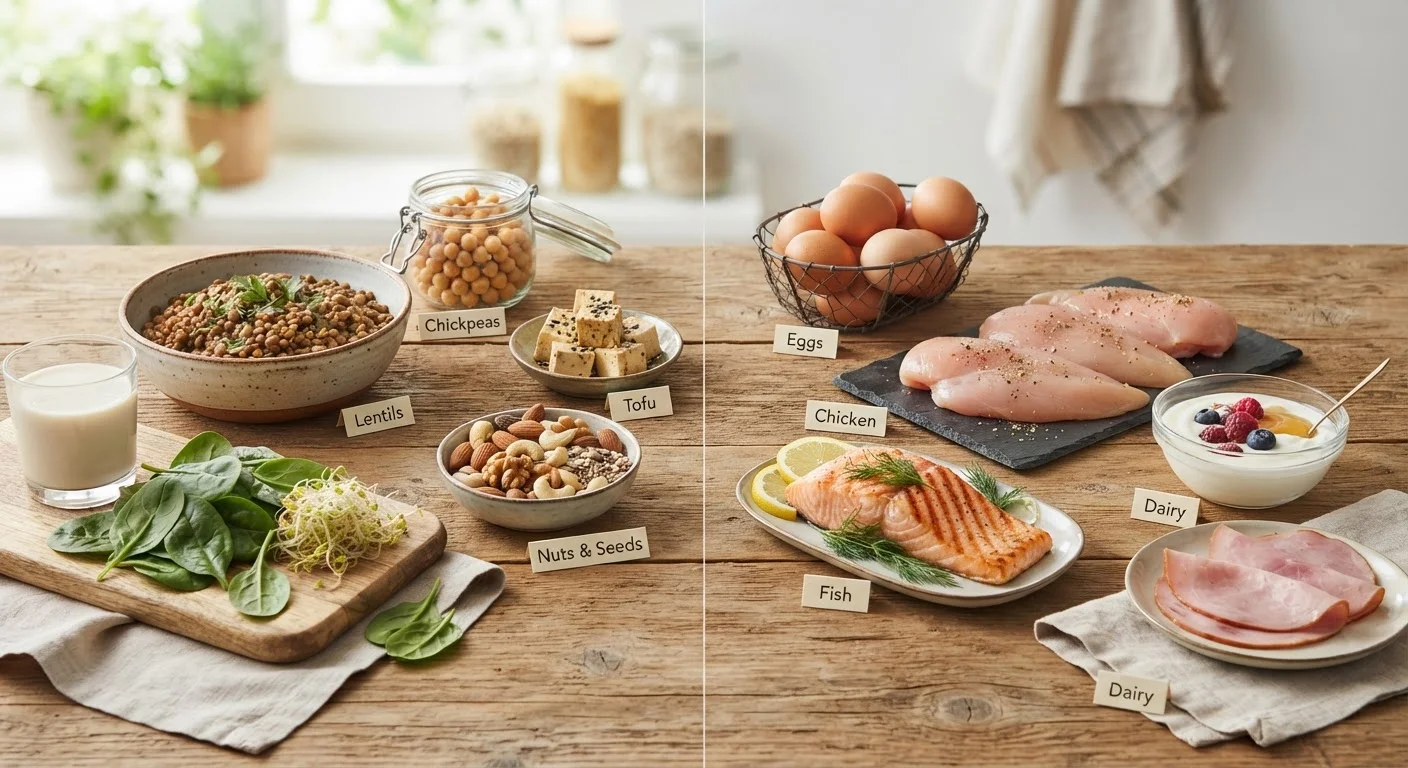
Lentils, canned beans, tofu, and peanut butter deliver substantial protein at a fraction of the cost of most meat or fish. See our guide to protein on a budget for specifics.
If you want the simplest path to complete protein
Animal Protein
Eggs, poultry, fish, and dairy each deliver all essential amino acids in a single food without requiring meal planning around combinations.
If you want to improve digestive health alongside protein intake
Plant Protein
Plant sources like legumes and whole grains bring dietary fiber alongside protein, supporting gut health in ways animal foods generally do not.
If you follow a vegetarian or vegan diet
Plant Protein
With thoughtful variety — beans, lentils, soy, whole grains, nuts, and seeds — plant protein alone can meet protein needs at any life stage, though consulting a registered dietitian is advisable.
If you eat both plants and animal foods
Plant Protein
Most Americans already get plenty of animal protein; adding more plant protein sources is a practical way to increase fiber, diversify nutrients, and reduce food spending.
What Makes a Protein 'Complete' or 'Incomplete'?
Protein is made of building blocks called amino acids. Of the 20 amino acids the body uses, nine are called essential — meaning your body cannot make them on its own and must get them from food. A protein source is called complete when it contains all nine essential amino acids in meaningful amounts.
Animal proteins — including meat, poultry, fish, eggs, and dairy — are universally complete. Plant proteins are a more mixed picture. Soy and quinoa are notable exceptions and are considered complete plant proteins. Most other plant sources — beans, lentils, rice, nuts, seeds — are low in at least one essential amino acid.
This doesn't mean plant eaters are at a disadvantage. The concept of protein complementarity — combining foods like rice and beans, or hummus and whole wheat pita — ensures the full amino acid spectrum is covered over the course of a day. Nutrition research generally supports that this doesn't require precise meal-by-meal pairing; eating a varied plant-based diet across the day is sufficient for most healthy adults.
For more on how this fits into overall eating patterns, see our guide on building a balanced plate.
| Criterion | Plant Protein | Animal Protein |
|---|---|---|
| Amino acid completeness | Usually incomplete (soy & quinoa are exceptions) | Complete in all sources |
| Digestibility | Moderate; improved by cooking/soaking | Generally high |
| Typical cost per gram | Lower (lentils, beans, tofu) | Higher (varies; eggs are affordable) |
| Fiber content | Yes — a significant benefit | None |
| Vitamin B12 | Not naturally present | Naturally present |
| Saturated fat | Generally low | Varies; red meat tends to be higher |
| Heme iron availability | Not present (non-heme iron only) | Present in red meat and poultry |
| Environmental footprint | Generally lower | Generally higher (especially red meat) |
Digestibility, Cost, and What Else Comes Along for the Ride
Beyond amino acid profiles, protein sources differ in how efficiently they're absorbed. A metric called DIAAS reflects how well the body can actually use the protein in a food. Animal proteins — particularly eggs, dairy, and meat — tend to score high. Many plant proteins score lower, partly because plant cell walls and certain compounds called antinutrients (like phytates and tannins) can reduce absorption. Cooking, soaking, and fermentation all help improve plant protein digestibility.
Cost is a major real-world factor. Dried lentils, canned chickpeas, peanut butter, and tofu are consistently among the lowest-cost protein options available. Ground beef, chicken breast, and fish tend to cost more per gram of protein, with some exceptions like eggs, which remain cost-competitive. Our protein-on-a-budget breakdown covers specific food comparisons in detail.
Each protein category also brings distinct nutritional co-passengers:
- Plant proteins come packaged with fiber, antioxidants, and phytonutrients. They are naturally cholesterol-free and typically lower in saturated fat.
- Animal proteins often provide nutrients that are harder to obtain from plants, including heme iron (more bioavailable than plant iron), vitamin B12, zinc, and long-chain omega-3 fatty acids (in fatty fish).
Neither type is nutritionally complete on its own in a broader dietary sense — which is why variety, regardless of your dietary pattern, remains the central recommendation from mainstream nutrition guidance.
A Note on Special Populations
Protein needs and the risks of deficiency differ meaningfully for pregnant individuals, growing children, older adults, and people managing chronic health conditions. General nutrition guidance is a starting point, not a prescription. If you fall into any of these groups, please speak with a registered dietitian or your healthcare provider before making significant changes to your protein sources.
~10%
Average American protein from plant sources
The USDA's Dietary Guidelines Advisory Committee has noted that most Americans derive roughly 10% of their protein from plant sources, well below what diverse eating patterns would suggest.
95%+
Digestibility of egg and dairy protein
According to established DIAAS scoring methods used in nutrition research, animal proteins like eggs and milk consistently score among the highest for protein digestibility and amino acid availability.
~$0.10–$0.25
Estimated cost per gram of protein (lentils/beans)
Dried legumes represent one of the most cost-effective protein options available in US grocery stores, based on typical retail pricing for bulk or canned varieties.
Practical Trade-Offs and How to Think About Your Own Diet
The plant vs. animal protein question is less about which is categorically superior and more about what fits your life, budget, and health context. A few practical realities worth keeping in mind:
For most Americans, the issue isn't getting enough total protein — it's getting enough variety. The Dietary Guidelines for Americans consistently note that most people meet or exceed protein recommendations but fall short on fiber, which is found only in plant foods.
If you currently eat mostly animal protein, adding plant sources like lentils, black beans, or edamame is a relatively easy way to increase fiber, reduce food costs, and diversify your nutrient intake — without abandoning foods you already enjoy. Our article on budget eating across different diets explores how these patterns play out financially.
If you eat little or no animal protein, the key watchpoints are vitamin B12 (generally requires supplementation on a fully plant-based diet), iron absorption (pairing plant iron sources with vitamin C-rich foods helps), and omega-3s (algae-based supplements provide a plant-derived source of DHA and EPA). Anyone making a significant dietary shift — especially those who are pregnant, breastfeeding, elderly, or managing a chronic condition — should consult a registered dietitian before doing so.
It's also worth separating protein quality from overall dietary patterns. Highly processed products derived from either plants or animals may not deliver the same benefits as whole food sources. For context on that distinction, see whole foods vs processed foods. And if you want to explore common misconceptions around protein more broadly, protein myths examined is a helpful next read.
This article is for general informational and educational purposes only and is not a substitute for professional medical or dietary advice. Consult a qualified healthcare provider or registered dietitian for guidance specific to your health needs.