

Key Takeaways
- Dry food costs less per serving and stores easily, making it practical for most households.
- Wet food provides significantly more moisture, which matters especially for cats prone to urinary issues.
- Neither format is universally superior — the right choice depends on your pet's health, age, and preferences.
- Many veterinarians support a mixed-feeding approach that combines both formats.
- Always check that any food meets AAFCO nutritional adequacy standards before buying.
Option A
Dry Food (Kibble)
The convenient, cost-effective everyday staple.
Best for: Pet owners looking for an affordable, easy-to-store option that supports dental health in dogs.
Option B
Wet Food (Canned)
The moisture-rich, palatable choice for picky or high-need pets.
Best for: Cats needing extra hydration, senior pets with dental issues, or animals with low appetite.
If you're feeding a healthy adult dog on a tight budget
Dry Food (Kibble)
Kibble delivers complete nutrition at a lower cost per serving, and its texture can help reduce plaque buildup on teeth.
If your cat drinks very little water or has a history of urinary tract issues
Wet Food (Canned)
Wet food is roughly 75–80% moisture, helping cats meet their hydration needs through diet alone.
If your pet is a senior with dental pain or reduced appetite
Wet Food (Canned)
Soft texture is easier to chew, and the stronger aroma can entice pets that have become less interested in eating.
If you want a balanced approach for a healthy cat or dog
Dry Food (Kibble)
Use kibble as the daily base for cost efficiency and add wet food as a supplement a few times per week for variety and hydration.
If your pet has been diagnosed with kidney disease or chronic dehydration
Wet Food (Canned)
Higher moisture content supports kidney function; always follow your veterinarian's specific dietary guidance for these conditions.
What's Actually Different Between Kibble and Canned Food
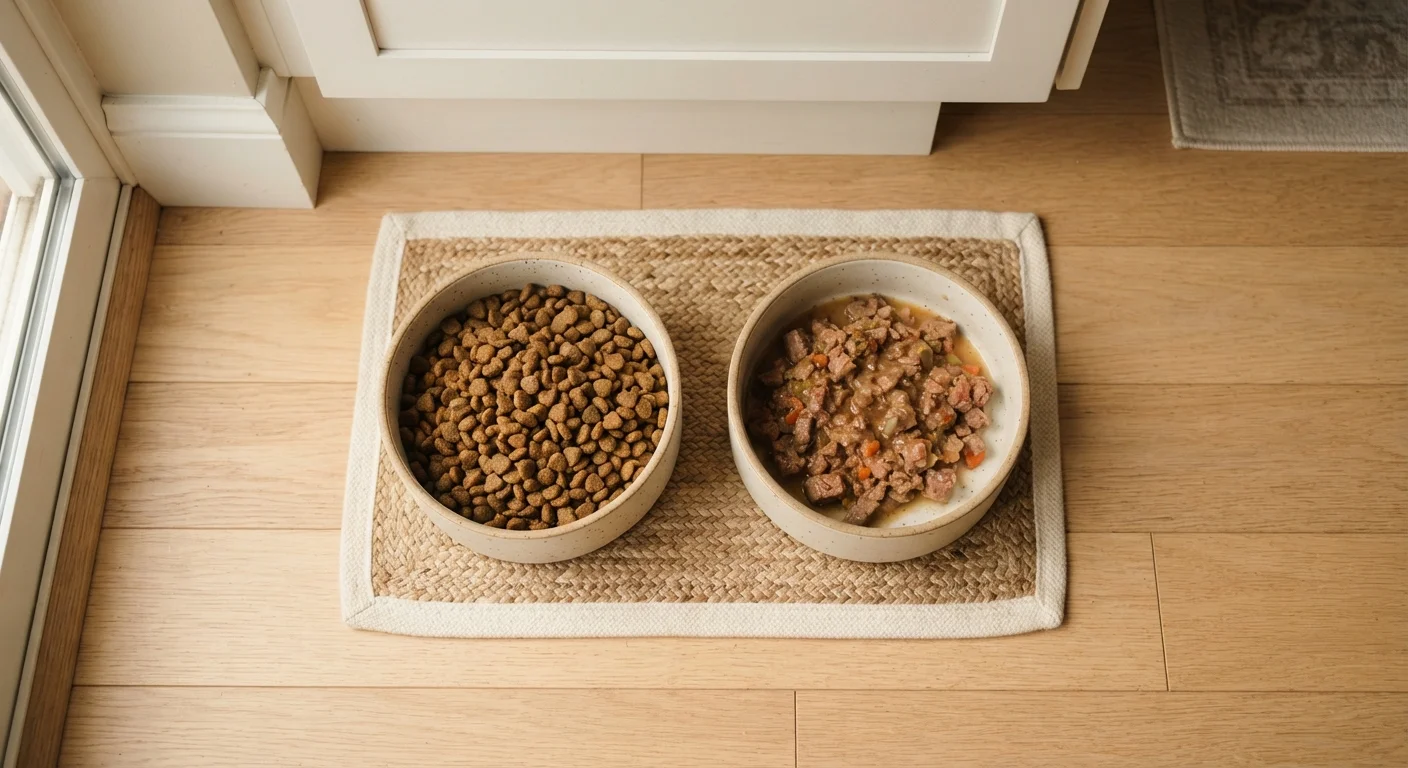
The most fundamental difference between dry and wet pet food is water content. Kibble typically contains 8–10% moisture, while canned wet food runs between 75–82% moisture. That gap shapes everything else — calorie density, texture, shelf life, cost, and how each format supports your pet's body.
Because kibble is calorie-dense, you feed smaller portions by weight. Wet food portions look much larger but deliver fewer calories per ounce. Both formats can be nutritionally complete, provided they carry an AAFCO statement confirming they meet established nutrient profiles. Before comparing options, it helps to understand how to read those labels — see our guide on decoding pet food labels.
Processing methods also differ. Kibble is heat-extruded or baked at high temperatures, which extends shelf life and reduces bacterial risk. Wet food is cooked inside sealed cans, preserving more of its fat and protein in a softer form. Neither process is inherently better for nutrition when the final product is formulated correctly.
Cost and Practicality: The Day-to-Day Reality
For budget-conscious pet owners, cost per day is usually the deciding factor. Dry food wins here consistently. A bag of kibble typically costs two to four times less per serving than an equivalent volume of canned food. It also stores easily at room temperature, with no refrigeration needed after opening — just a sealed container to keep it fresh.
Wet food, once opened, must be refrigerated and used within two to three days. That adds a layer of planning, and partial cans can be wasted if your pet doesn't finish them. However, buying larger cans and portioning them carefully can reduce waste significantly.
| Criterion | Dry Food (Kibble) | Wet Food (Canned) |
|---|---|---|
| Moisture content | 8–10% | 75–82% |
| Cost per serving | Lower | Higher |
| Storage after opening | Room temp, up to 6 weeks | Refrigerate, use within 2–3 days |
| Dental benefit | Some plaque reduction | Minimal dental benefit |
| Palatability for picky eaters | Variable | Generally higher |
| Best suited for | Healthy dogs, cost-conscious owners | Cats, seniors, low-thirst pets |
| Calorie density | High — smaller portions needed | Lower — larger portions by volume |
A practical middle-ground used by many pet owners is mixed feeding: dry kibble as the daily base, with a small amount of wet food added several times a week. This approach lowers overall food costs while still providing variety and some hydration boost.
Nutritional and Health Considerations by Pet Type
Cats are obligate carnivores with a low thirst drive — they evolved to obtain most of their water from prey. This makes hydration through food particularly important for them. Dry-only diets can contribute to chronic low-level dehydration, which veterinary professionals have linked to urinary tract problems and kidney stress over time. Wet food helps bridge this gap. For more on why water intake matters so much, see why your pet's water bowl matters more than you think.
Dogs generally tolerate dry food well and tend to drink more water independently than cats. Kibble's firmer texture can help reduce tartar buildup, though it's not a substitute for proper dental care. Dogs with certain health conditions — kidney disease, megaesophagus, or post-surgery recovery — may do better with wet or softened food.
A Note on Cats and Hydration
Cats have a lower thirst drive than dogs and naturally consume less water when fed dry-only diets. Veterinary nutritionists often recommend that cat owners incorporate at least some wet food to support urinary and kidney health over time. This is especially relevant for indoor cats with limited activity and for any cat that has previously had a urinary blockage or crystals. Talk to your vet about the right balance for your individual cat.
Nutritional needs also change across a pet's life. Kittens and puppies need calorie-dense food for growth; seniors may need softer food and adjusted protein levels. Our overview of pet care at every life stage covers how dietary priorities shift over time.
Making the Right Call for Your Pet
There is no single correct answer. A healthy young dog eating complete dry kibble and drinking adequate water may thrive without any wet food. A middle-aged indoor cat on a dry-only diet, on the other hand, may be quietly under-hydrated without obvious symptoms.
Start by considering your pet's species, age, and any known health conditions. Then weigh your budget and storage situation honestly. If you're already feeding dry and your pet seems healthy, engaged, and well-hydrated, there may be no reason to change. If your cat is prone to urinary issues or your senior dog struggles to chew, wet food — or a blend — may be worth the added cost.
For owners interested in understanding the broader landscape of pet food options, including raw and homemade diets, the raw vs. commercially prepared food debate offers a balanced look at what each approach involves.
When in doubt, ask your veterinarian. They can factor in your pet's weight, bloodwork, and individual history in ways that no general guide can.
This article is for general informational purposes only and is not a substitute for personalized veterinary advice. Always consult a licensed veterinarian before making significant changes to your pet's diet, especially if your pet has a known health condition.