

Key Takeaways
- Ingredients are listed by weight before cooking, so moisture content affects their order.
- The AAFCO nutritional adequacy statement tells you whether a food is complete or a supplement.
- Serving size guidelines on packaging are starting points, not exact prescriptions for every pet.
- Terms like 'natural' and 'premium' have limited or no regulatory definitions on pet food labels.
- The guaranteed analysis shows minimum or maximum nutrient levels, not precise amounts.
Pet Food Label
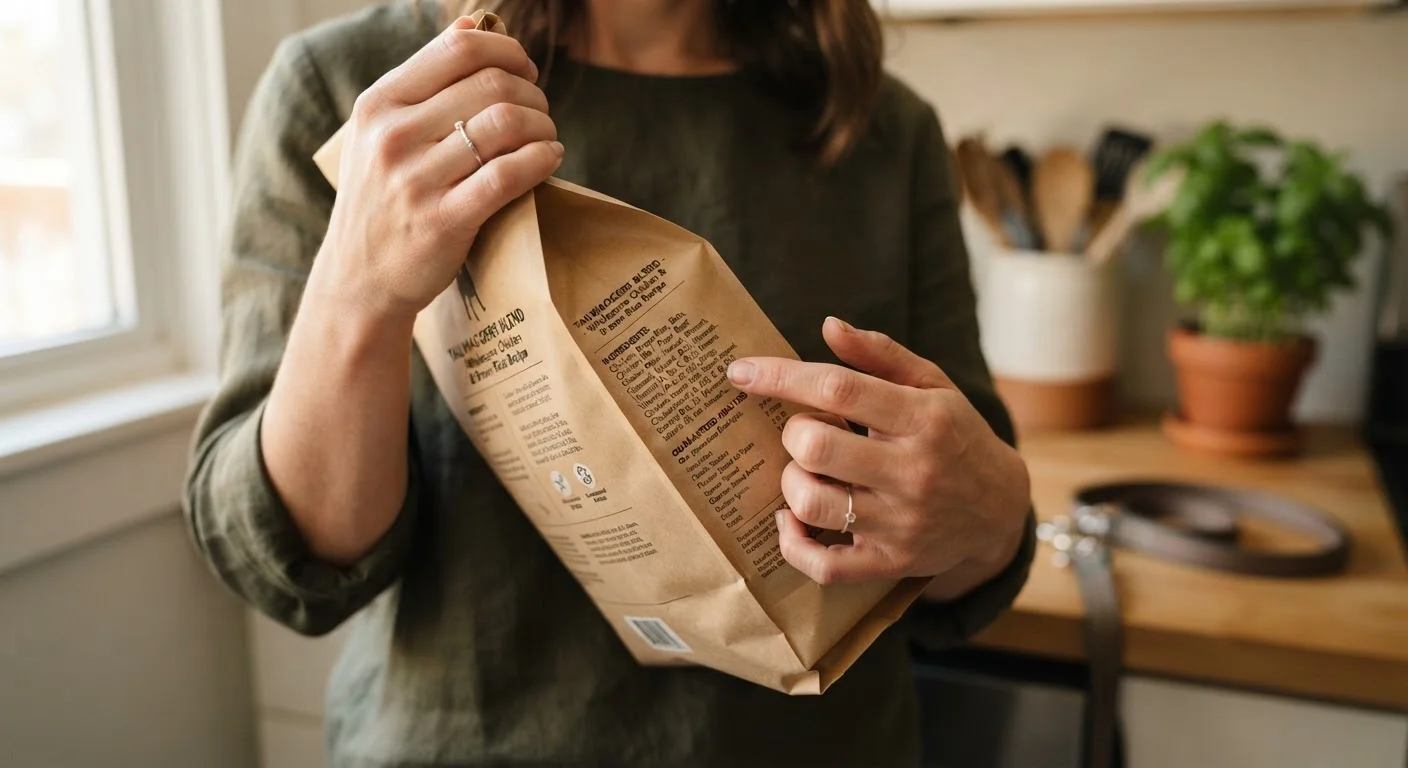
A pet food label is the regulated set of information printed on pet food packaging that tells you what's inside, who it's made for, and whether it meets minimum nutritional standards. In the U.S., pet food labels are governed by the Association of American Feed Control Officials (AAFCO) and, at the federal level, the FDA. Every label must include specific required elements — from the ingredient list to a nutritional adequacy statement — that help you evaluate whether a food is appropriate for your pet.
AAFCO establishes model regulations that most U.S. states adopt; these define how terms like 'complete and balanced,' 'natural,' and ingredient naming conventions must be used on labels.
The Ingredient List: What Order Really Means
Pet food ingredients are listed in descending order by weight before cooking or processing. This detail matters more than most people realize. A fresh chicken ingredient is roughly 70% water by weight, so it will rank high on the list — but once that moisture is cooked off, it contributes less actual protein than it appears to. Meanwhile, a dry ingredient like oats or peas may sit lower on the list but deliver a meaningful share of calories.
This doesn't mean fresh-named ingredients are bad — it just means the order alone doesn't tell the whole story. A useful habit: look at the first five to seven ingredients together as a group. Do you see a named protein source (chicken, salmon, beef) near the top? Are there multiple fiber or carbohydrate sources that could add up to more than a single ingredient? That fuller picture is more informative than ingredient rank alone.
For a broader look at how ingredient lists work on food packaging generally, see our guide to processed vs. whole food labels.
95%
Minimum named ingredient in direct-name foods
Under AAFCO's '95% rule,' a product named 'Beef Dog Food' must contain at least 95% beef (excluding water) — one of the most stringent naming thresholds.
3%
Minimum for 'with [ingredient]' claims
AAFCO guidelines require only 3% of a named ingredient when 'with' precedes it on the label — a significant difference from direct-name products.
10%
Minimum for 'dinner' or 'entrée' named products
Products using descriptors like 'dinner,' 'platter,' or 'formula' need only 10% of the named protein ingredient under AAFCO regulations.
The AAFCO Nutritional Adequacy Statement
This is the single most important line on any pet food label, and it's easy to miss. The nutritional adequacy statement — sometimes called the AAFCO statement — tells you two things: whether the food is complete and balanced, and which life stage it's formulated for.
A complete and balanced food has either been tested through feeding trials or formulated to meet AAFCO nutrient profiles. Foods labeled for all life stages meet the most demanding profile (growth and reproduction), making them suitable for puppies and kittens too. Foods labeled for adult maintenance may not provide enough of certain nutrients for growing or pregnant animals.
If a label says something like "intended for intermittent or supplemental feeding only," that food should not be used as a primary diet. Treats, toppers, and many flavored additions fall into this category. Understanding this statement helps you avoid accidentally feeding an incomplete diet. You can explore detailed label anatomy further in our companion piece on pet food label anatomy.
Check the Life Stage Match First
Before evaluating anything else on a pet food label, confirm the AAFCO statement matches your pet's current life stage. A kitten or puppy needs a food labeled for 'growth' or 'all life stages' — adult maintenance formulas may not meet their needs. This one check can prevent nutritional gaps before they become problems.
The Guaranteed Analysis: Ranges, Not Recipes
The guaranteed analysis panel lists minimum percentages of crude protein and crude fat, and maximum percentages of crude fiber and moisture. These are regulatory floors and ceilings — not the actual amount in every bag. A food guaranteeing "minimum 26% crude protein" could contain more; you just know it won't be less.
One common point of confusion: comparing wet and dry food using guaranteed analysis numbers is misleading without accounting for moisture. Wet food is typically 75–80% water, so its nutrient percentages look much lower on paper than a dry kibble. To make a fair comparison, you'd need to calculate nutrients on a dry matter basis — essentially stripping out the water content from both foods first.
The guaranteed analysis is useful for spotting obvious mismatches (a low-protein food for a high-energy working dog, for example), but it doesn't tell you about ingredient quality or digestibility. Think of it as a minimum safety check, not a full nutritional picture. For more on reading nutrition panels on packaged foods in general, our plain-language guide to nutrition labels is a helpful parallel resource.
Serving Size Guidelines and How to Use Them
Feeding guides on pet food packaging are calculated averages based on body weight ranges. They're a reasonable starting point, but they're not tailored to your individual pet's age, metabolism, activity level, or health status. A sedentary indoor cat and an active outdoor cat of the same weight can have meaningfully different caloric needs.
When you first switch to a new food, start at the lower end of the suggested range and monitor your pet's body condition over two to four weeks. Signs of appropriate weight include being able to feel — but not prominently see — ribs, and a visible waist when viewed from above. Adjust portions gradually rather than making large jumps. Overfeeding is one of the most common unintentional mistakes pet owners make, especially when transitioning from less calorie-dense foods.
Also account for treats and toppers. If treats make up more than 10% of your pet's daily intake, you may need to reduce their main meal size accordingly. Keeping a rough mental tally helps prevent caloric creep — a common cause of gradual weight gain. For more on how portion guidance works in everyday practice, see this practical guide to serving sizes.
This article is for general informational purposes only and is not a substitute for personalized veterinary advice. Consult your veterinarian for guidance tailored to your pet's specific health needs.