

Key Takeaways
- Most landlords deduct from security deposits for damage that tenants could have easily prevented or repaired.
- A small toolkit and a few practiced skills cover the majority of common rental repairs.
- Knowing when NOT to DIY is just as valuable as knowing how — your lease and local codes both matter.
- Patching nail holes, silencing a running toilet, and clearing slow drains are all beginner-friendly tasks.
- Always document the condition of your unit in writing and photos before and after any repair.
Start here
Why Renters Benefit from Basic Repair Skills
Next
Patching Holes and Fixing Walls
Then
Plumbing Basics: Toilets, Drips, and Drains
When you're ready
Know Your Limits — and Your Lease
Why Renters Benefit from Basic Repair Skills
Moving into a rental comes with an unspoken financial reality: the condition you leave it in directly affects how much of your deposit comes back. Landlords are allowed to deduct for damage beyond normal wear and tear — and a lot of common damage is surprisingly easy to prevent or fix yourself.
Beyond the deposit, practical repair skills reduce how long you live with a dripping faucet, a slow drain, or a door that won't latch right while you wait for a maintenance request to be processed. They also build a baseline of household confidence that carries with you whether you rent forever or eventually own.
For more on avoiding common household mistakes that silently cost money, see our article on home maintenance myths that cost people real money. And if you're trying to stretch a limited budget across repairs and other household needs, the principles in home maintenance on a tight budget apply equally to renters.
Security deposit
A sum of money paid upfront to a landlord, typically refunded at move-out minus deductions for damage beyond normal wear and tear.
Normal wear and tear
Minor deterioration that happens through everyday, reasonable use — such as small scuffs on walls or carpet matting — which landlords generally cannot charge tenants for.
Flapper valve
A rubber seal inside a toilet tank that controls the flow of water into the bowl; worn flappers are a common cause of running toilets.
Spackling compound
A paste-like material used to fill small holes and cracks in drywall or plaster walls before painting.
Drain snake
A flexible tool inserted into a drain pipe to break up or pull out blockages like hair or debris.
Patching Holes and Fixing Walls
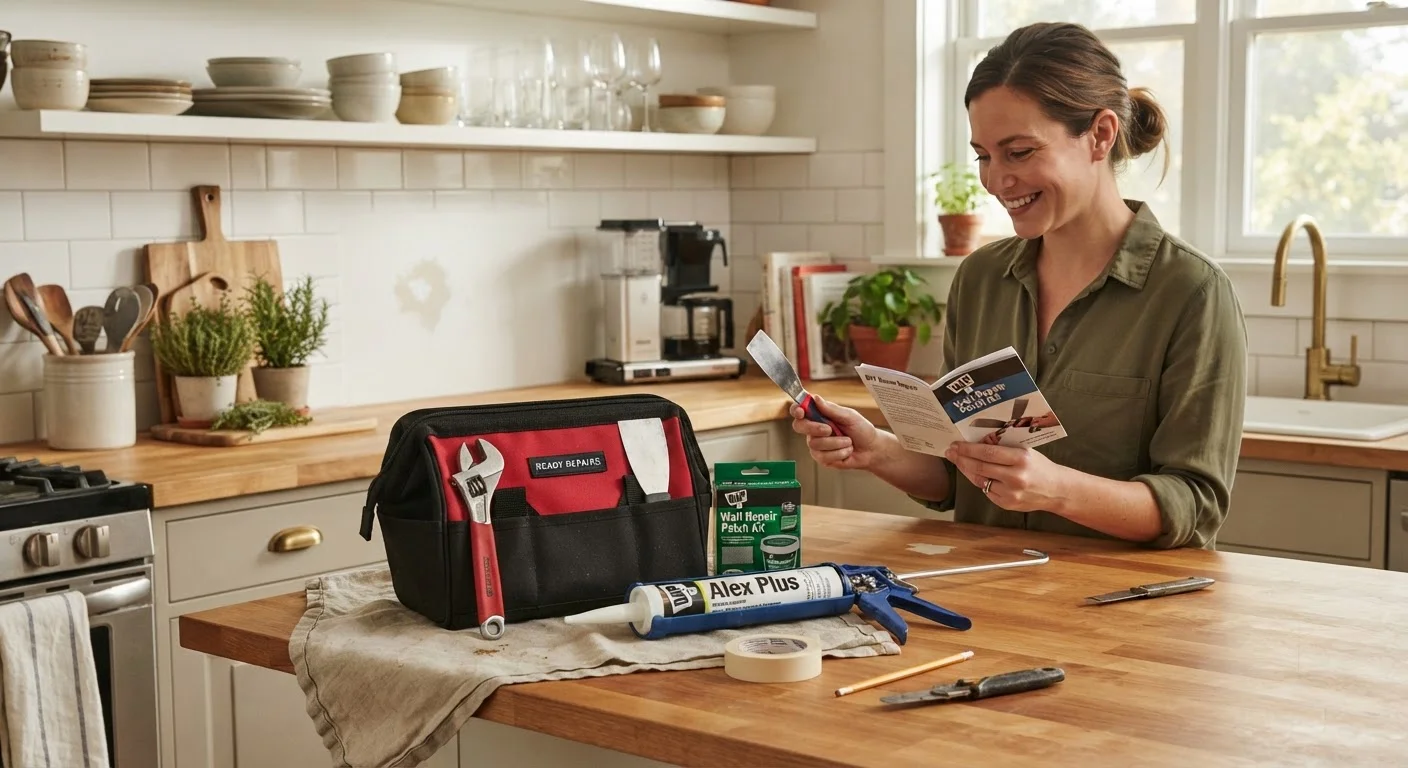
Nail holes are the most common deposit deduction — and one of the easiest to fix. Small holes left by picture hooks can be filled with lightweight spackling compound, smoothed with a putty knife, allowed to dry, and then lightly sanded before a dab of matching paint is applied. The entire process takes under 30 minutes.
Larger holes — say, a doorknob punched through drywall — require a patch kit or a mesh backing piece to support the compound. These kits are widely available at hardware stores and come with instructions. The key is applying thin layers and letting each one dry fully before adding the next. Rushing creates visible bumps.
Before you drill or nail into any wall, it's worth understanding what's behind the surface. Our guide on what's behind your walls before you drill or nail explains how to locate pipes and wiring safely. And for a deeper look at which wall problems are genuinely DIY-friendly versus which signal something more serious, see patch, fill, or replace.
Match Your Paint Before You Need It
When you first move in, ask your landlord if there's leftover paint from the unit. Even a small sample is enough for touch-ups. If no paint is available, take a small chip of paint to a hardware store — most can color-match it accurately. Having the right shade on hand makes wall repairs nearly invisible.
Plumbing Basics: Toilets, Drips, and Drains
A running toilet is one of the most common — and most fixable — issues in any rental. The culprit is almost always a worn flapper valve, the rubber flap inside the tank that seals water in between flushes. Replacement flappers are inexpensive and require no tools: you turn off the water supply valve behind the toilet, flush to empty the tank, unhook the old flapper, snap the new one in, and restore the water supply. The whole job typically takes under 15 minutes.
Slow or clogged drains are another frequent issue. A drain snake or a simple drain cleaning tool (the plastic kind with barbed edges) can clear most hair-related clogs in bathroom sinks and tubs without chemicals. For kitchen drains, reducing grease and food particle buildup is often more effective long-term than relying on drain cleaners, which can degrade older pipes over time.
A dripping faucet usually comes down to a worn washer or O-ring inside the handle assembly. This is fixable, but shutting off the water supply and knowing the faucet type (compression, ball, cartridge) matters before you open anything up. If you're unsure, it's reasonable to notify your landlord rather than risk making the leak worse.
Never Use Drain Chemicals on Completely Blocked Drains
If water is standing still in a sink or tub, avoid pouring chemical drain cleaners in — they can splash back and cause burns, and they may damage certain pipe materials with prolonged contact. A drain snake or plunger is the safer first step. For persistent blockages, contact your landlord or a licensed plumber.
Know Your Limits — and Your Lease
DIY repair has real limits — and ignoring them can cost more than hiring help. Electrical work, gas appliances, structural issues, and anything requiring a permit must go to a licensed professional. Not only are these tasks genuinely dangerous without proper training, but performing them without authorization can void your lease and create legal liability.
Your lease is the first document to consult before doing anything beyond cosmetic fixes. Many leases specify what tenants may or may not repair, and some require written approval even for minor work. When in doubt, send a quick message to your landlord documenting the issue and your intent — that paper trail protects you.
It's also worth thinking clearly about which projects are worth your time versus which aren't. Our balanced breakdown of doing your own minor repairs vs. calling a tradesperson can help you make that call with confidence. Similarly, not every home improvement makes sense for a renter — renter vs. owner home upgrades outlines how to think through that distinction.
Document everything: photograph your unit at move-in and again after any repair you make. This creates a record that can resolve deposit disputes clearly and fairly.