

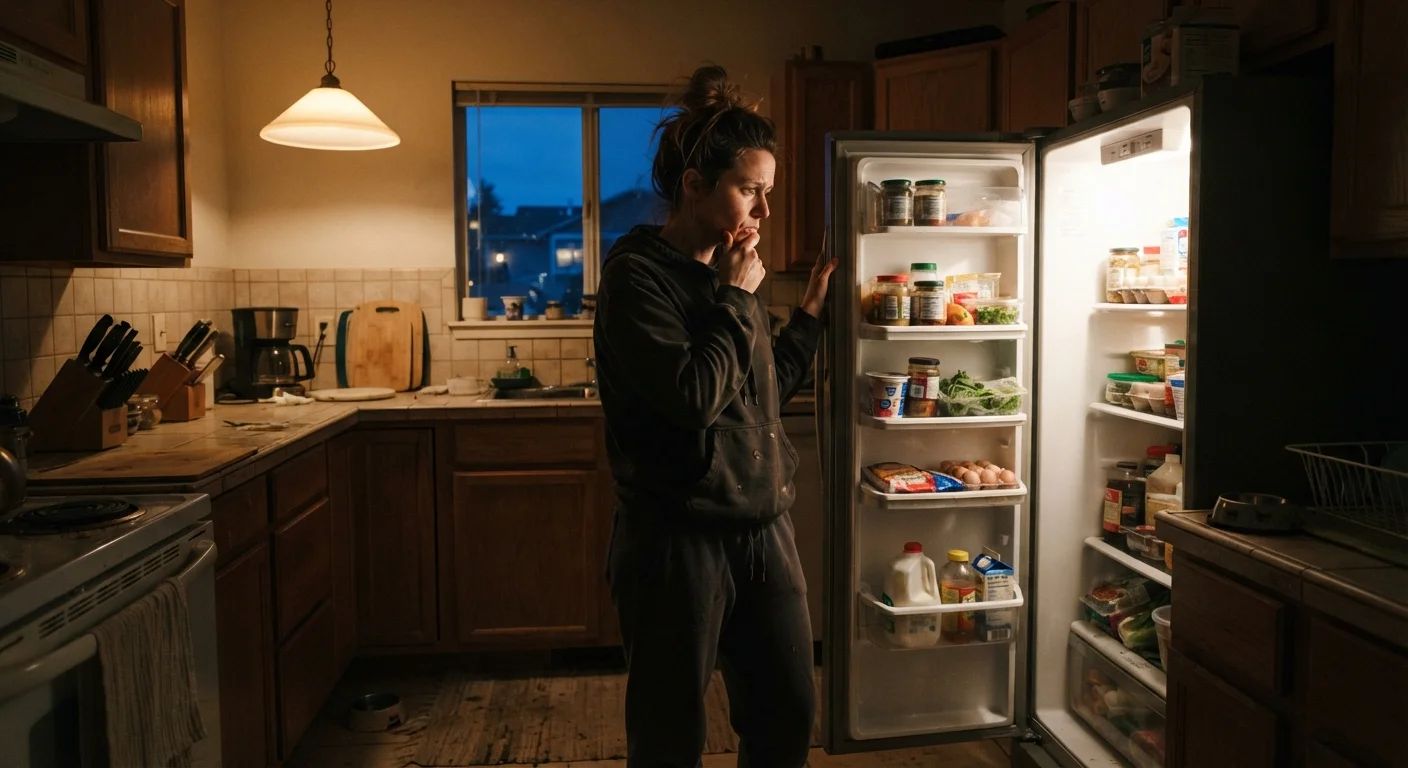
Key Takeaways
- Decision fatigue, not laziness, is usually behind that 6 p.m. feeling of overwhelm.
- Reducing the number of daily cooking decisions is more effective than trying harder.
- A simple weekly structure — even a loose one — dramatically lowers stress at dinnertime.
- Batch-prepping one or two ingredients on the weekend creates a head start all week.
- Fast, affordable dinners are possible without relying on processed shortcuts.
Decision Fatigue at Dinnertime
Decision fatigue is the mental exhaustion that builds up after making many choices throughout the day, leaving your brain with less energy for even simple decisions. By the time 6 p.m. arrives, most people have already made hundreds of small choices — and the question 'What's for dinner?' can feel like one too many. This is why weeknight cooking often feels harder than it actually is.
Research in cognitive psychology suggests that willpower and decision-making draw on a shared, finite mental resource that depletes with use — a concept sometimes called 'ego depletion,' though the science remains an active area of study.
The Real Reason Weeknight Cooking Feels So Hard
It's not that you've forgotten how to cook. And it's not that weeknight meals are genuinely complicated. The problem is that by the time dinner needs to happen, your mental bandwidth is nearly spent.
Psychologists describe this as decision fatigue — the progressive depletion of your ability to make good decisions as the day wears on. Every choice you make, from what to wear to how to word an email, draws on a limited cognitive reserve. By early evening, that reserve is running low. The question 'What should I make for dinner?' arrives at the worst possible moment in your mental day.
This is why so many people default to takeout, cereal, or whatever requires the least thought — not because they're incapable, but because their brains are genuinely tired of choosing. Understanding this shifts the goal: instead of trying to muster more motivation, you can design out the decisions themselves.
This Is About Information, Not Medical Advice
Decision fatigue is a well-documented concept in behavioral psychology, but the mechanisms behind it are still studied and debated. If you're experiencing persistent exhaustion, difficulty concentrating, or mood changes that go beyond a rough evening, speaking with a healthcare professional is worthwhile. This article covers general eating habits and cooking strategies, not clinical guidance.
How Structure Replaces Willpower
The most effective fix for weeknight dinner stress isn't a new recipe — it's a simple framework that removes the blank-page problem. When you already have a loose answer to 'What's for dinner?' before hunger strikes, you skip the hardest part entirely.
One practical approach: assign a broad theme to each weeknight rather than a specific dish. Think along the lines of grain bowls on Monday, pasta on Tuesday, eggs on Wednesday. This narrows each evening's decision from the entire culinary universe down to a handful of variations. You still have flexibility — a grain bowl can be a dozen different things — but the cognitive lift is far smaller.
A weekly meal rotation takes this one step further by giving your shopping list a predictable shape, which tends to save both time and money at the grocery store. The rotation doesn't need to be rigid to be useful.
Start With Just Two Themed Nights
You don't need to theme every night of the week to feel the benefit. Pick just two evenings — maybe Monday and Thursday — and assign them a loose category. Once that feels natural, you can add more. Small, consistent habits tend to stick better than sweeping overhauls.
Small Prep Steps That Pay Off All Week
You don't need to spend a Sunday afternoon batch-cooking full meals to feel the benefit of a little advance preparation. The goal is simply to remove the biggest friction points from each weeknight — the tasks that feel tedious when you're hungry and tired.
A few high-return prep habits include:
- Cook a pot of grains (rice, farro, or quinoa) on the weekend — it takes minimal active effort and serves as a base for multiple meals.
- Wash and dry leafy greens so a salad takes 90 seconds instead of 10 minutes.
- Portion and season a protein ahead so it's ready to cook straight from the fridge.
These micro-investments in prep are the idea behind a weekly prep checklist — a short routine that makes every dinner slightly easier without turning the weekend into a second job.
If you want to stretch ingredients further, cooking once and eating three times through ingredient doubling is a reliable strategy that keeps grocery costs low while reducing the number of nights you start from scratch.
When You Need Dinner in 15 Minutes (or Less)
Even the best-laid prep plans run into reality. On the nights when nothing is prepped and time is short, the answer isn't to give up — it's to have a reliable shortlist of genuinely fast meals in mind.
Eggs, canned beans, frozen vegetables, and pasta are among the most affordable and fastest-cooking ingredients available. A skillet of scrambled eggs with frozen spinach and canned white beans, seasoned with garlic and olive oil, comes together in under 12 minutes and costs a fraction of takeout. The key is keeping a small repertoire of these go-to formulas, not an exhaustive recipe collection.
Fifteen-minute meals don't have to feel like a compromise — they just require a different kind of thinking than elaborate weekend cooking. Speed cooking leans on pantry staples, high heat, and simple seasoning rather than long ingredient lists.
For the nights when cleanup feels as daunting as cooking itself, sheet pan dinners offer a nearly effortless structure: protein and vegetables on one tray, into the oven, done. They work whether you're feeding one person or four, and they scale easily with whatever ingredients you have on hand.
35%
Americans who report skipping cooking due to fatigue
A survey by the American Psychological Association found that stress and tiredness are among the most commonly cited barriers to healthy eating habits among U.S. adults.
~3x
Average cost difference: home-cooked vs. restaurant meal
USDA Economic Research Service data consistently shows home-cooked meals cost significantly less per serving than restaurant or takeout equivalents, though exact figures vary by food type and location.
Under 30 min
Time most people want to spend on weeknight dinner
Food industry research repeatedly finds that the majority of U.S. home cooks prioritize speed on weeknights, with most preferring meals ready in 30 minutes or fewer.