

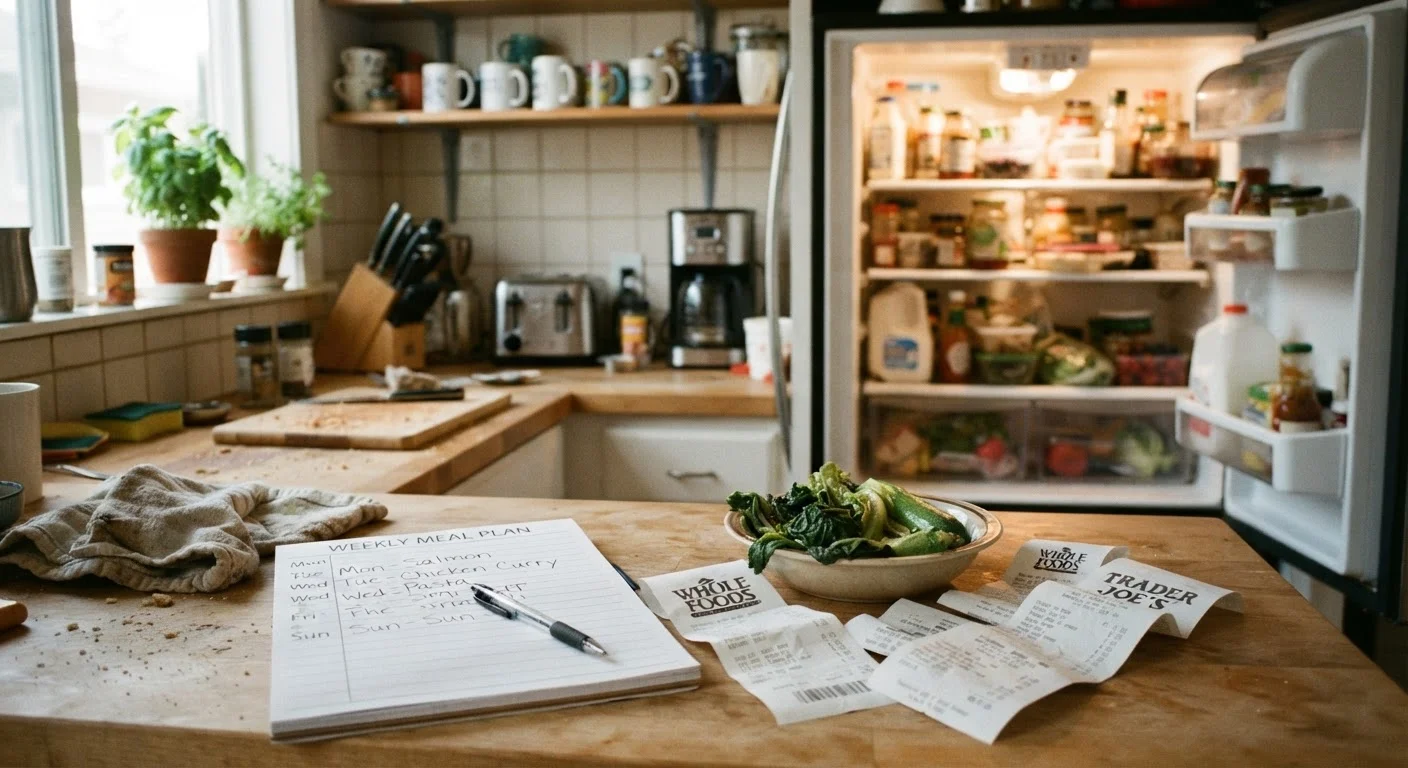
Key Takeaways
- Overly rigid meal plans are one of the most common reasons budgets and motivation collapse mid-week.
- Misjudging portion sizes leads to either wasted food or surprise grocery runs that blow your budget.
- Ignoring perishable ingredients when planning causes spoilage, which is money directly in the trash.
- Shopping without a full inventory check means buying duplicates and missing actual gaps.
- Flexible, ingredient-led planning consistently outperforms recipe-first rigid scheduling.
Why Meal Planning Fails Before You Reach the Stove
Meal planning sounds straightforward: decide what you'll eat, buy what you need, cook it. But the gap between a plan on paper and a successful week in the kitchen is wider than most people expect. The mistakes that derail budget cooks rarely happen while cooking — they happen during the planning phase itself.
Understanding where things go wrong is the fastest route to fixing them. The errors below are common, avoidable, and often invisible until you're standing in front of a fridge full of wilted spinach wondering where your grocery budget went.
Planning every meal with zero flexibility, leaving no room for leftovers, busy nights, or ingredient substitutions.
Why it happens: New planners often assume a detailed, locked-in schedule equals success. It feels organized, but it sets an unrealistic standard.
Misjudging how much food your household actually eats, leading to either waste or running out mid-week.
Why it happens: Portion estimation is genuinely tricky without benchmarks, especially for mixed households with different appetites.
Failing to account for perishable ingredients first when building the week's meals.
Why it happens: Most people plan from recipes outward, rather than from the fridge inward — meaning what's already in the house gets overlooked.
Shopping without first doing a full pantry and fridge inventory, resulting in duplicate purchases and gaps.
Why it happens: It's easy to assume you're out of something or forget what you already have, especially in a stocked pantry.
Choosing overly complex or unfamiliar recipes for busy weekdays, making the plan feel like a burden.
Why it happens: Meal planning inspiration often comes from food media, which favors impressive dishes over practical weeknight cooking.
Building Plans That Actually Survive the Week
The most durable meal plans are built on ingredients, not recipes. When you anchor your week around a few versatile staples — a whole grain, a protein, a sturdy vegetable — you give yourself the flexibility to pivot without waste. For a practical example of this in action, see how ingredient doubling unlocks multiple meals from a single cook.
Don't Plan Around Recipes Alone
Building your week exclusively around specific recipes makes you dependent on having every exact ingredient on hand. When one item is unavailable or goes bad, the whole plan can unravel. Plan around flexible anchor ingredients — like a grain, a protein, and a vegetable — and let recipes follow from what you have.
If you're ready to move from fixing mistakes to building a sustainable system from scratch, the core principles of budget meal planning lay out the full framework. And once your plan is working smoothly, building a weekly meal rotation can keep things fresh without adding complexity.
Food Waste Is a Budget Problem
The USDA estimates that American households waste a significant portion of the food they buy. When meal planning ignores perishables or overestimates portions, that waste falls squarely on your grocery budget. Treating spoilage as a planning failure — not a cooking one — is the mindset shift that makes the biggest difference.
Good planning also means knowing which prep style fits your schedule. Batch cooking and meal prepping serve different households — understanding the difference can save time and reduce weekday stress. For broader guidance on eating well without overspending, healthy eating on a tight budget covers the nutrition side of the equation.
30–40%
Share of US food supply wasted
According to the USDA, between 30 and 40 percent of the US food supply is wasted, much of it at the household level.
$1,500+
Estimated annual household food waste cost
Feeding America and other food-access organizations cite estimates suggesting the average American family wastes over $1,500 worth of food each year.
This article is for general informational purposes only and does not constitute dietary or medical advice. Consult a qualified nutrition professional or healthcare provider for personalized guidance.