

Key Takeaways
- Batch cooking produces large quantities of individual ingredients you mix and match throughout the week.
- Meal prepping assembles complete, portioned meals in advance that are ready to eat as-is.
- Batch cooking offers more flexibility; meal prepping offers more convenience and consistency.
- Both strategies can significantly reduce food waste and weekly grocery spending.
- Your schedule, storage space, and eating preferences determine which approach works better for you.
Option A
Batch Cooking
The flexible, cook-once-use-all-week approach.
Best for: People who want maximum flexibility and dislike eating the same full meal twice in a row.
Option B
Meal Prepping
The structured, grab-and-go portion planning method.
Best for: Busy individuals who want complete, ready-to-eat meals waiting in the fridge with zero daily decision-making.
If you hate eating identical meals back-to-back
Batch Cooking
Cooking large amounts of versatile staples like grains, proteins, and roasted vegetables gives you the building blocks to create varied meals every day without starting from scratch.
If your weekdays leave no time to think about food
Meal Prepping
Having complete, portioned meals already assembled means zero daily decisions — just grab, heat, and eat, which is ideal for packed schedules.
If you're cooking for a household with different tastes
Batch Cooking
Prepping individual components lets each person customize their plate from the same set of ingredients, reducing waste and family friction.
If you're tracking calories or specific nutritional goals
Meal Prepping
Pre-portioned, fully assembled meals make it easier to estimate nutritional content consistently across the week.
If you're new to weekly food planning and want to start simple
Batch Cooking
Cooking a few staple ingredients in bulk is a lower-pressure entry point — no need to plan every meal in detail before you begin.
The Core Distinction You Need to Understand
These two terms are used interchangeably online, but they describe meaningfully different systems. Understanding the gap helps you pick the one that'll actually stick.
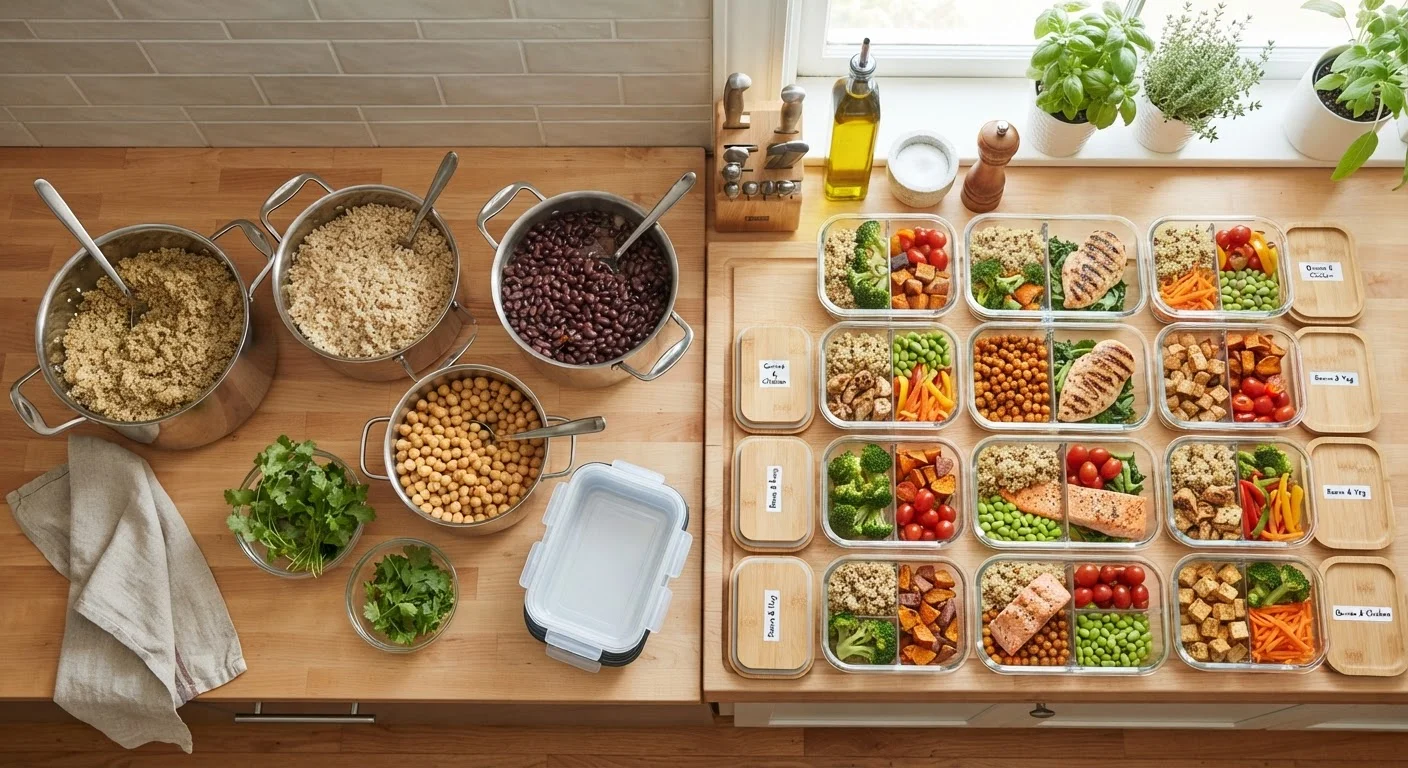
Batch cooking means preparing large quantities of individual components — a big pot of brown rice, a sheet pan of roasted vegetables, a pound of cooked ground turkey — that you store separately and combine into different meals throughout the week. Nothing is fully assembled. The flexibility is the point.
Meal prepping means building complete, portioned meals in advance. You cook, combine, portion into containers, and refrigerate or freeze fully finished dishes. On a busy Tuesday, you open the fridge and pull out Tuesday's lunch — done.
Both approaches save time and reduce the temptation to order takeout. The difference lies in how much structure you want baked into your week. See our budget meal planning principles for the broader system that either approach fits into.
| Criterion | Batch Cooking | Meal Prepping |
|---|---|---|
| What you store | Individual ingredients separately | Complete, portioned meals |
| Daily effort required | Some assembly each day | Grab and reheat only |
| Menu flexibility | High — mix and match freely | Low — meals are pre-decided |
| Upfront planning needed | Minimal — cook staples, improvise | Moderate to high — plan all meals |
| Food variety during the week | Easy to vary | Can feel repetitive |
| Best for households | Mixed tastes or preferences | Solo or uniform preferences |
| Container needs | Various sizes for components | Uniform portion-sized containers |
How Each Approach Plays Out in Practice
Picture a Sunday afternoon. A batch cooker might make a large pot of lentils, roast two trays of mixed vegetables, and cook a few chicken breasts. On Monday, those become a grain bowl. On Wednesday, the lentils go into tacos. On Thursday, the chicken gets sliced into a salad. The cook is building with Lego bricks, not following a script.
A meal prepper spends that same Sunday making five portions of chicken and broccoli with rice, plus five servings of overnight oats. Monday through Friday, each meal is decided. There's no assembly required mid-week — just reheating. That predictability is powerful for sticking to portion sizes and budgets, but it does require planning every meal's details upfront.
~$1,500
Estimated annual savings from cooking at home vs. eating out
The USDA Economic Research Service has consistently found that home-prepared food costs significantly less per meal than restaurant or takeout options.
30–40%
Reduction in household food waste with weekly planning
Research from the Natural Resources Defense Council suggests that meal planning and structured shopping are among the most effective ways to cut household food waste.
One common pitfall with meal prepping is overcommitting to a rigid plan and burning out by Wednesday. Our guide on common meal planning mistakes covers exactly that trap.
Cost, Storage, and Practical Considerations
Both methods help stretch a grocery budget by reducing waste and impulse spending. But they create slightly different demands on your kitchen.
Storage: Batch cooking requires more fridge real estate for individual ingredient containers. Meal prepping typically needs the same number of containers, but you need uniform, stackable ones that hold full portions — which may mean a small upfront investment.
Ingredient variety: Batch cooking naturally discourages food fatigue because you're recombining components. Meal prepping can lead to monotony if you prep the same dish five days in a row — plan for at least two different meals if you go this route.
Time commitment: Meal prepping often requires a longer focused session upfront, since you're finishing full dishes. Batch cooking can be done more loosely — throw rice in the cooker, roast vegetables while you do other things, and you're done without much active effort.
A well-stocked pantry makes both approaches faster. See how to build a pantry that practically cooks for you for what to keep on hand.
If you want a structured starting point for either method, this weekly prep checklist walks you through the small tasks that make the biggest difference.
This article is for general informational and educational purposes only. Consult a registered dietitian or qualified healthcare professional for personalized dietary guidance.