

Key Takeaways
- Smaller American cities often offer walkable neighborhoods, local food scenes, and cultural depth at lower daily costs.
- Slow travel — staying longer in one place — typically reduces transportation spending and reveals a city more authentically.
- Many underrated cities benefit from off-peak timing, bringing even lower prices and thinner crowds.
- Free museums, public markets, and neighborhood strolls frequently produce the most memorable travel moments.
- Choosing a small city over a major hub can mean genuinely affordable lodging, often within walking distance of attractions.
Why Small Cities Are Quietly Winning
Everyone knows the big names — New York, Chicago, Los Angeles. They're iconic for good reason. But the traveler who keeps cycling through the same marquee destinations is missing something genuinely exciting: the small American city that punches well above its weight.
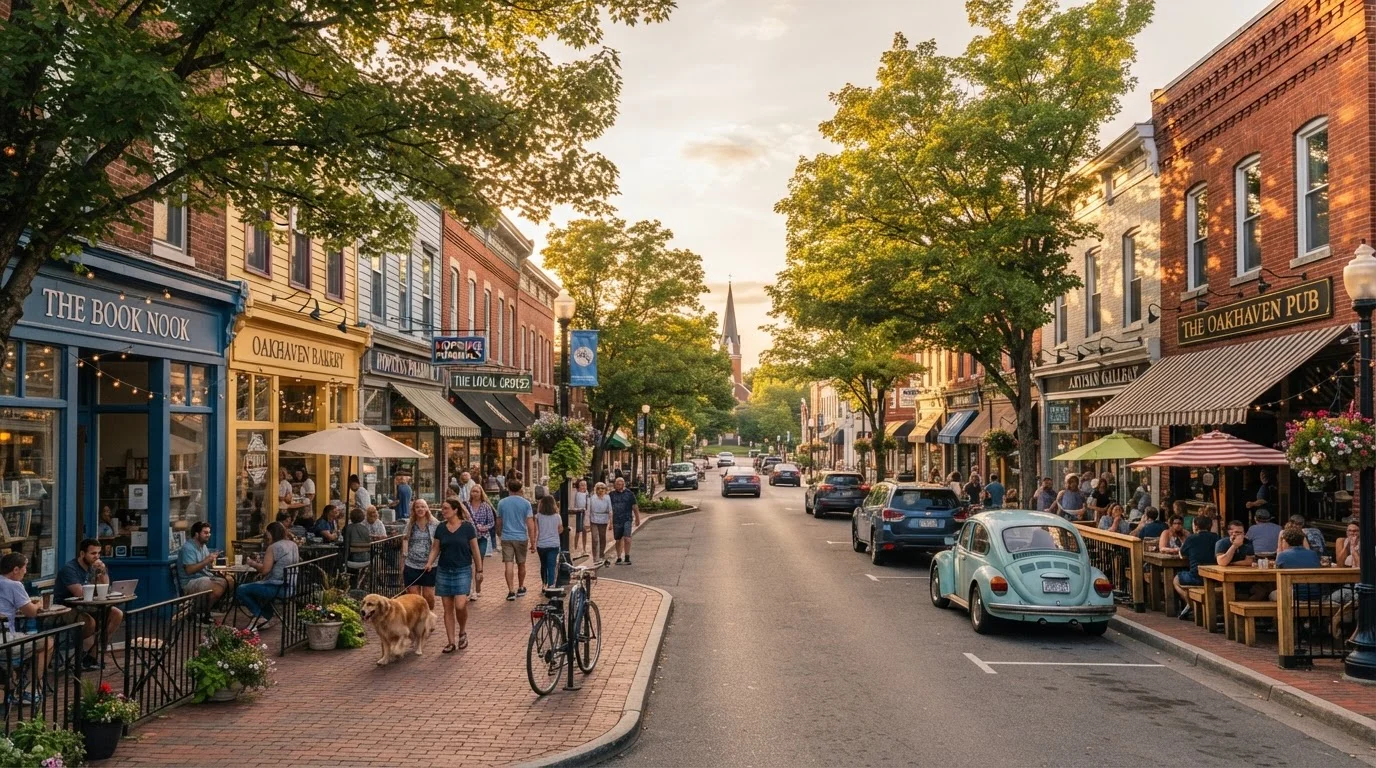
These places tend to share a few traits. Walkable downtowns. Independent restaurants that have survived on local loyalty, not tourist foot traffic. A slower rhythm that actually lets you absorb a place rather than sprint through it. And costs — lodging, food, parking — that are often dramatically lower than their famous counterparts.
Slow travel is the ideal match for this kind of destination. When you're not rushing to hit fifteen attractions in two days, you find the coffee shop the locals actually use, the neighborhood park nobody photographs, the small museum that closes early on Tuesdays. For a deeper look at why spending more time in fewer places can actually save money, see our piece on slow travel vs. whirlwind itineraries.
Marquette, Michigan
Perched on the southern shore of Lake Superior, Marquette is one of the Upper Peninsula's best-kept secrets. The downtown is compact and genuinely walkable, with independent bookstores, breweries, and galleries within easy strolling distance. Presque Isle Park — a city-owned peninsula jutting into the lake — offers free access to some of the most dramatic freshwater scenery in North America.
Lodging tends to be affordable, especially outside summer weekends. The local food scene leans heavily on Great Lakes fish and pasties (a regional meat-and-vegetable pastry brought by Cornish miners), giving visitors an honest taste of regional identity rather than generic tourist fare.
Presque Isle Park delivers dramatic freshwater scenery entirely free of charge.
Asheville, North Carolina
Asheville has gained visibility in recent years, but it still rewards visitors willing to move at a relaxed pace. The River Arts District — a former industrial corridor now occupied by working artists — takes a full afternoon to explore properly. The surrounding Blue Ridge Parkway offers free driving and hiking through some of the East Coast's most striking mountain terrain.
Downtown lodging can be pricier on weekends, so targeting midweek stays or the shoulder seasons (spring and late fall) tends to unlock better rates. The city's independent restaurant scene is notably strong, with a range of price points that makes eating well without overspending genuinely achievable.
The Blue Ridge Parkway provides world-class mountain scenery at zero admission cost.
Galveston, Texas
Often overshadowed by Houston just 50 miles north, Galveston operates on a different register entirely. Its Victorian-era Strand Historic District — a row of ornate 19th-century commercial buildings — is freely explorable on foot. The island's beaches are wide and uncrowded compared with better-known Gulf Coast destinations, and the Galveston Island State Park charges only a modest day-use fee.
Hotels and vacation rentals are generally far more affordable than equivalent Gulf Coast options in Florida. The historic architecture, a genuinely interesting maritime museum, and fresh Gulf seafood at neighborhood spots make this an easy place to fill several unhurried days.
Galveston's Victorian Strand District is an architectural treasure most visitors simply drive past.
Duluth, Minnesota
Duluth sits at the western tip of Lake Superior and remains one of the most underappreciated port cities in the country. The Lakewalk — a paved multi-use path running along the shoreline — offers striking views of the lake and the famous Aerial Lift Bridge without spending a dollar. Canal Park, adjacent to the bridge, is a genuinely lively area even in off-peak months.
The city's hillside neighborhoods are worth exploring for their architecture and the panoramic views they provide over the lake. Lodging costs are typically modest outside the brief summer peak, and the dining scene skews toward hearty, unpretentious Midwestern cooking at reasonable prices.
Duluth's Lakewalk and Aerial Lift Bridge together form one of the Midwest's most rewarding free strolls.
Savannah, Georgia
Savannah's 22 public squares — shaded by live oaks draped in Spanish moss — are among the most walkable urban spaces in the American South. Most of the city's core attractions, including the squares themselves, the riverfront, and the majority of its antebellum architecture, require no admission. The Telfair Museums are an exception worth budgeting for.
The city is well-suited to slow travel because its pleasures are largely pedestrian: wandering, sitting, observing. Food costs can vary; dining one block off the main tourist corridor typically drops prices noticeably. Savannah also tends to reward off-season visits, with mild winters and significantly thinner crowds than its popular spring and fall peaks.
Savannah's 22 oak-shaded public squares are completely free and endlessly worth lingering in.
Bozeman, Montana
Bozeman has grown considerably in recent years, but it still functions as a genuinely livable small city rather than a resort town. Downtown Bozeman is walkable, unpretentious, and backed by the Bridger Mountains, which offer free hiking with views that rival anything in the country. The Museum of the Rockies, connected to Montana State University, houses one of the world's most significant dinosaur fossil collections at a modest admission fee.
For travelers interested in the broader Rocky Mountain region without the price tag of ski-resort towns, Bozeman sits within day-trip range of Yellowstone's northern entrances. Our guide to Rocky Mountain towns that don't require a ski-resort budget covers adjacent options worth pairing with a Bozeman stay.
Bozeman's Bridger Mountains offer world-class hiking access without a resort price tag attached.
Making the Most of Your Time There
Once you've picked a destination, the slow-travel mindset does most of the heavy lifting. Resist the urge to over-schedule. Build in at least one unplanned afternoon per visit — those gaps tend to fill with the best memories.
Walk Before You Plan
In a small city, one of the most productive things you can do on arrival is simply walk a central neighborhood without a destination in mind. You'll identify the coffee shops, bookstores, and food stalls that locals actually use — none of which tend to appear prominently in standard travel guides. Give yourself 90 minutes on day one before opening a single app.
Food spending is one of the biggest budget variables in any small city. Seek out lunch specials at sit-down restaurants, farmers' markets for portable meals, and neighborhood taquerias or diners that cater to residents rather than visitors. Our guide on eating well while traveling on a budget has practical strategies that translate directly to smaller cities.
Timing also matters. Many of these cities see dramatic crowd and price differences by season. Off-season travel can be especially rewarding in smaller destinations that don't rely on a single tourist peak. And if you want to extend your stays without blowing your lodging budget, city-adjacent campgrounds are worth considering — many sit within a short drive of downtown areas.
For a broader toolkit of budget travel strategies, explore our full hub — the same principles that apply to major cities work even better when the baseline costs are already lower.