

Key Takeaways
- City-adjacent campgrounds typically sit 5–30 miles from major urban centers, often accessible by car or public transit.
- Nightly rates at these campgrounds generally range from around $20 to $60, far below average hotel costs in most metros.
- Sites are operated by a mix of federal, state, county, and private entities, each with distinct booking rules.
- Amenities vary widely — some offer full RV hookups and showers; others are primitive tent-only sites.
- Advance reservations are essential for popular city-adjacent sites, especially on weekends and holidays.
- Urban campers can use the campground as a base, commuting into the city for sightseeing while keeping lodging costs low.
Urban Camping / City-Adjacent Campground
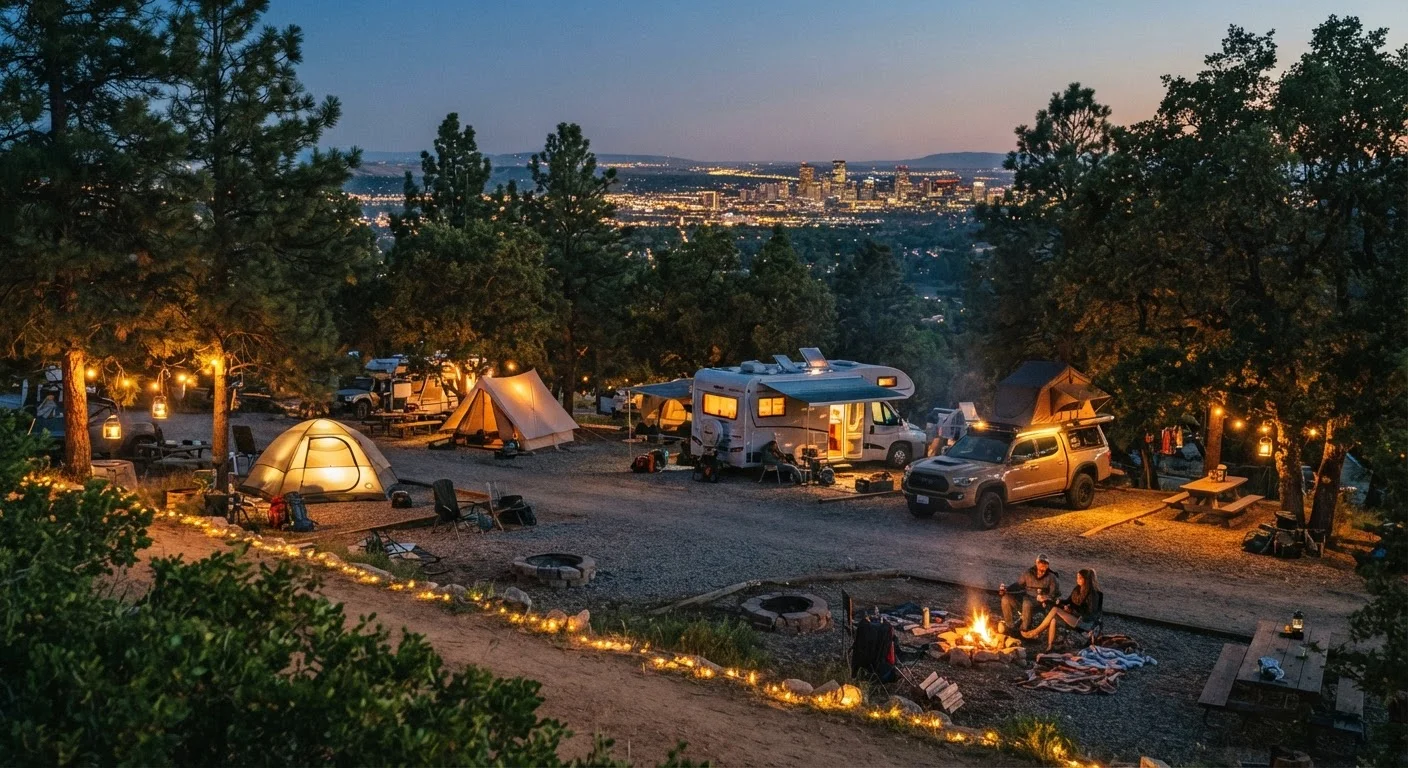
Urban camping refers to staying at a campground located within a short drive — typically 5 to 30 miles — of a major American city. These sites offer traditional camping amenities such as tent pads, RV hookups, and restrooms, while giving visitors quick access to city attractions, transit, and dining. They function as a budget-conscious alternative to downtown hotels, blending outdoor lodging with urban exploration.
City-adjacent campgrounds are operated by a range of entities including the National Park Service, Army Corps of Engineers, state park systems, county parks departments, and private campground operators — each with different reservation systems, fee structures, and rule sets.
What Makes a Campground "City-Adjacent"?
The term city-adjacent campground doesn't have a rigid official definition, but it generally describes any developed or semi-developed camping area close enough to a metropolitan area that day trips into the city are practical. The sweet spot tends to be within 30 miles — a distance that keeps commute times manageable while still placing you in greenery rather than a parking structure.
These sites appear in a surprising range of settings. National recreation areas around major metros — think the Golden Gate National Recreation Area near San Francisco or Gateway National Recreation Area outside New York — embed campgrounds almost within city limits. State and county parks occupy greenbelts on the urban fringe. Private campground operators have also recognized the demand and built RV parks and tent sites specifically to serve travelers who want affordable city access without downtown prices.
For a fuller picture of how camping fits alongside other non-hotel lodging options, this breakdown of lodging types maps out where camping sits relative to hostels, guesthouses, and home-shares.
$20–$60
Typical nightly rate at city-adjacent campgrounds
Rates vary by operator type and amenities; public sites generally run lower than private resort-style campgrounds.
5–30 miles
Typical distance from city center
Most practical city-adjacent sites fall within this range, keeping downtown day trips manageable by car or transit.
3 types
Main campground operator categories
Federal agencies, state/county parks, and private operators each govern city-adjacent sites with distinct rules and booking systems.
Who Operates These Campgrounds and Why It Matters
Understanding who runs a campground shapes everything about your experience — booking process, pricing, rules, and what to expect on arrival.
- Federal sites (National Park Service, Army Corps of Engineers, Bureau of Land Management) use Recreation.gov for reservations and follow standardized fee schedules. Nightly rates typically range from roughly $20 to $35 for basic sites.
- State and county parks operate their own reservation portals and often offer a range from primitive tent sites to sites with electrical hookups. Prices vary widely by state but commonly fall between $25 and $50 per night.
- Private campgrounds near cities can range from bare-bones tent sites to resort-style operations with pools and camp stores. These tend to run $35 to $60 or more per night and offer the most amenities.
Knowing the operator also tells you which rules apply. Federal and state sites typically enforce quiet hours, fire restrictions, and stay limits (often 14 days maximum). Private operators set their own policies. Always read the site-specific terms before booking.
Book Weeknights When You Can
If your schedule allows flexibility, targeting weeknight stays at city-adjacent campgrounds can make a real difference. Sites that fill up entirely on Friday and Saturday nights often have open spots Monday through Thursday. You'll enjoy a quieter campground, and in some cases, weeknight rates at private sites are slightly lower than weekend pricing.
Using a Campground as a City Base
The practical appeal of urban camping is straightforward: you pay campground rates, then use the city as your playground during the day. Many experienced travelers treat the campground as little more than a comfortable, affordable hotel alternative — a place to sleep, cook a simple breakfast, and decamp each morning toward downtown museums, markets, and neighborhoods.
This approach pairs well with strategies for maximizing a 48-hour city visit, since a lower nightly lodging cost frees up budget for dining, attractions, and experiences in the city itself. Parking costs are often lower at a campground than downtown, and some sites sit directly on transit lines — making car-free commutes into the urban core genuinely feasible.
If you're weighing camping styles, a comparison of car camping versus backpacking helps clarify which format suits different travelers. City-adjacent camping is almost exclusively a car camping context — gear-heavy, comfort-forward, and oriented toward a home base rather than a through route.
Booking Tips and What to Watch Out For
Demand for city-adjacent campgrounds has grown substantially in recent years, which means popular sites near major metros fill weeks — sometimes months — in advance during peak season. A few practical points to keep in mind:
- Reserve early. For summer weekends near cities like Washington D.C., Chicago, or Los Angeles, reserving six to eight weeks ahead is a reasonable target for public sites. Some highly competitive sites open reservations six months out.
- Check the cancellation policy. Federal recreation sites typically charge a small cancellation fee if you cancel within a certain window. Private campgrounds vary. Know the policy before you book.
- Look beyond the first search result. County parks and Army Corps of Engineers sites are frequently overlooked but can be well-maintained, affordable, and closer to city attractions than better-known alternatives.
- Confirm amenities directly. Campground listings don't always reflect recent closures of shower facilities or fire ring restrictions during dry conditions. A quick call or email to the managing agency saves surprises.
For anyone building a broader budget travel strategy, city-adjacent camping is one of the most reliably effective tools for cutting accommodation costs without sacrificing proximity to the places you actually want to explore. Smaller American cities in particular often have excellent campgrounds on their outskirts — with far less competition for sites than major metros.