

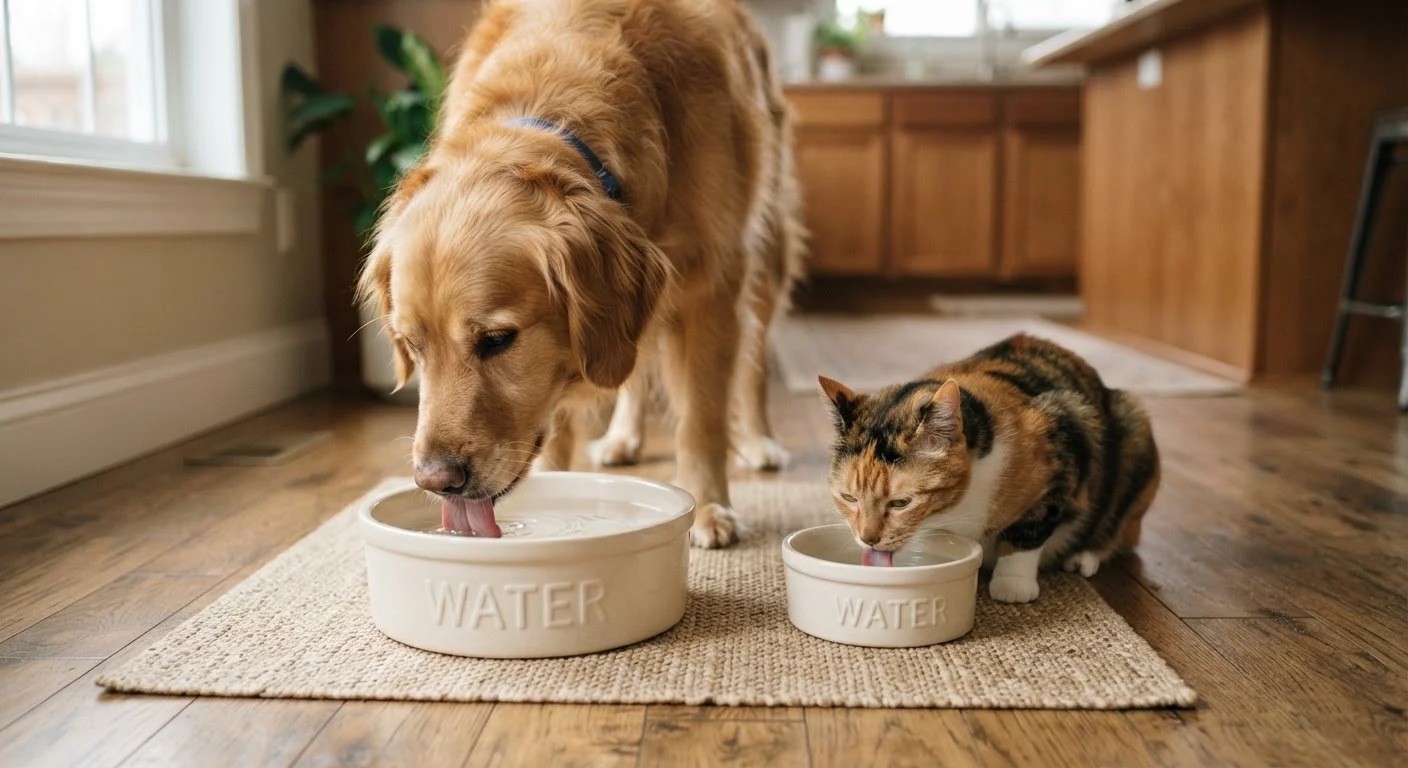
Key Takeaways
- Pets need fresh water available at all times — not just a refill when the bowl looks empty.
- Plastic bowls harbor bacteria more easily than stainless steel or ceramic alternatives.
- Water bowls should be washed with soap and rinsed daily, not just topped off.
- Cats are especially prone to voluntary dehydration and may need water placement or bowl style adjustments.
- Signs of underhydration include lethargy, dry gums, and reduced urination — all worth a vet call.
Pet Hydration and Bowl Hygiene
Pet hydration refers to how much water your animal drinks relative to what their body needs to function properly. Bowl hygiene means keeping the vessel that holds that water clean, safe, and free of contaminants. Together, they form one of the most basic — and most commonly neglected — pillars of everyday pet care.
Biofilm, a thin microbial layer that forms on bowl surfaces within 24–48 hours of use, can harbor bacteria and discourage animals from drinking. Material choice and washing frequency both affect how quickly biofilm accumulates.
The Overlooked Daily Essential
Most pet owners pay close attention to what goes in the food bowl. The water bowl? It usually gets a quick refill and not much else. But hydration is fundamental to kidney function, digestion, temperature regulation, and joint health in both dogs and cats. When water intake drops — even slightly — it can quietly contribute to urinary tract issues, constipation, and kidney strain over time.
The water bowl itself is part of the equation. A bowl that looks full isn't necessarily clean or safe. Understanding what makes a water setup work well is one of the easiest ways to support your pet's health without spending extra money. For a broader look at how simple daily habits add up, see our guide to daily pet care habits that prevent costly vet bills.
Bowl Material: Why It's Not a Minor Detail
Plastic bowls are popular because they're inexpensive and lightweight — but they develop microscopic scratches with regular use. Those scratches harbor bacteria and make thorough cleaning harder even when you try. Over time, some pets also develop skin irritation around the muzzle from prolonged contact with certain plastics.
Stainless steel is widely considered the most practical choice: it resists scratching, doesn't absorb odors, and holds up well in the dishwasher. Ceramic is another solid option, provided it's free of lead-based glazes and doesn't have chips or cracks where bacteria can settle.
70–80%
Water content in a healthy pet's body
Veterinary physiology references consistently note that water constitutes the majority of a mammal's body weight, underlining why consistent intake is critical.
~1 oz/lb
Daily water guideline for dogs
General veterinary guidance suggests dogs need approximately one ounce of water per pound of body weight per day, varying with activity level and diet.
48 hrs
Time for biofilm to form on bowl surfaces
Microbiology research on pet bowls indicates bacterial biofilm can develop on unwashed surfaces within one to two days of use.
Whatever material you choose, the bowl should be sized appropriately — large enough that your pet doesn't have to press their face into it awkwardly, but not so large that water sits for days before being consumed.
Hygiene Basics That Actually Make a Difference
A common misconception is that simply topping off a water bowl keeps it fresh. In reality, biofilm — a thin, slippery bacterial layer — begins forming on bowl surfaces within a day or two of use. Pets can smell it even when owners can't, and some animals will reduce their water intake rather than drink from a bowl that smells off to them.
The fix is simple: wash the bowl with dish soap and warm water daily, just as you would a drinking glass. If you use a dishwasher, most stainless steel and ceramic bowls are dishwasher-safe. Don't rely on rinsing alone — soap is needed to break down the biofilm.
Make Bowl Washing Part of Your Routine
Pair the water bowl wash with something you already do daily — like making your morning coffee or feeding your pet. Keeping a second bowl on hand means one can soak or run through the dishwasher while the other stays in use. Small habits like this cost nothing and consistently make a difference.
Also consider where the bowl is placed. Many cats instinctively avoid drinking water that's positioned directly next to their food — a behavior thought to be rooted in wild instincts to keep food and water sources separate. Moving the water bowl to a different part of the room or a different room entirely can meaningfully increase how much a cat drinks. You can read more in our overview of what most owners overlook about pet hydration.
Recognizing When Hydration Is a Problem
Mild dehydration is easy to miss. Pets can't tell you they're thirsty, and the early signs — slightly reduced energy, less frequent urination, dry or tacky gums — are subtle enough to overlook. Cats are particularly prone to voluntary underdrinking, especially those eating primarily dry food. The differences between dry and wet food diets are worth understanding in this context, since wet food contributes significantly to daily fluid intake.
If your pet seems lethargic, is urinating less than usual, or their gums feel dry to the touch, don't wait. These can be signs of dehydration or underlying illness that warrants a vet evaluation. Our article on signs your pet needs a vet can help you decide when watchful waiting is appropriate versus when to make that call.
This article is for general informational purposes only and is not a substitute for veterinary advice. Always consult a qualified veterinarian with questions about your pet's health or hydration needs.