

Key Takeaways
- Most homes have several untapped storage zones that require little or no renovation to use.
- Door backs, ceiling clearance, and furniture bases are among the most consistently overlooked spots.
- Rethinking existing space costs far less than buying more furniture or expanding square footage.
- Small organizational upgrades in hidden zones can meaningfully reduce visible clutter throughout a home.
The Space You Already Have
Before buying another shelf unit or renting a storage locker, it's worth doing a honest look at what your home already offers. Most households leave a surprising amount of usable space completely empty — not because they don't need it, but because those zones simply don't register as storage opportunities.
This isn't about cramming every corner full of stuff. It's about matching the right items to the right forgotten spots, so the things you use regularly are easier to reach and the things cluttering your counters and floors finally have a home. If you haven't already worked through a room-by-room decluttering audit, that's a good starting point — it helps you figure out what actually needs a home before you start organizing.
The Back of Every Door
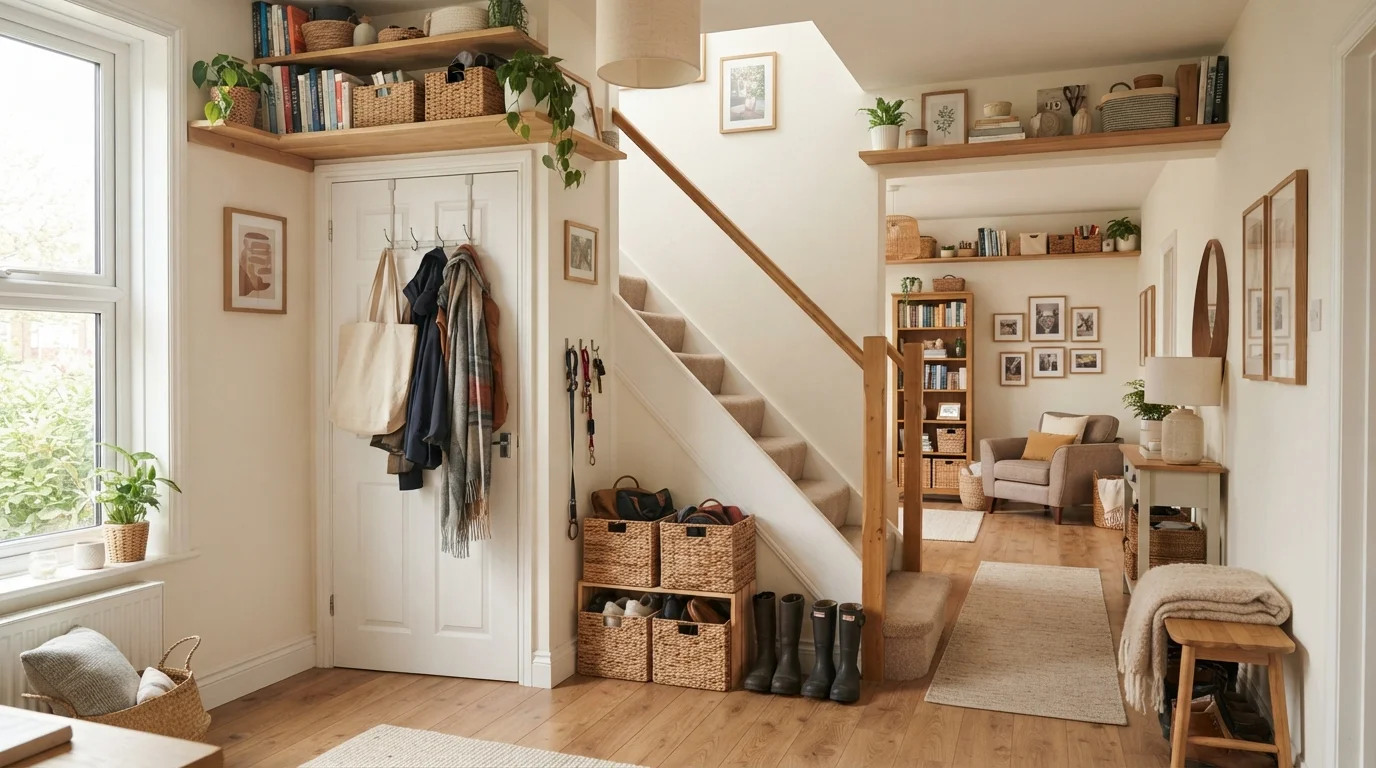
Interior door backs are among the most reliable hidden storage surfaces in any home, yet the majority sit bare. A standard door back can hold an over-door organizer, a row of hooks, a shoe pocket, or a slim rack for cleaning supplies, pantry items, or accessories — all without taking up any floor or wall space.
This works especially well in bathrooms (toiletries, hair tools), closets (shoes, belts, small bags), pantries (foil, wrap, spices), and laundry rooms (dryer sheets, stain remover). The key is matching the organizer type to what actually accumulates in that room.
Most door backs go completely unused — and each one is a free vertical storage surface.
Above Cabinet Tops in the Kitchen
The gap between the top of upper kitchen cabinets and the ceiling is typically 12 to 18 inches — enough to store bulky, infrequently used items like large roasting pans, seasonal serving dishes, or extra small appliances. Most people treat this zone as dead space or, worse, let it collect dust and random junk.
Sturdy baskets or bins placed up there keep items contained and easy to pull down when needed. If the gap is very shallow, flat items like baking sheets and cutting boards can often slide in on their sides.
The space above kitchen cabinets can hold seasonal items that would otherwise clog lower cabinets.
The Area Under the Bed
Under-bed storage is well-known in theory but underused in practice, often because the space is disorganized and items get pushed to the back never to be seen again. Flat rolling bins with lids, vacuum-seal bags, or purpose-made drawers solve this — they make the space genuinely usable rather than a black hole.
This zone is ideal for off-season clothing, extra bedding, shoes, or luggage. For beds with limited clearance, bed risers can create enough height to fit standard storage containers.
Under the bed is one of the largest single storage zones in most bedrooms — use it deliberately.
Inside Furniture: Ottomans, Benches, and Bed Frames
Many people overlook that furniture can do double duty. Storage ottomans, lift-top coffee tables, storage benches at entryways, and bed frames with built-in drawers all hold meaningful amounts without adding any footprint to a room.
If you're replacing a piece of furniture anyway, choosing one with integrated storage is a straightforward upgrade. For furniture you already own, a hollow interior — like an old trunk or bench — can be repurposed with a cushion top to add both seating and storage at once. This kind of thinking aligns well with a shared living space strategy where storage needs to stay tidy and accessible for multiple people.
Furniture that stores as well as functions is one of the smartest uses of limited square footage.
The Toe-Kick Space Beneath Lower Cabinets
The recessed section at the base of lower kitchen or bathroom cabinets — called the toe kick — is almost always wasted space. In kitchens, pull-out toe-kick drawers can be fitted to hold flat items like baking sheets, placemats, or infrequently used trays. This is a more involved modification, but the payoff is meaningful extra storage in the room that typically needs it most.
Even without custom drawers, the toe-kick area in some cabinets can be opened up to store rarely accessed items in flat bins that slide in and out.
The toe-kick beneath your cabinets is hidden square footage that almost no one uses.
Stair Risers and Under-Stair Nooks
Staircases, if you have them, often hide one of the largest unused storage volumes in a home. The space under a staircase can become a closet, a set of pull-out drawers built into the risers, or open shelving for books and baskets. Even without a full build-out, the under-stair area can hold bins, sports equipment, or seasonal items when organized thoughtfully.
Pull-out drawers fitted into individual risers are a more involved carpentry project — consult a qualified contractor if you're considering structural changes — but simpler shelving and bin solutions require no construction at all.
Stairs are often a home's most underused storage zone — even simple bins can reclaim that space.
Making the Most of What You Find
Claiming these spaces doesn't have to mean a big project. Many of these solutions involve simple hardware — hooks, tension rods, stackable bins, or basic shelving brackets — that are widely available and installable without professional help. Even renters can often use damage-free mounting options for lighter loads.
Start with What's Already Cluttered
Rather than trying to use every hidden space at once, identify the two or three spots in your home where clutter accumulates most visibly. Then look for a nearby hidden zone that could absorb those items. Solving a specific problem is more effective — and more motivating — than reorganizing everything at once.
Worth noting: thinking vertically works hand-in-hand with the spots listed here. Many of the best hidden storage zones are above eye level, and once you start looking up, you'll likely spot even more unused real estate. And if general clutter rather than storage is the core issue, it's also worth separating organising myths from what actually works before investing time or money.