

Key Takeaways
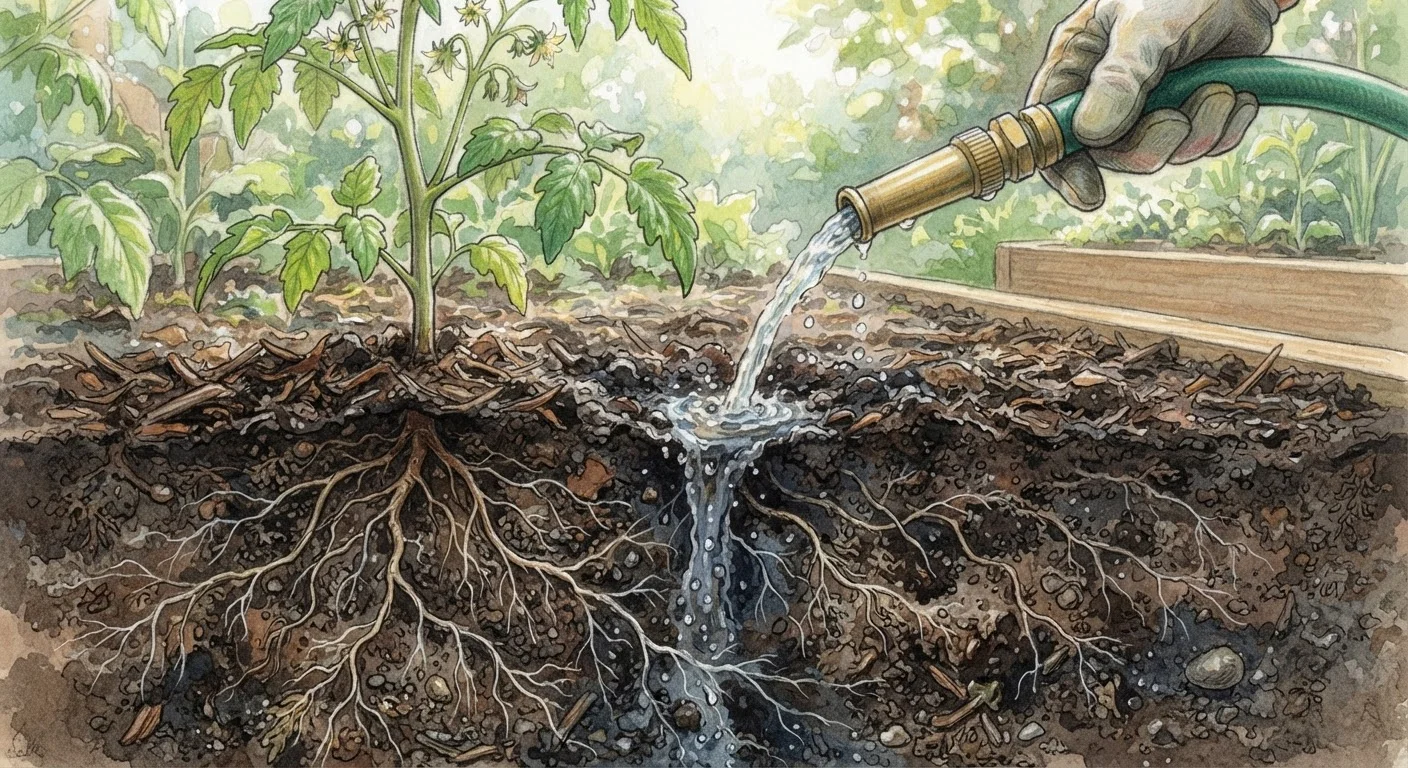
- Deep, infrequent watering encourages roots to grow downward, making plants more drought-tolerant.
- Frequent shallow watering keeps roots near the surface, leaving plants more vulnerable to heat and dry spells.
- Most established garden plants do better with one or two thorough waterings per week than daily light sprinkles.
- Newly planted seedlings and seeds are the main exception — they need consistent surface moisture to germinate and establish.
- Soil type significantly affects how quickly water penetrates and how long it stays available to roots.
Option A
Watering Deeply (Infrequent)
The method that builds resilient, drought-tolerant root systems.
Best for: Established plants, lawns, shrubs, and trees that benefit from reaching moisture deeper in the soil profile.
Option B
Watering Often (Shallow)
The intuitive but frequently counterproductive watering habit.
Best for: Newly seeded areas, seedlings, and container plants that can't yet reach deeper water reserves.
If you have established shrubs, perennials, or a lawn
Watering Deeply (Infrequent)
Mature root systems benefit from being drawn downward. Deep watering once or twice a week is more effective and uses less water overall than daily shallow sessions.
If you're germinating seeds or nurturing seedlings
Watering Often (Shallow)
Seeds and young seedlings haven't yet developed roots capable of reaching deeper moisture. Light, frequent watering keeps the top layer of soil consistently moist without waterlogging.
If you're trying to reduce your water bill
Watering Deeply (Infrequent)
Deep watering reduces surface evaporation loss and trains plants to need less frequent intervention, which typically lowers overall water use.
If you're growing plants in containers or raised beds
Watering Often (Shallow)
Containers and shallower raised beds dry out faster than in-ground soil, so more frequent checks and watering are often genuinely necessary.
The Core Difference — and Why It Matters
When most people water their garden, they go by feel: if the soil looks dry or the plant looks droopy, they run the hose for a few minutes. That instinct isn't wrong, but it often leads to a habit of frequent, shallow watering that keeps the top inch or two of soil moist while leaving the deeper layers bone dry.
The problem is that roots follow water. When moisture only reaches the surface, roots cluster near the top of the soil — exactly where they're most exposed to summer heat, foot traffic, and rapid drying. Plants end up dependent on you watering them every day or two just to stay upright.
Deep watering — applying water slowly and thoroughly until it penetrates 6–8 inches into the soil — pulls roots downward. Once roots reach those deeper layers, they tap into moisture that persists long after the surface has dried out. The plant becomes genuinely more self-sufficient. This is why soil health matters so much: compacted or nutrient-poor soil resists deep penetration, no matter how long you run the hose.
| Criterion | Watering Deeply (Infrequent) | Watering Often (Shallow) |
|---|---|---|
| Root development | Drives roots downward | Keeps roots near surface |
| Drought tolerance | Higher over time | Lower — plants stay dependent |
| Water efficiency | Generally lower total usage | More water lost to evaporation |
| Best for | Established plants and lawns | Seeds, seedlings, containers |
| Time investment | Less frequent, longer sessions | More frequent, shorter sessions |
| Risk of fungal disease | Lower (surface dries between sessions) | Higher if foliage stays wet |
When Shallow Watering Is Actually the Right Call
Deep watering isn't always better — context matters. There are genuine situations where frequent, lighter watering is the appropriate approach.
Seeds and seedlings are the clearest case. Seeds need consistent moisture at the surface to germinate, and young seedlings have roots that might only extend half an inch into the soil. A single deep watering could leave the surface dry for days before roots are strong enough to reach what's below.
Raised beds and containers are another exception. Because they have limited soil volume and often drain faster than in-ground beds, they genuinely dry out more quickly. Checking moisture daily and watering more frequently is often appropriate — though even here, you should water until it drains from the bottom rather than just misting the surface.
Newly transplanted plants are also in a transitional state. Their root systems are disrupted, and they need a few weeks of attentive watering before they're ready to handle the drought-and-recover cycle that deep watering relies on.
6–8 inches
Target soil depth for deep watering
General horticultural guidance recommends water penetrating to 6–8 inches to reach the active root zone of most established garden plants.
50%
Outdoor water lost to inefficient use
The U.S. Environmental Protection Agency estimates that as much as 50% of outdoor residential water is wasted due to overwatering and inefficient irrigation methods.
Practical Tips for Getting Deep Watering Right
The most common mistake people make when trying to water deeply is rushing. If you run a sprinkler for five minutes on compacted soil, most of that water runs off the surface or evaporates before it penetrates. Deep watering requires either a slow-running hose at the base of the plant, a soaker hose, or a sprinkler set to run long enough for water to actually sink in.
A simple way to check: after watering, push a wooden skewer or screwdriver into the soil. If it meets resistance a few inches down, the water hasn't reached there yet. Aim for easy penetration to at least 6 inches for established plants.
Timing also makes a difference. Watering in the morning gives moisture time to soak in before afternoon heat increases evaporation. Evening watering can leave foliage damp overnight, which creates conditions for fungal disease — a point worth keeping in mind if you're already dealing with common garden problems.
For low-maintenance plants, deep watering every 7–10 days during the growing season is often sufficient once they're established. You'll use less water and spend less time managing them — both useful outcomes for a busy household.
Soil Type Changes Everything
Sandy soil drains quickly, so water moves through it fast — you may need to water more frequently even when watering deeply. Clay soil holds moisture longer but can become waterlogged if overwatered and is slower to absorb water. Loamy soil sits in the middle and is generally the easiest to work with. Knowing your soil type helps you calibrate watering schedules more accurately than any fixed rule.