

Key Takeaways
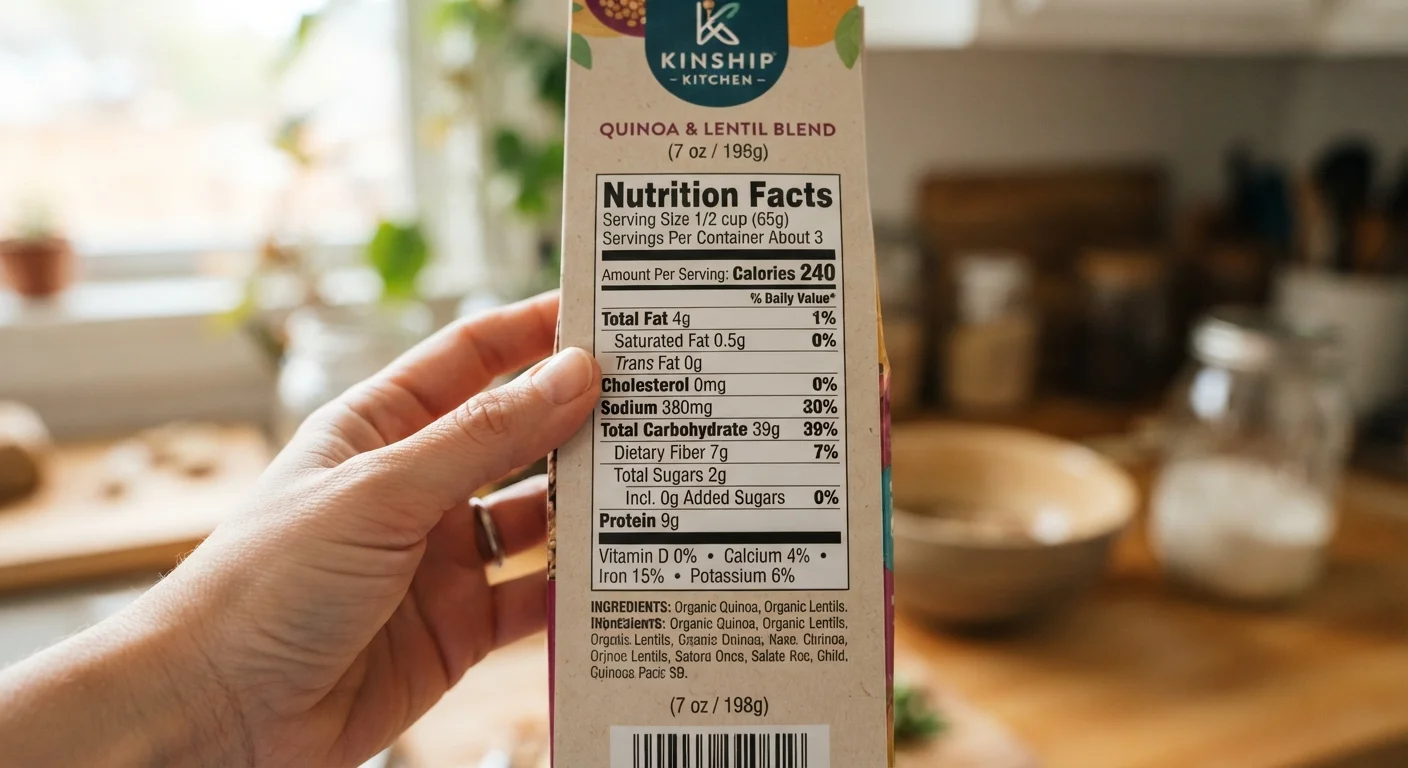
- Serving size is the foundation of every number on the label — always check it first.
- % Daily Value tells you how much a nutrient contributes to a standard 2,000-calorie diet.
- Aim for less sodium, saturated fat, and added sugars; prioritize fiber, protein, and key vitamins.
- Ingredient lists are ordered by weight — what's listed first is present in the largest amount.
- Labels are tools for comparison, not strict prescriptions — context and whole diet matter most.
What you will need
Why Nutrition Labels Confuse People (And How to Fix That)
Most people glance at the calorie count, feel uncertain about everything else, and move on. That's understandable — a nutrition label packs a lot of numbers into a small space. But each section is designed to answer a specific question, and once you know which question each part answers, the label becomes genuinely useful rather than overwhelming.
The U.S. Food and Drug Administration (FDA) standardizes the Nutrition Facts panel format, which means the same layout appears on virtually every packaged food in the country. Learning it once means you can read any label with confidence. This article walks through each section in order, explaining what it means and what to do with the information.
What you will need
Packaged Food Item
Provides the real Nutrition Facts label you'll practice reading during this walkthrough.
Smartphone or Notepad
Useful for jotting down key numbers or comparing two products side by side while shopping.
Step-by-Step: How to Read Any Nutrition Label
Work through these steps in order the first few times. Once the pattern is familiar, scanning a label takes less than a minute.
Find the serving size and servings per container
The very first line of any Nutrition Facts label is the serving size — this is the amount all the numbers on the label refer to. Below it, you'll see servings per container, which tells you how many portions the package holds.
Before reading anything else, ask: how much do I actually eat compared to this serving size? If the label says one serving is 1 cup but you typically eat 2 cups, every number on the label doubles for your portion.
Check the calorie count in context
Calories measure the energy a food provides per serving. This number matters, but it doesn't tell you what the food does for your body. A 200-calorie handful of nuts and a 200-calorie serving of cookies deliver very different nutritional value.
Think of calories as one data point — important, but incomplete on its own. For a fuller picture, see why nutrient density matters more than calories alone.
Read the % Daily Value column
The % Daily Value (% DV) column shows how much of a nutrient one serving contributes toward a standard 2,000-calorie daily diet. It's the fastest way to evaluate whether a food is high or low in a given nutrient — without needing to memorize recommended daily amounts.
Nutrients are split into two groups on the label:
- Limit these: Saturated fat, trans fat, sodium, and added sugars
- Get enough of these: Dietary fiber, vitamin D, calcium, iron, and potassium
Scan the ingredient list
Ingredients are listed in descending order by weight — whatever appears first makes up the largest portion of the food. A short ingredient list with recognizable items generally signals a less processed product, though this isn't a hard rule.
Pay attention to where added sugars appear. Sugar can show up under many names: cane juice, dextrose, corn syrup, maltose, and more. If several of these appear in the top five ingredients, the food is likely high in added sugar even if no single name dominates.
Use the label to compare similar products
One of the most practical uses of a nutrition label is side-by-side comparison. When choosing between two versions of the same product — say, two brands of canned beans or two types of bread — align them on the same serving size and compare the nutrients that matter most to you.
Look for differences in sodium, added sugars, and fiber. A small difference in price between two options often disappears when you factor in nutritional value, which connects to the broader principle of getting value from your grocery budget.
Labels Are a Guide, Not a Verdict
No single food makes or breaks a healthy diet. Nutrition labels help you make informed comparisons, but they don't account for your full daily eating pattern. For personalized dietary guidance — especially if you manage a health condition — consult a registered dietitian or your healthcare provider.
Putting It All Together at the Store
Reading a label efficiently is a skill that builds quickly. A practical approach: pick one or two nutrients to focus on per shopping trip rather than trying to evaluate everything at once. If your goal is reducing sodium, focus on the sodium % DV. If you want more fiber in your day, make that your lens.
Use % DV as a Quick Filter
A quick rule of thumb from nutrition professionals: 5% DV or less is considered low for a nutrient, while 20% DV or more is considered high. Use these benchmarks to quickly flag foods that are heavy on sodium or light on fiber without doing any math.
Labels work best as comparison tools rather than absolute scorecards. A food that's high in sodium might still fit into a day where you eat mostly whole, unprocessed foods. For a practical way to think about your overall plate — without tracking numbers — see building a balanced plate without counting anything.
If you'd like to go deeper on understanding portion sizes without using scales or apps, how portion awareness works without calorie counting offers practical visual strategies that complement what you've learned here.
This article is for general informational purposes only and is not a substitute for professional medical or dietary advice. Consult a qualified healthcare provider or registered dietitian for guidance specific to your health needs.