

Key Takeaways
- Soups and stews dilute cheap ingredients across more servings, lowering the cost per meal.
- Liquid-based cooking extracts flavour from tough, inexpensive cuts and vegetable scraps.
- A basic batch can be refrigerated for four days or frozen for up to three months.
- Legumes, grains, and frozen vegetables are among the most affordable soup base ingredients.
- Seasoning smartly — with aromatics, acid, and spice — builds deep flavour without expensive add-ins.
- One pot of soup or stew can replace several individual meals, cutting both food waste and grocery spend.
Soups and Stews as a Budget Strategy
Using soups and stews as a deliberate money-saving approach means treating liquid-based cooking as a system for stretching low-cost ingredients — like beans, lentils, root vegetables, and grains — across multiple meals. Because water or broth acts as a cooking medium, even small amounts of protein or produce go further than they would in a dry-heat method like roasting or frying. The result is a filling, nutritious meal that typically costs far less per serving than most alternatives.
The cooking liquid in soups and stews also captures water-soluble nutrients — including B vitamins and vitamin C — that can leach out of vegetables during boiling. Consuming the broth means those nutrients are not lost.
Why the Pot of Soup Is the Budget Cook's Best Tool
Most budget cooking advice focuses on ingredients — buy lentils, not steak. That's useful, but it misses the bigger lever: cooking method. Soups and stews are uniquely efficient because the liquid medium does the work that expensive ingredients would otherwise do.
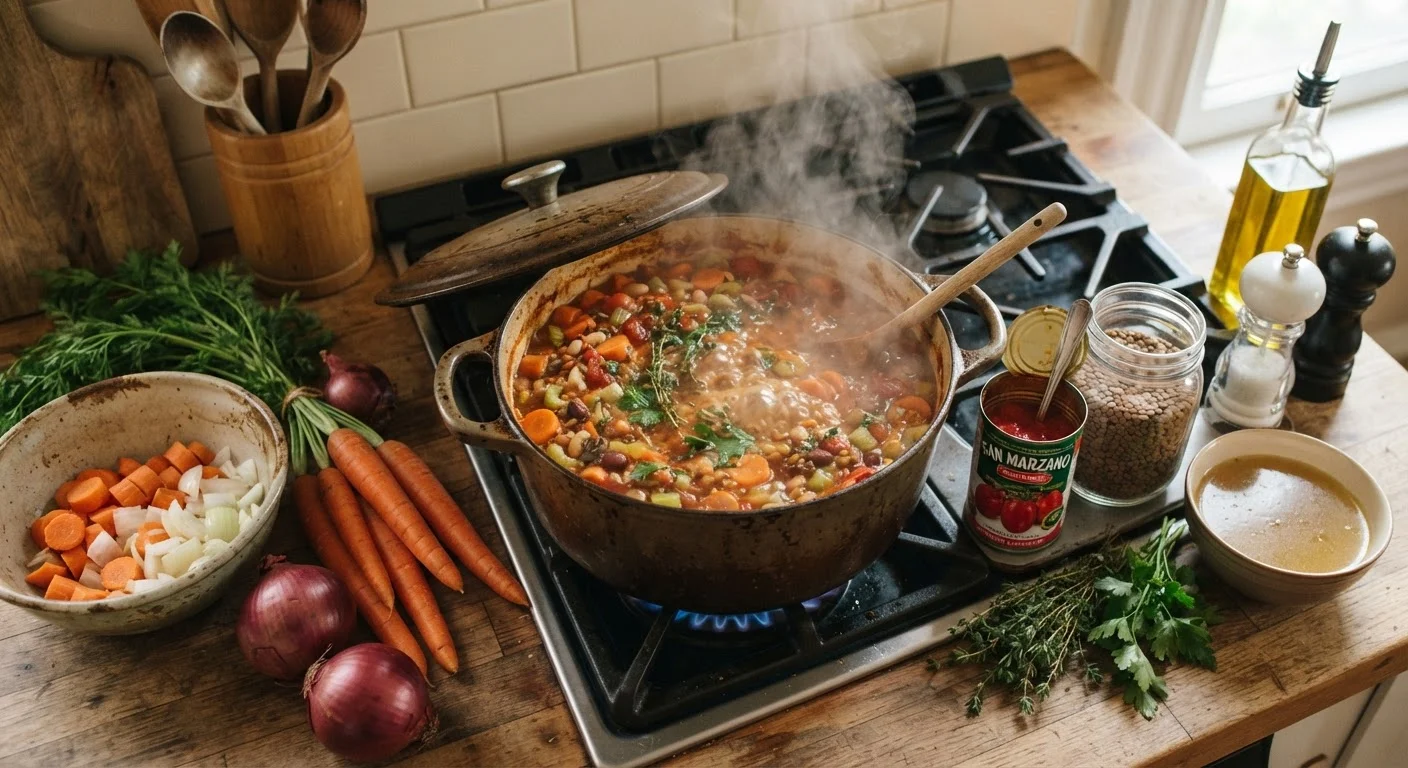
When you simmer a pot of soup, a handful of aromatics (onion, garlic, celery) infuses an entire batch with flavour. A small amount of protein — whether a ham hock, a can of white beans, or a cup of lentils — spreads across six to eight servings. The broth binds everything together into something that tastes fuller and richer than its ingredient list suggests.
This is the core logic: soups and stews dilute cost without diluting satisfaction. That's not true of most cooking methods. A stir-fry or a sheet pan dinner requires enough of each ingredient to fill each plate. A soup lets you stretch. See our complete guide to budget eating for how this fits into a wider grocery strategy.
$0.50–$1.50
Estimated cost per serving of homemade lentil soup
Based on typical US retail prices for dried lentils, canned tomatoes, onions, and basic spices — ingredients that together yield six to eight servings.
3 months
Safe freezer storage time for most soups and stews
According to USDA food safety guidance, properly stored cooked soups and stews maintain quality in the freezer for two to three months.
~30%
Average share of US household food spending lost to waste
USDA research estimates that roughly 30–40% of the food supply is wasted — much of it recoverable through batch cooking strategies like soup-making.
The Building Blocks: Cheap Ingredients That Work
Effective budget soups rely on a short list of inexpensive staples that are also nutritionally solid:
- Legumes: Dried lentils, split peas, and canned beans are among the cheapest sources of plant protein and fibre available. They also thicken soup naturally, adding body without extra cost.
- Root vegetables: Carrots, potatoes, parsnips, and turnips hold up well to long simmering, absorb seasoning readily, and are typically affordable year-round.
- Onion, garlic, and celery: The foundation of flavour in most cuisines. A large onion costs very little and flavours an entire pot.
- Canned tomatoes: Add acidity, depth, and colour. A single can serves as a soup base or flavour booster.
- Frozen vegetables: Peas, corn, spinach, and mixed vegetables freeze at peak freshness and cost far less than fresh equivalents out of season.
- Grains: Barley, rice, or small pasta shapes can be added to extend a soup further and increase its staying power.
If you want to build a system around these ingredients, budget meal planning principles offer a practical framework for shopping and rotating them through the week.
Save Your Scraps for Free Broth
Keep a zip-lock bag in the freezer and add vegetable trimmings as you cook — onion ends, carrot peels, celery leaves, herb stems. Once the bag is full, cover the scraps with water and simmer for 30–45 minutes, then strain. You'll have a flavourful, free broth that replaces the need to buy boxed stock.
Building Flavour Without Spending More
The most common concern about cheap soup ingredients is that they'll taste flat. That's a technique problem, not an ingredient problem. Flavour is built in layers:
- Bloom your aromatics first. Cook onion, garlic, and any spices in a small amount of oil before adding liquid. This step takes two minutes and dramatically deepens the base flavour.
- Season in stages. Add a pinch of salt early and adjust at the end. Adding all seasoning at the end leaves flavour on the surface rather than worked through the dish.
- Use acid to finish. A squeeze of lemon juice or a splash of vinegar added at the very end brightens the entire pot and makes it taste more complex without adding cost.
- Add something umami. A parmesan rind simmered in the pot, a spoonful of tomato paste, or even a dash of soy sauce adds savoury depth that mimics the richness of more expensive ingredients.
For additional ideas on building satisfying meals from pantry staples, see healthy eating on a tight budget.
“The stockpot is the most democratic cooking vessel ever invented. It takes the cheapest, most humble ingredients and transforms them — through time and heat — into something nourishing and deeply satisfying.”
— Mark Bittman, Food journalist and author of 'How to Cook Everything'
Batch Cooking and the Multiplier Effect
The real financial advantage of soups and stews isn't just in the ingredients — it's in the yield per cook session. Making a pot that serves eight takes roughly the same active time and energy as making a pot that serves two. That ratio is rarely achievable with other cooking methods.
A practical approach: cook one large batch on the weekend, portion it into containers, and use it across four or five weekday meals. This eliminates the temptation to buy convenience food on busy evenings — arguably one of the most common ways grocery budgets get derailed. Refrigerate servings you'll eat within four days; freeze the rest.
Batch soup cooking also reduces food waste. Vegetables that are slightly past their prime, leftover grains, or a half-used can of beans all belong in a soup pot rather than a bin. That's money already spent being recovered as a meal. This complements broader strategies outlined in our guide to eating well on a tight budget.
This article provides general nutrition and cooking information for educational purposes. It is not intended as medical or dietary advice. Consult a qualified healthcare or nutrition professional for guidance tailored to your individual health needs.