
Frozen vs. Fresh Produce: What the Price Difference Actually Means for Your Diet

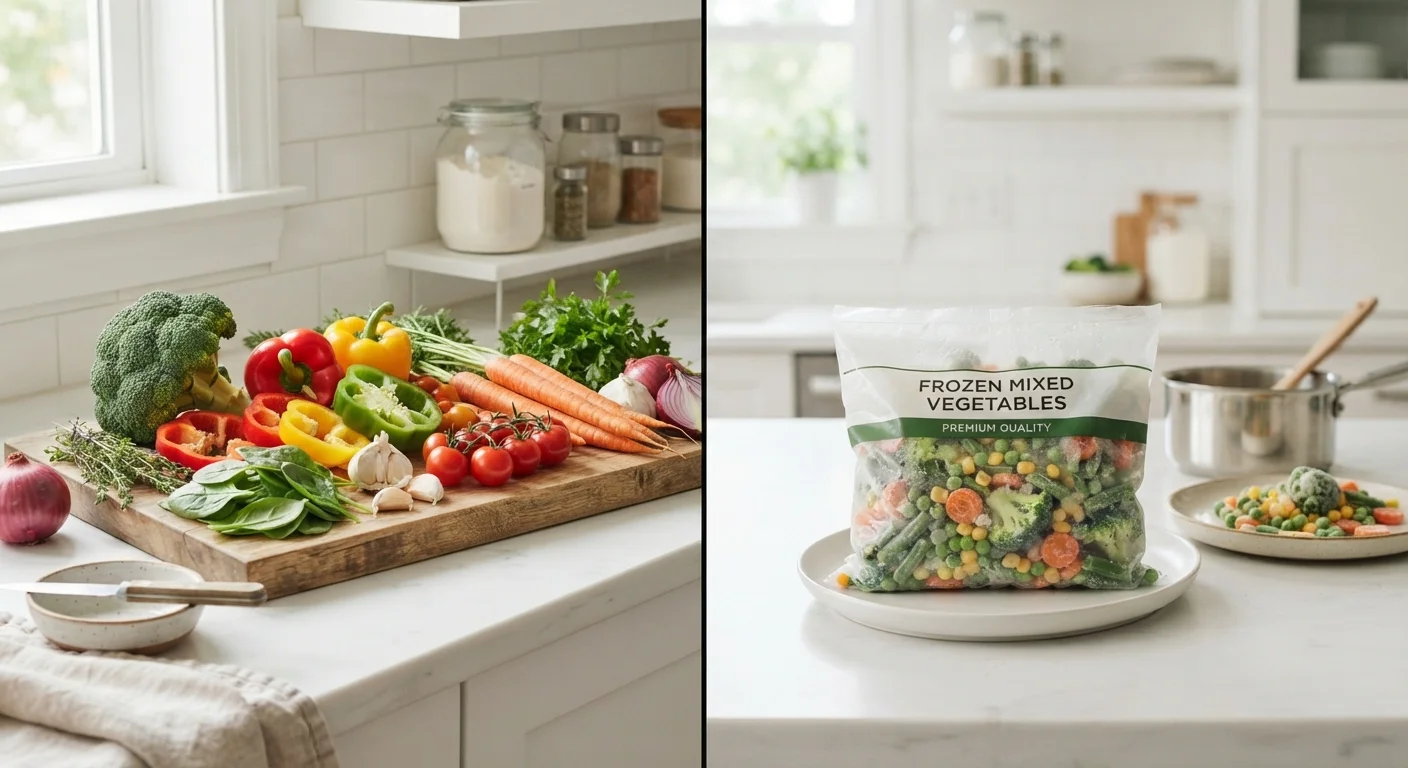
Key Takeaways
- Frozen vegetables are often nutritionally comparable to fresh, and sometimes superior for certain nutrients.
- Fresh produce can lose vitamins rapidly after harvest, especially when stored for several days.
- Frozen options typically cost less per serving and generate less food waste than fresh alternatives.
- The best choice depends on how quickly you cook, your storage space, and what vegetables you need.
- Mixing both fresh and frozen produce is a practical strategy for most households.
Option A
Fresh Produce
The familiar, seasonal aisle staple.
Best for: Shoppers who cook frequently, have easy market access, and prioritize texture and variety in meals.
Option B
Frozen Produce
The convenient, year-round budget alternative.
Best for: Budget-conscious households looking to reduce waste and keep nutritious vegetables on hand at all times.
If you want to maximize your grocery budget with minimal waste
Frozen Produce
Frozen vegetables cost less per serving on average and stay usable for months, meaning you only use what you need and throw away far less.
If you cook daily and value texture, freshness, or seasonal variety
Fresh Produce
Fresh produce offers better texture for raw preparations and salads, and in-season vegetables can rival frozen on both price and taste.
If you want reliable nutrition without worrying about timing
Frozen Produce
Frozen vegetables are picked and processed at peak ripeness, locking in nutrients before significant degradation can occur.
If you're cooking for a variety of dietary needs or preferences
Fresh Produce
Fresh produce offers wider variety, including options not commonly found frozen, giving you more flexibility in planning meals.
Why the Price Gap Exists
Walk through any grocery store and you'll notice that a bag of frozen broccoli often costs noticeably less than its fresh counterpart. That price gap isn't just a marketing trick — it reflects real differences in how produce is handled from farm to shelf.
Fresh vegetables travel from farm to distribution center to store, often spending days in transit and storage. That supply chain requires careful temperature control, faster turnover, and more handling — all of which add cost. Frozen produce, by contrast, is typically blanched (briefly heated) and frozen shortly after harvest, which significantly extends its shelf life and reduces spoilage losses along the way.
The result: frozen vegetables are generally cheaper per serving, and because you only use what you need, household food waste drops too. For budget-conscious shoppers, that combination is hard to ignore. As our budget eating myths guide explains, perceived savings sometimes come with hidden costs — but in this case, the savings on frozen tend to be genuine.
| Criterion | Fresh Produce | Frozen Produce |
|---|---|---|
| Typical cost per serving | Higher, varies by season | Generally lower year-round |
| Shelf life at home | Days to one week | Months in the freezer |
| Nutrient retention | Declines over days post-harvest | Locked in near harvest |
| Texture for cooking | Firm, versatile raw or cooked | Softer after freezing; best cooked |
| Food waste risk | Higher if not used quickly | Low — use only what you need |
| Variety available | Very wide, including specialty items | Common vegetables; more limited |
| Best use case | Salads, raw dishes, seasonal eating | Soups, stir-fries, batch cooking |
The Nutrition Question: Does Frozen Mean Lower Quality?
This is the question most people really want answered. The short answer: no, frozen produce is not nutritionally inferior — and in some cases, it may hold up better than fresh.
Research, including studies reviewed by institutions like the American Institute for Cancer Research, has found that freezing preserves most key nutrients well. Some water-soluble vitamins like vitamin C and certain B vitamins can actually decline in fresh produce during the days between harvest and when you eat it. Frozen vegetables, processed closer to harvest, can retain comparable or higher levels of these nutrients by the time they reach your plate.
That said, the blanching step used before freezing can reduce some heat-sensitive nutrients slightly. This is a real trade-off, but it's generally modest compared to the losses that occur in fresh produce sitting in a refrigerator for several days.
Up to 45%
Vitamin C lost in fresh spinach after storage
Research has shown that spinach stored at room temperature can lose a significant share of its vitamin C within a few days of harvest.
~30–40%
Lower average cost of frozen vs. fresh vegetables
USDA economic research has consistently found that frozen vegetables tend to cost less per edible cup than their fresh equivalents.
30–40%
Share of fresh produce wasted at household level
The USDA estimates that a substantial portion of fresh produce purchased by US households is discarded, making cost-per-used-serving higher than sticker price suggests.
The practical takeaway: if you're cooking a stir-fry, soup, or casserole, frozen vegetables will deliver solid nutrition. If you're making a raw salad or a dish where texture is central, fresh is the clearer choice. For more on how storage and processing affect nutritional value, see our piece on frozen and tinned ingredients.
How to Use Both Strategically
The smartest approach for most households isn't picking one over the other — it's knowing when each makes more sense.
Use fresh produce when:
- You're shopping for vegetables you'll use within one to three days
- The item is in season and locally available, often making it competitively priced
- Texture matters — salads, crudités, and garnishes benefit from fresh crunch
- You want variety not commonly available frozen, such as certain herbs or specialty greens
Reach for frozen when:
- You need a reliable, affordable base for cooked dishes like soups, stews, stir-fries, or grain bowls
- A vegetable is out of season and fresh versions are expensive or low quality
- You want to reduce food waste from produce you might not use in time
- You're stocking up and need shelf stability
This kind of hybrid approach is also discussed in our budget eating across different diets article, which shows how affordable eating looks different depending on your dietary pattern — but frozen produce tends to work across all of them.
It's also worth comparing this choice against other food cost decisions. Our breakdown of convenience food vs. cooking from scratch puts the fresh-vs-frozen debate into broader perspective.
This article is for general informational purposes only and is not medical or dietary advice. Consult a qualified healthcare professional or registered dietitian for personalized nutrition guidance.