

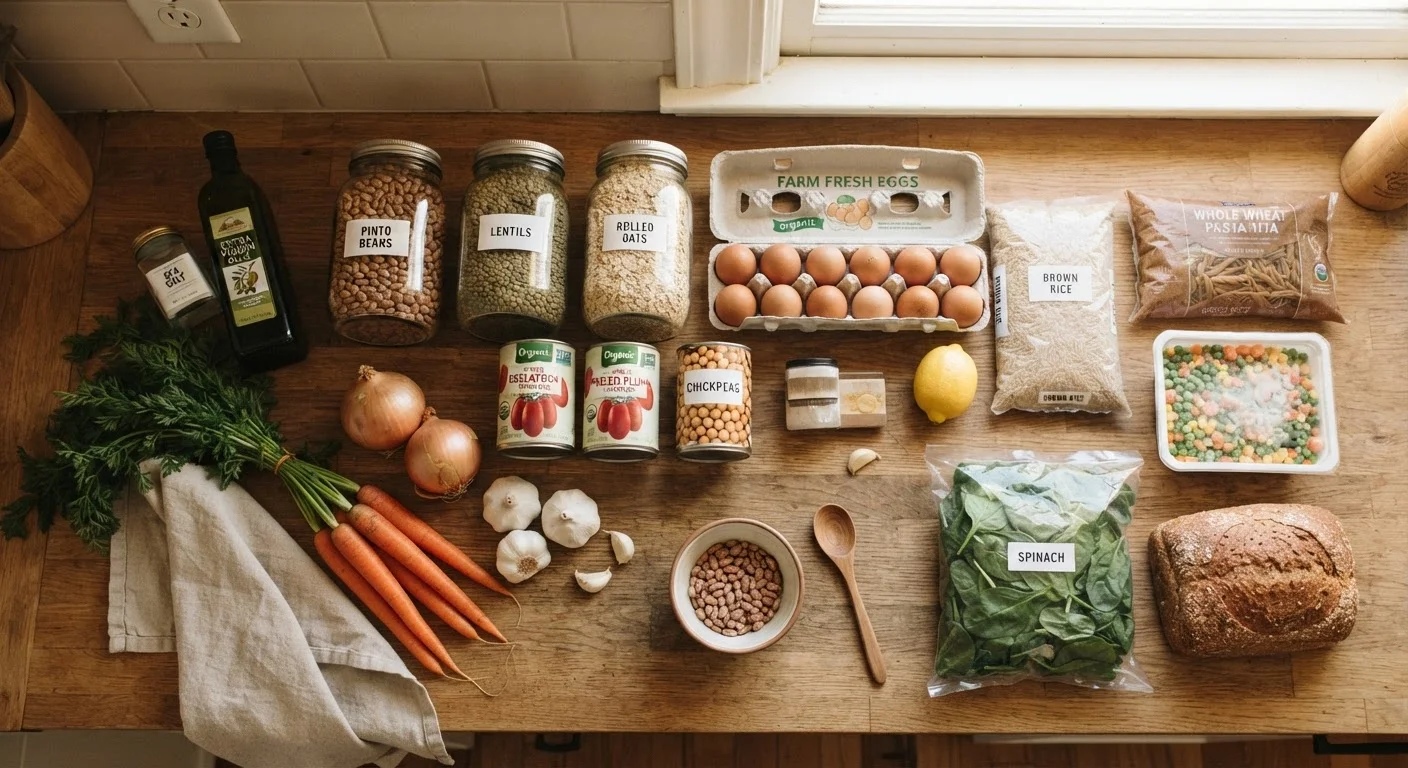
Key Takeaways
- Buying in bulk only saves money if you actually use everything before it expires.
- Cheap processed foods often cost more per nutrient than affordable whole foods like beans and oats.
- Skipping meals to cut costs can backfire by driving higher spending later in the day.
- Frozen produce is nutritionally comparable to fresh and is often the smarter budget choice.
- Generic store-brand staples are usually made to the same standards as name-brand equivalents.
Why Budget-Eating Advice Can Mislead You
Not all money-saving food advice is created equal. Some habits that feel thrifty — stocking up on bulk items, filling up on cheap snack foods, skipping a meal — can quietly cost more when you track the full picture. The goal here is to separate the strategies that genuinely work from those that only look good on the surface.
This isn't about judging how people eat — it's about giving budget-conscious shoppers better information so every dollar spent on food actually goes further. For a broader foundation, our comprehensive guide to affordable eating covers shopping strategy, meal prep, and nutrition trade-offs in one place.
Myth
Buying in bulk is always the cheapest way to shop.
Fact
Bulk buying only saves money when you consume everything before it spoils or expires.
Bulk purchases offer lower unit costs — but that math only holds if nothing goes to waste. For perishable items like produce, dairy, or bread, households that can't use large quantities quickly often end up throwing food away, turning a perceived bargain into a loss. A useful rule: bulk buying works well for shelf-stable staples like dried lentils, rice, or oats, and less well for fresh items with short shelf lives. See a balanced breakdown of when bulk buying helps and when it doesn't before committing to oversized quantities.
Myth
Cheap junk food is the most affordable way to fill up.
Fact
Highly processed snack foods typically deliver fewer nutrients per dollar than whole-food staples.
A bag of chips may cost little up front, but it satisfies hunger for a short time and provides minimal protein, fiber, or micronutrients. Foods like dried beans, lentils, canned sardines, oats, and eggs consistently rank among the most filling and nutritious options relative to their cost. Affordable foods that keep you genuinely full are often hiding in plain sight in the pantry staples aisle — not in the snack food section.
Myth
Skipping meals is a reliable way to spend less on food.
Fact
Skipping meals frequently leads to overeating or impulse spending later, which can offset any savings.
Going without a meal often creates intense hunger that drives people toward convenient, pricier options — fast food, vending machines, or unplanned takeout. The short-term saving disappears. There are also nutritional trade-offs worth considering, particularly for people with specific health conditions; the real trade-offs of skipping meals for budget reasons deserve a clear-eyed look before making it a habit. If you have any health concerns, consult a healthcare professional before making significant changes to your eating patterns.
Myth
Fresh produce is always nutritionally superior to frozen.
Fact
Frozen vegetables are typically frozen shortly after harvest, preserving most of their nutrients.
Fresh vegetables can lose nutritional value during transport and storage — sometimes sitting for days before reaching your plate. Frozen produce is generally processed close to harvest, which locks in vitamins reasonably well. Research generally supports frozen vegetables as nutritionally comparable to fresh for most nutrients. They're also often significantly cheaper and reduce food waste since you use only what you need. What the price difference between frozen and fresh really means for your diet is worth understanding before defaulting to the fresh aisle.
Myth
Name-brand products are higher quality than store-brand alternatives.
Fact
Store-brand and generic products are frequently manufactured to the same specifications as name brands.
In many product categories — canned goods, dried pasta, flour, cooking oils — store-brand items are produced in the same facilities or to equivalent quality standards as their name-brand counterparts. The price gap reflects marketing and packaging costs, not meaningful differences in the food itself. Swapping to store-brand staples across a typical grocery run can produce consistent savings over time with little or no sacrifice in quality. This is one of the simplest habits covered in why your weekly grocery bill is higher than it needs to be.
Myth
Cooking from scratch always takes too much time to be practical.
Fact
Many scratch-cooked meals take no longer than waiting for delivery or heating a processed meal.
The perception that home cooking is prohibitively time-consuming often doesn't hold up in practice. A pot of lentil soup, a stir-fry, or a simple grain bowl can come together in 20–30 minutes — comparable to delivery wait times, and far cheaper. Batch cooking once or twice a week reduces daily effort significantly. The true cost comparison between convenience food and cooking from scratch often surprises people once time and money are both factored in honestly.
Building Better Budget Habits That Actually Hold Up
Correcting these myths is a starting point, not the finish line. The most sustainable budget-eating habits tend to share a few traits: they reduce waste, prioritize nutrient density over sheer cheapness, and fit realistically into daily life.
Cheap Calories Aren't the Same as Affordable Nutrition
A food can be inexpensive and still deliver poor value if it leaves you hungry again within an hour or provides little nutritional benefit. When evaluating budget food options, consider cost per serving alongside protein, fiber, and staying power — not just the sticker price. Foods that keep you full longer often cost less overall because you eat less of them.
Small adjustments — switching to store-brand staples, leaning on frozen vegetables, batch-cooking a few times a week — tend to compound into meaningful savings without requiring dramatic lifestyle overhauls. If you want practical strategies that fit those principles, sustainable nutrition habits that actually stick offers a useful next step. And if you're managing a specific dietary pattern on a budget, how budget eating compares across different diets breaks down the real cost differences.
This article is for general informational purposes only and is not a substitute for advice from a qualified healthcare or nutrition professional. If you have specific health conditions or dietary needs, please consult a professional before making significant changes to your eating habits.